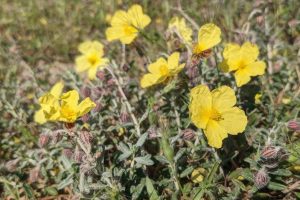
Among the many wildflowers that brighten Cyprus in spring, few capture the imagination quite like the Cyprus Tulip. This rare beauty, found nowhere else in the world, emerges each year with its deep, velvety petals – often appearing almost black against the sunny landscape. Spotting one in the wild feels like uncovering a small treasure hidden on the island.
How does it look like and where it grows
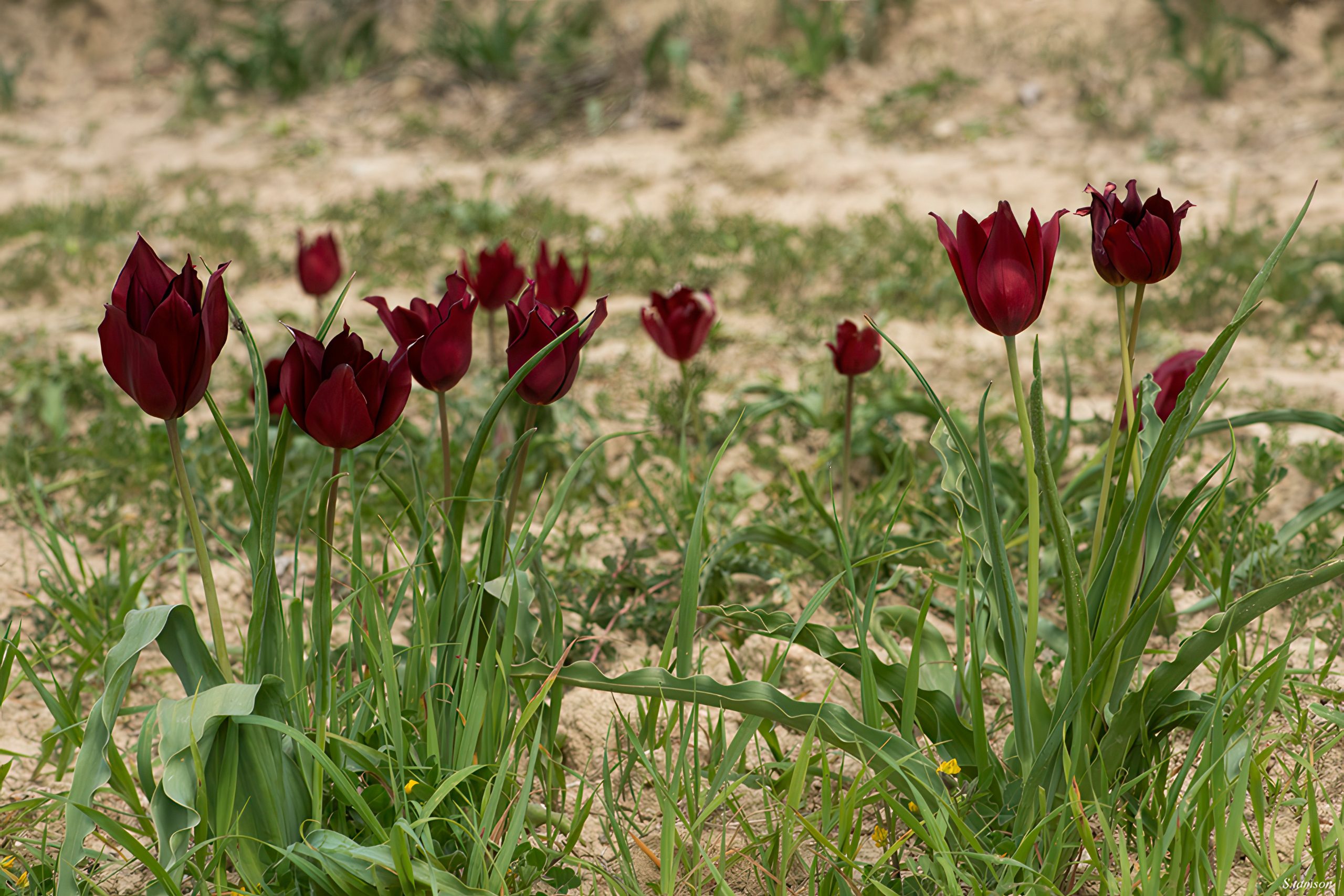
The Cyprus Tulip, or Tulipa cypria, is a perennial bulbous plant that belongs to the lily family. There are three species of tulips on the island – Tulipa cypria, Tulipa akamasica and the parent specie of which both endemics originated – Tulipa agenensis.
Tulipa cypria has been part of Cyprus’s flora for around 5 million of years, shaped by the island’s isolated geography into a separate specie during last Glacial cycles. It grows in Juniperus phoenicea maquis, pastures and cereal fields on limestone.
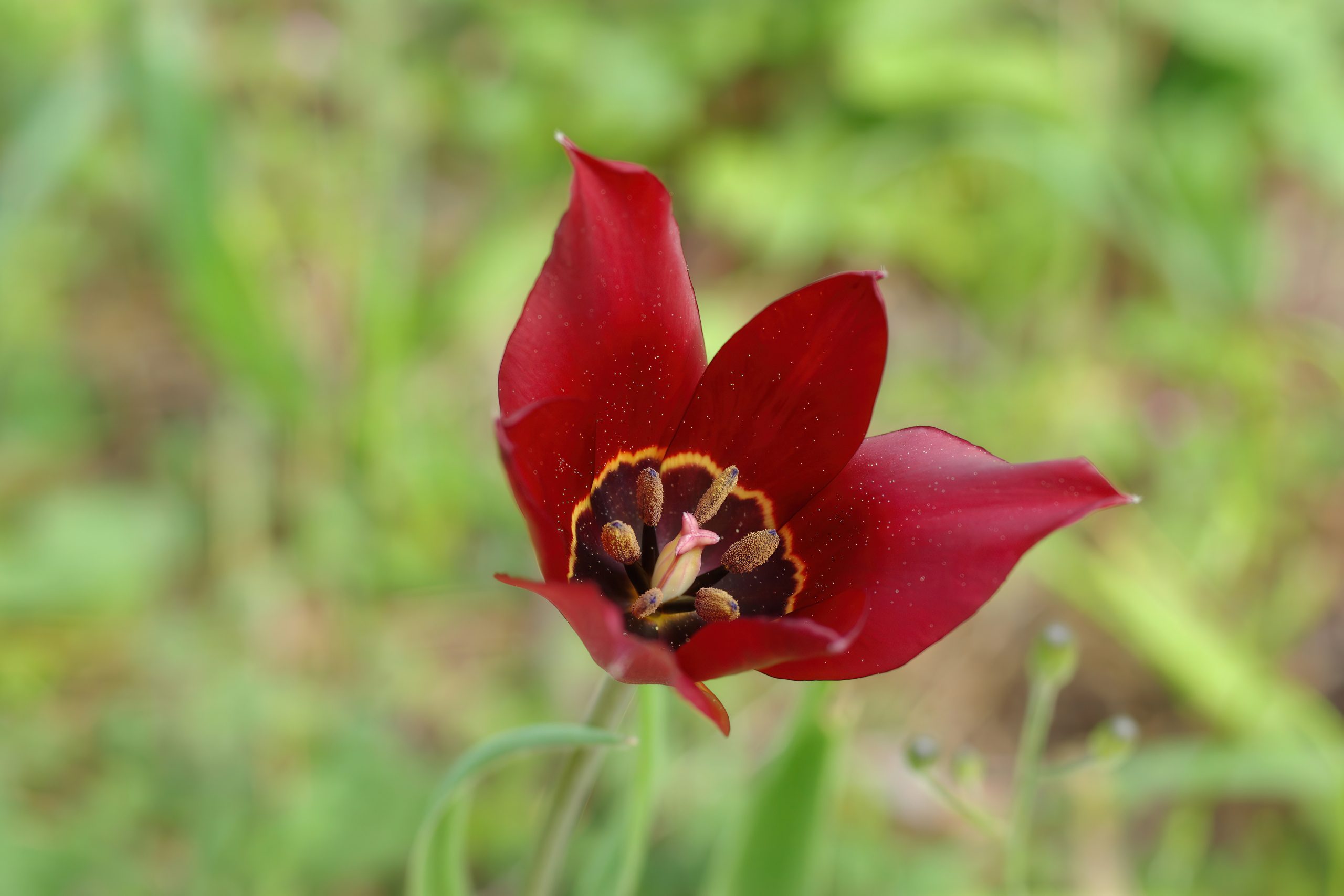
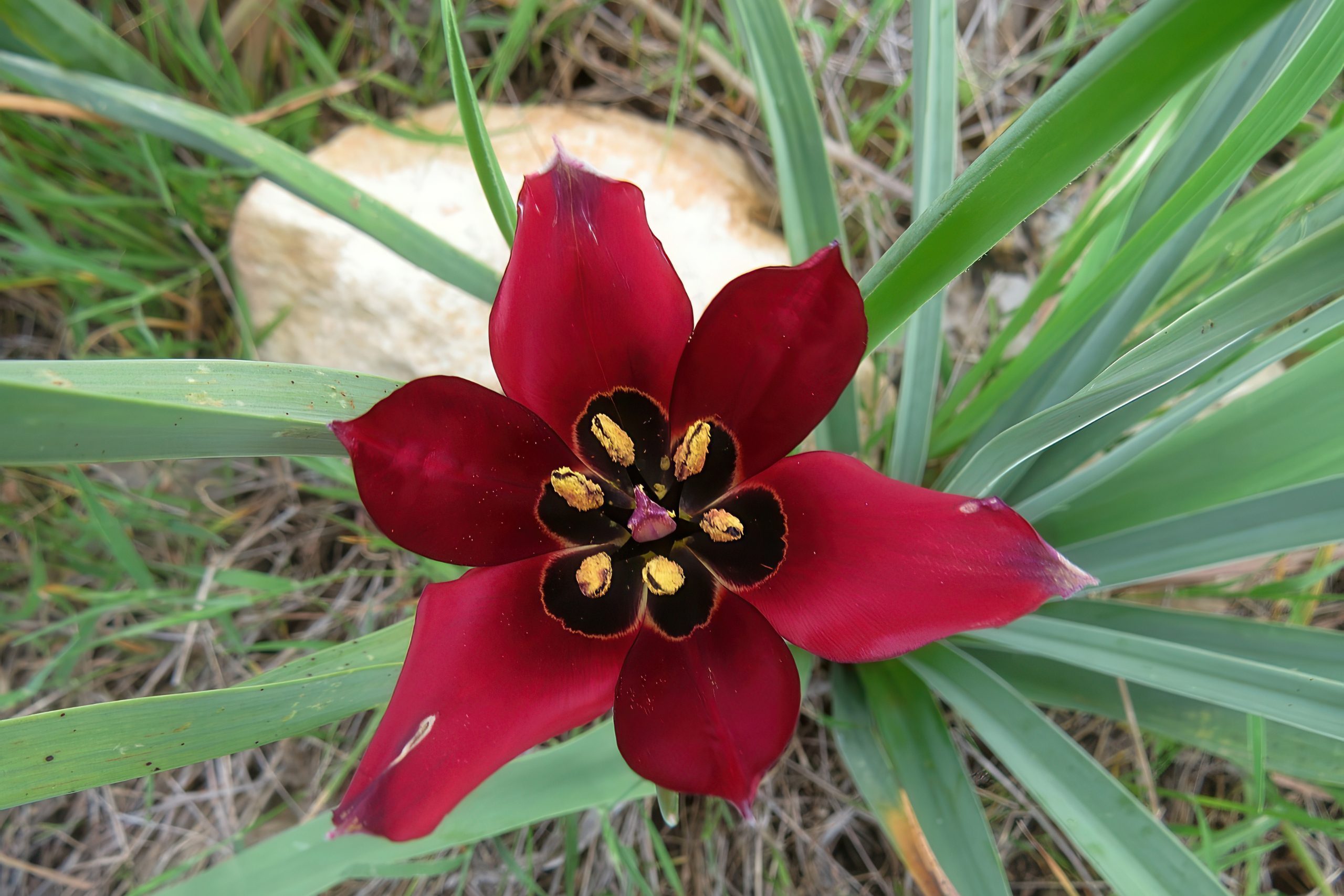
The plant grows 15–40 cm tall, usually with four smooth, fleshy slightly bluish-green leaves, two at the base which are larger and lanceolate, and the two upper leaves which are much smaller and almost linear. Petals are deep blood-red colour with distinctive internal black blotch bordered by a yellow zone, earning the plant its nickname as the “black tulip” of Cyprus – a rare trait that makes it stand out among its relatives.
Quick facts about Cyprus tulip
• The “black” colour isn’t actually a black pigment (which is rare in plants). It is a dense concentration of anthocyanins—the pigments that make flowers purple or blue.
• Black blotch serves two purposes — it’s a “nectar guide” for the pollinators and the solar heater for the delicate inner parts of the flower.
• Local festivals celebrate its arrival, turning quiet villages into colourful gathering spots for flower lovers.
Is it rare or endangered?
Tulipa cypria is classified as Endangered on the IUCN Red List due to habitat loss from development and agriculture. The species is protected by both Cypriot and international laws, and conservation efforts continue to monitor and safeguard its remaining populations.
Tulips in Cypriot cultural heritage
For generations, the endemic Tulipa cypria has served as a significant source of inspiration for the island’s craftspeople. Its form has been integrated into the foundation of Cypriot iconography, appearing frequently in traditional embroidery, ceramics, and various folk motifs that define the island’s cultural heritage.
The Story and Name of the Tulip
The word “tulip” comes from the Ottoman Turkish word for turban, tülbent. There are two main versions about how this happened. The first is simply because of how the flower looks: a blooming tulip has rounded petals that resemble the folds of a traditional turban.
The second is about a misunderstanding when early European travellers pointed to a tulip tucked into someone’s headwear and asked for its name, the person thought they were asking about the headwear itself and replied, “tülbent.” The travellers brought this name back to Europe, where it eventually became “tulip.”
In the Ottoman Empire, tulips were often used as a turban decoration because they were symbols of pure love. This meaning comes from the tragic legend of a young man named Farhad and a princess named Shirin. When Farhad was falsely told that his beloved Shirin had died, he was so heartbroken that he took his own life. According to the legend, red tulips began to grow wherever his blood hit the ground.
In Turkish language tulip is called -Lale. The word Lale is of Persian origin, as the flower itself, and means “God’s flower”.
While the flower physically existed in Cyprus for millennia, its cultural “fame” was born with the Ottomans. Prior to 1571, the tulip lived “quietly” in the landscape and appeared in art simply as a generic symbol of spring or fertility rather than the specific national icon it is today. Today it appears on stamps, in local artwork, and in environmental campaigns that highlight the need to protect Cyprus’s endemic species.
Where and when to observe?
The best time to see the Cyprus Tulip is during its short blooming season in March and April. Prime locations include the Akamas Peninsula in the west, the Kyrenia (Pentadactylos) mountain range, and areas around villages such as Tepebaşı (Diorios) and Avtepe in the north, where local tulip festivals often take place. Walking quietly through these habitats at dawn or late afternoon offers the most rewarding views – fields dotted with dark blooms against the green landscape. Remember that the flowers are protected: admire them from the path and never pick or disturb the bulbs.
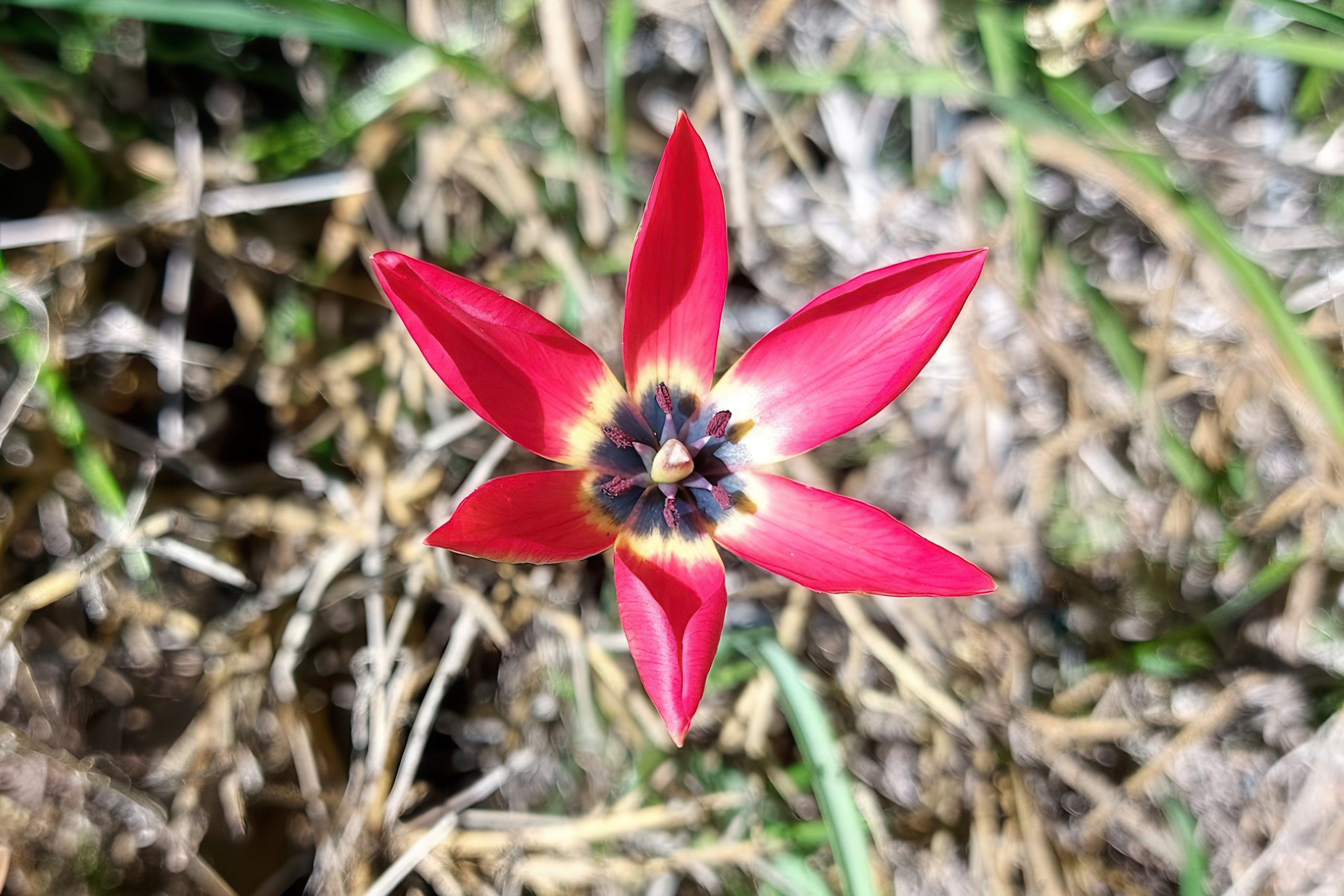
The blooming of Tulipa cypria offers a worthy reason to explore the island’s natural landscape. Deeper understanding of its history and unique biological adaptations will foster greater respect for this endemic species, ultimately contributing to its long-term conservation in the wild.