Explore Cyprus with Our Interactive Map

Explore our top stories and discover ideas worth your time.

Aphrodite Nature Trail Cyprus Coastal Wilderness

Aphrodite Nature Trail Cyprus Coastal Wilderness

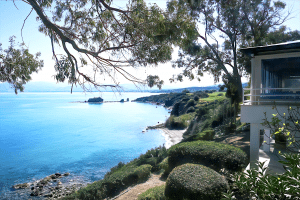
The Aphrodite Nature Trail cuts through the Akamas Peninsula, one of the last untouched wildernesses in Cyprus. This 7.5-kilometer circular route starts at the legendary Baths of Aphrodite and climbs to viewpoints where the entire northwest coast unfolds below. chooseyourcyprus-com The path combines mythology with genuine ecological significance, passing through an area that hosts 39 of Cyprus's 141 endemic plant species and serves as protected habitat for endangered sea turtles. The route reaches a maximum elevation of 370 meters at Moutti tis Sotiras, a rocky plateau that offers panoramic views across Chrysochou Bay to Cape Arnaoutis. Despite covering 7.5 kilometers, the trail maintains a moderate difficulty level, with most elevation gain concentrated in the middle section. Walking time ranges from 3 to 4 hours. The entire Akamas Peninsula covers 230 square kilometers and is designated as a NATURA 2000 protected area, recognized by the European Environment Agency as one of only 22 areas of endemism in Europe. The Goddess Who Rose from the Sea According to Greek mythology, Aphrodite emerged from sea foam off the coast of Cyprus. The Baths of Aphrodite, where the trail begins, is a natural grotto where the goddess supposedly bathed. Local legend claims this is where she met Adonis, her mortal lover, when he stopped to drink from the spring while hunting. The peninsula takes…

Read more

Lara Beach, Cyprus – Turtle Nesting & Wild Coast

Lara Beach, Cyprus – Turtle Nesting & Wild Coast

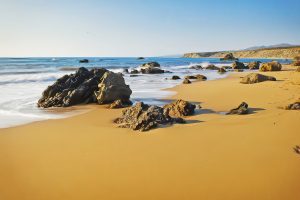
Lara Beach sits on the Akamas Peninsula in western Cyprus, roughly 27 kilometers northwest of Paphos. This stretch of golden sand is one of the Mediterranean's most important nesting sites for two endangered sea turtle species. Unlike the developed beaches that line most of Cyprus's coast, Lara remains untouched by commercial tourism. There are no sunbeds, no restaurants, and no permanent structures beyond a small conservation hut. The beach exists primarily for the turtles, with human visitors welcomed as guests rather than customers. tripadvisor-co Cyprus's First Turtle Conservation Station The protection of Lara Beach began in 1971 when the area was officially designated as a protected zone. In 1978, the Cyprus Fisheries Department launched a formal conservation project that included establishing a seasonal station and hatchery at Lara. This became the first turtle conservation project in the entire Mediterranean region. tripadvisor-co The initiative received support from the World Wildlife Fund between 1980 and 1983, followed by European Union assistance through the MedSPA Project in 1990. Today, government-funded conservationists maintain year-round monitoring of the nesting areas, though their presence intensifies during the breeding season. Green turtles and loggerhead turtles have nested on this beach for centuries. Both species are classified as endangered in the Mediterranean Sea by international conservation authorities. The green turtle population in the Mediterranean is critically endangered, making…

Read more
Basilica of Kampanopetra Salamis Christian Architecture

Basilica of Kampanopetra Salamis Christian Architecture

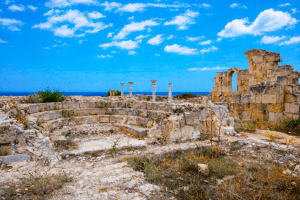
The Basilica of Kampanopetra is a large Early Christian church complex located at the archaeological site of ancient Salamis, near modern Famagusta in the Turkish-occupied part of Cyprus. Built during the late 5th or early 6th century CE, the basilica served the city of Constantia, the name given to Salamis after it was rebuilt following devastating earthquakes in 332 and 342 CE. The complex consists of four major sections arranged in a linear sequence. From west to east, these include a large western courtyard, a second western atrium connected to a narthex (entrance hall), the main three-aisled basilica, and an eastern atrium. The entire structure measures approximately 152 meters in length and reaches nearly 38 meters at its widest point. This makes it one of the largest Early Christian basilicas in Cyprus. The name "Kampanopetra" has been interpreted in different ways. Some sources translate it as "stone by the monks' cells," while others suggest it means "stone bell." The name likely refers to features or traditions associated with the site during medieval times when a small monastic community continued to use portions of the ruined basilica. Historical Background Salamis was one of Cyprus's most important cities throughout antiquity. According to legend, it was founded around the 11th century BCE by Teucer, a hero from the Trojan War who was exiled…

Read more