In the high, rocky landscapes of Cyprus’s central mountains, one tree shines with a quiet golden glow. The Cyprus Golden Oak, an evergreen species found nowhere else on Earth, earns its name from the shimmering underside of its leaves. Walking through its groves offers a peaceful encounter with one of the island’s most enduring natural wonders.
Early history and naming
The Cyprus Golden Oak, Quercus alnifolia, was first described in 1754 as a member of the genus Alnus (alders), hence the scientific epithet. Its local name, latzia (λατζιά), derives from Hylates — a title attributed by ancient Cypriots to the god Apollo. Hylates comes from the Greek word hyle (ὕλη), meaning forest.
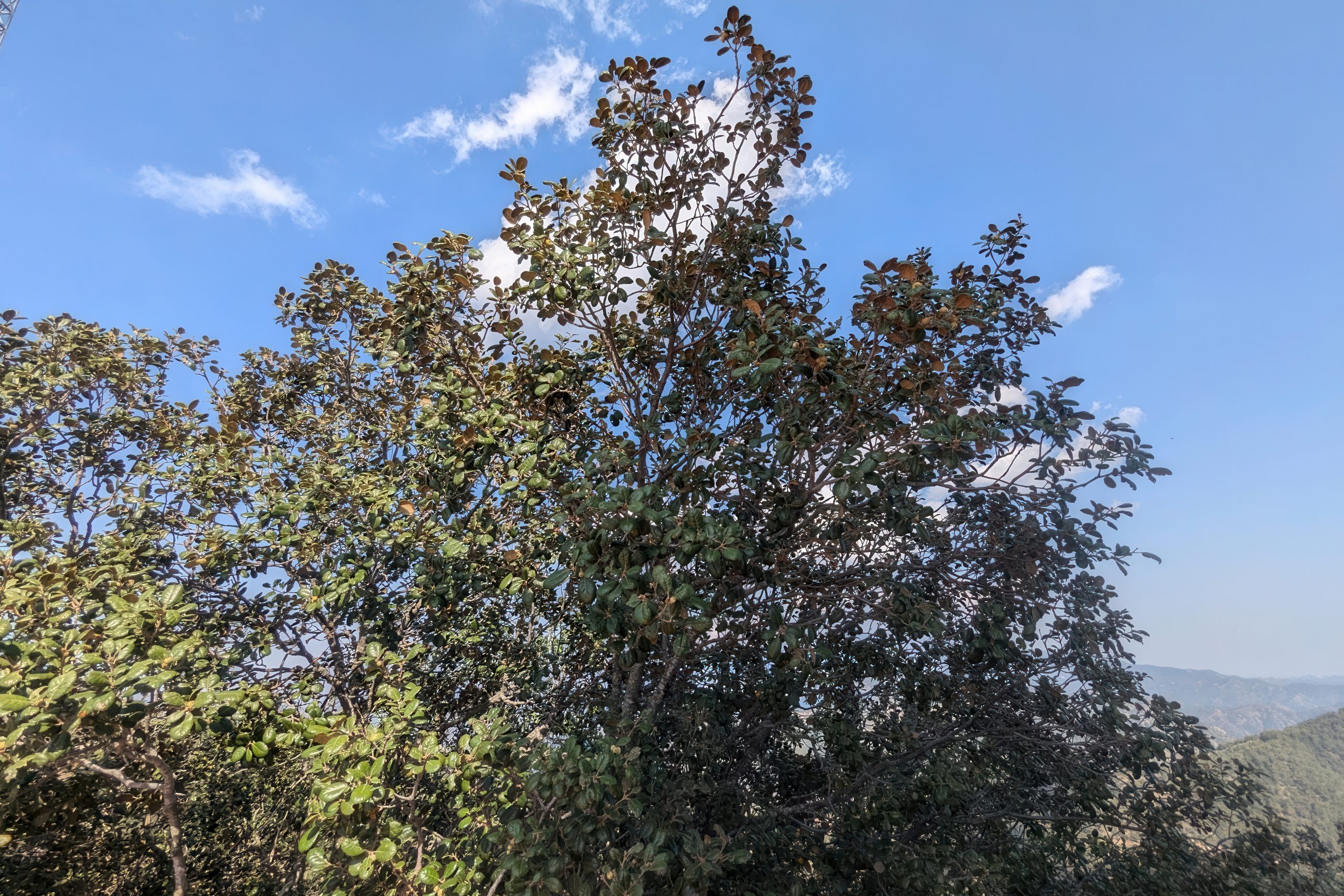
It’s an evergreen oak that grows only in Cyprus on basaltic and ultramafic rocks of Troodos ophiolite. Its most distinctive feature is the golden-coloured underside of its leaves, which gives the tree its common name. Notably, specimens cultivated outside their native habitat—such as those found in the Royal Botanic Gardens, Kew— fail to develop this characteristic golden coloration.
Golden Oak ancestry and ecological role
The Golden Oak branched off from its Turkish relatives to make a home on the volcanic rocks of the Troodos Mountains. It plays a crucial role on the mountain’s steep slopes, where its roots act as a natural anchor to stabilize the soil. Over thousands of years, its fallen leaves have created a layer of rich organic earth, making it a vital part of Cyprus’s high-altitude forests—long before the first humans ever set foot on the island
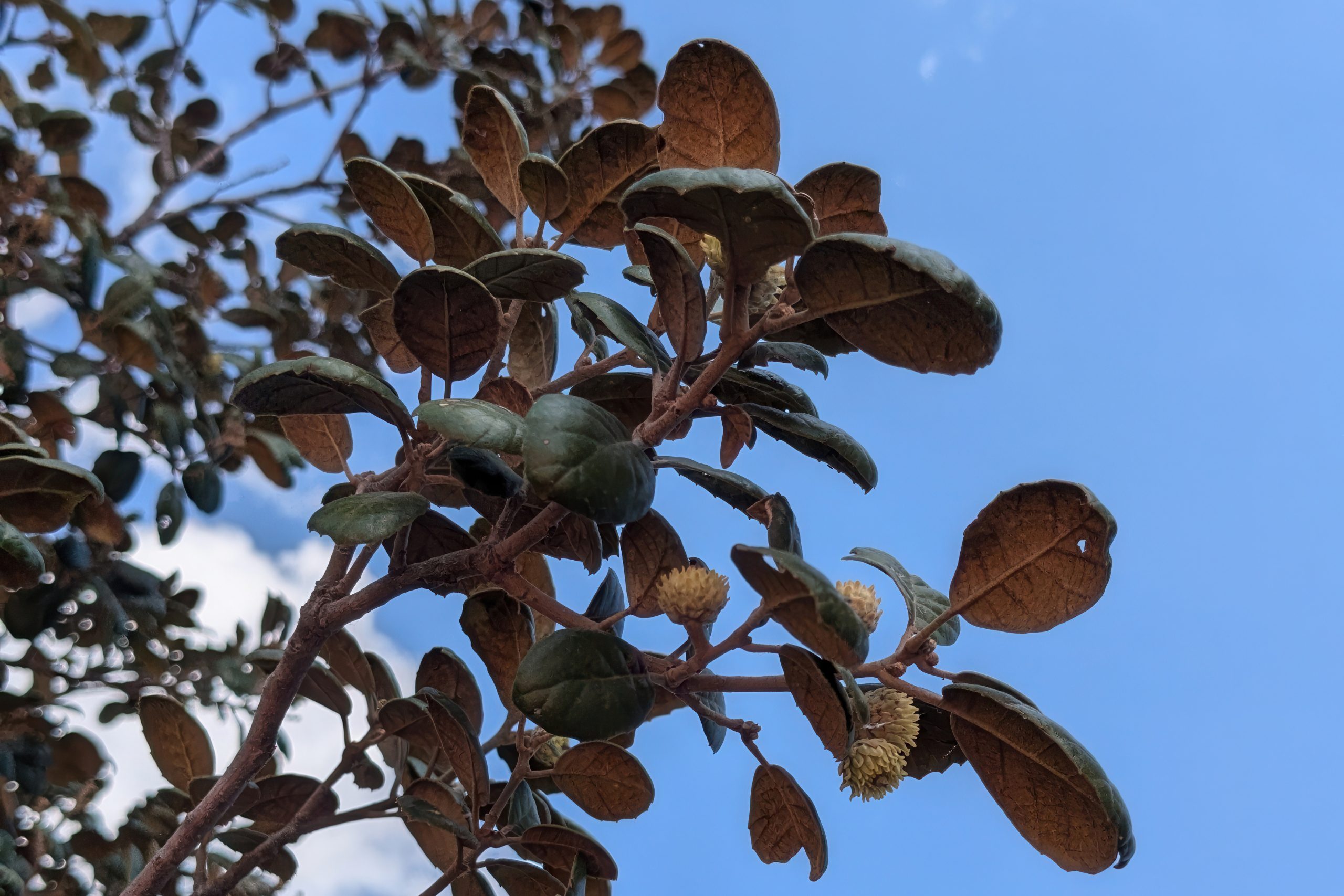
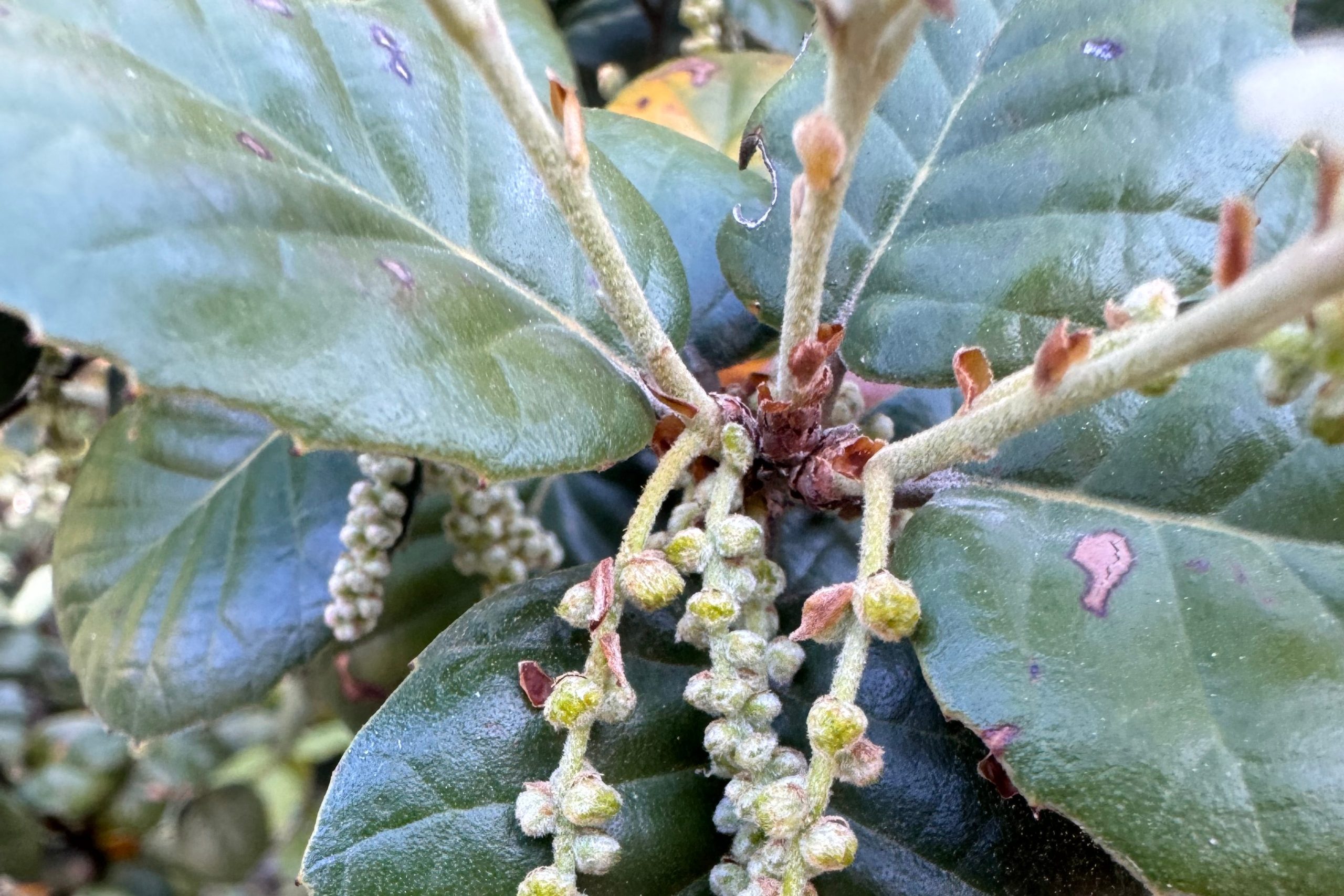
The tree typically reaches 6–10 metres in height, with a dense, branching habit that can form thick stands. Its leaves are tough and leathery: shiny dark green on the upper side and covered in dense golden-yellow hairs underneath, creating a beautiful contrast when the wind turns them over. In autumn, it produces thin elongated acorns in cups with curly scales, nestled among the foliage.
Quick facts about Golden Oak
• It was officially chosen as Cyprus’s national tree in 2006 by parliament.
• The golden underside of the leaves is made of tiny felt-like hairs that are believed to help protect the tree in dry conditions.
• Hosting over 80 species of fungi, the Golden Oak has developed a unique biological partnership to survive Cyprus’s harsh sunlight and volcanic soils.
Is it rare or endangered?
The golden oak thrives between 400 and 1,800 metres in the Troodos range, on igneous soils, either in pure dense thickets or mixed with pines. Although currently listed as Least Concern, its habitat is protected under Cypriot law and EU directives as a priority ecosystem.
Today, the Cyprus Golden Oak stands as a proud national symbol, representing the island’s unique biodiversity and resilience. It features in conservation efforts and Natura 2000 sites, reminding both locals and visitors of the need to preserve Cyprus’s mountain wilderness amid growing environmental pressures.
Where to find Golden Oak of Cyprus?
The best places to see the golden oak are in the Troodos Mountains, especially along hiking trails near Platres, Trooditissa Monastery, or the broader national forest park. Year-round access is possible, though spring and autumn offer comfortable weather and vibrant surroundings.
Next time you’re hiking in the Troodos Mountains, keep an eye out for this shrub-like oak. It might look different from the classic image of a massive, towering tree, but that is exactly what makes it so special —I t is perfectly shaped by the local climate and the unique volcanic soil of the island.