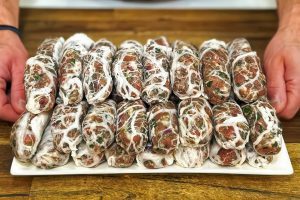
Sheftalia Cypriot Sausage Tradition
Sheftalia looks like a sausage, but it behaves very differently. There is no casing to snap, no neat uniformity, and no attempt to imitate anything else in the Mediterranean. Instead, minced meat, herbs, and onion are wrapped loosely in caul fat and cooked slowly over charcoal, producing something softer, juicier, and unmistakably Cypriot. facebook-com This is a dish shaped by village logic rather than factory precision. Its endurance comes from how well it fits the island’s rhythms of cooking, gathering, and shared meals. To understand sheftalia is to understand how Cyprus turns necessity into identity. Built Around Fire, Not Convenience Sheftalia is inseparable from the grill. It is not cured, dried, or stored. It is mixed, wrapped, and cooked fresh, usually over charcoal rather than gas. This choice matters. As the caul fat melts, it bastes the meat from the outside, dripping onto the coals and sending smoke back into the sausage. The cooking process is interactive and attentive, requiring turning, patience, and an understanding of heat. Unlike conventional sausages, which rely on tight casings and internal pressure, sheftalia remains deliberately loose. The meat steams gently inside its fatty wrap while the exterior browns. The result is not crispness, but succulence, a texture designed for slow eating rather than fast handling. Why Caul Fat Changes Everything The defining feature of…
Read more