 English
 Greek
Greek German
 Russian
In the center of Nicosia stands the largest Gothic building in Cyprus. Originally a cathedral, it was later turned into a mosque but still keeps its French Gothic style. Over 800 years, the building has seen coronations, earthquakes, sieges, and the rise and fall of kingdoms, making it one of the most important historic sites on the island.
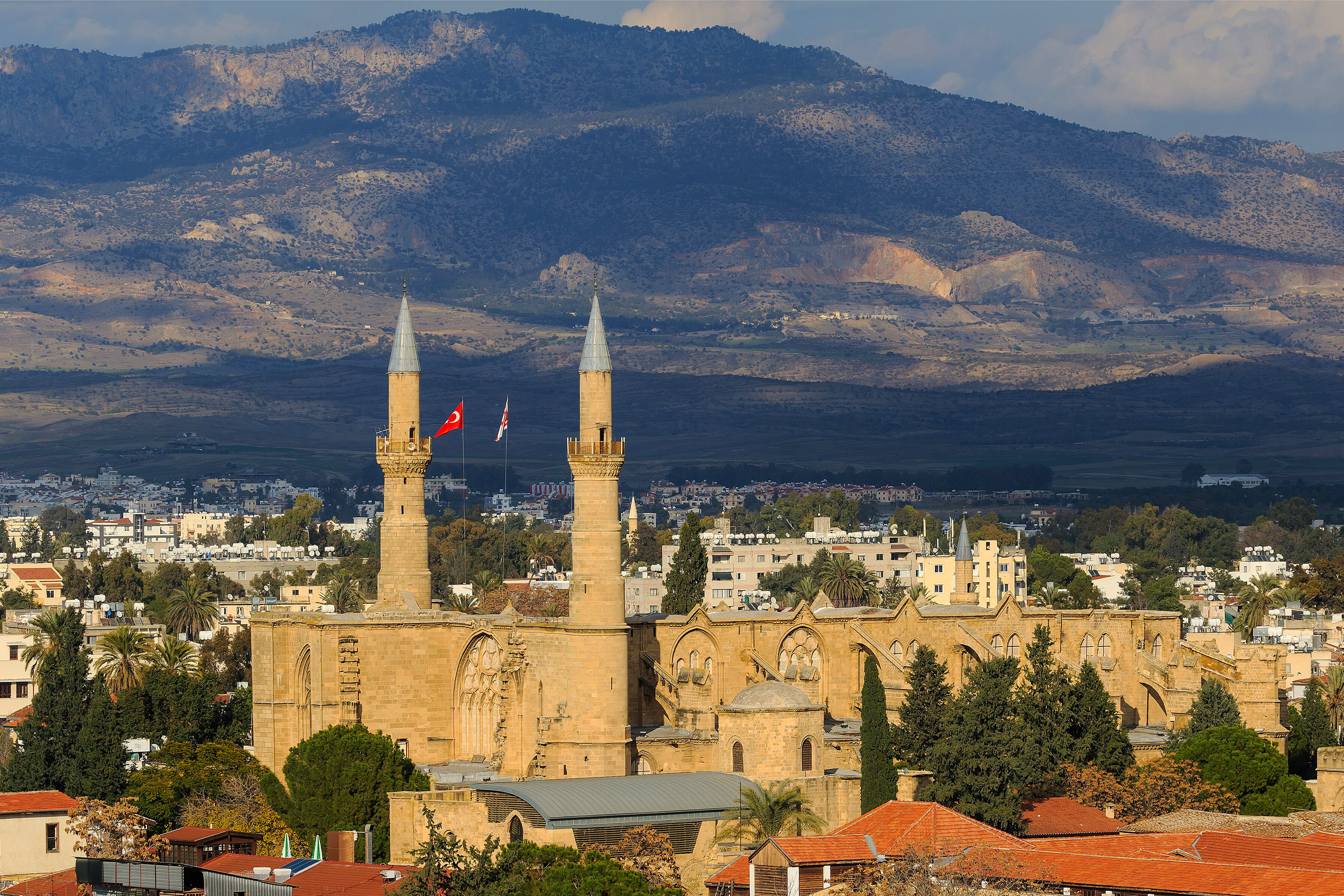
St. Sophia Cathedral, now called Selimiye Mosque, was built in the 13th century. It was converted into a mosque in 1570 after the Ottoman conquest of Cyprus. The building measures 66 by 21 meters inside and can hold about 2,500 worshippers. It was the coronation church for the Lusignan kings of Cyprus and later for the titular kings of Jerusalem and Armenia.
Historical Background
Construction of St. Sophia Cathedral began in 1209 under the Lusignan dynasty, a French royal family that ruled Cyprus after the Crusades. Its design was strongly inspired by Notre-Dame de Paris and other French cathedrals. French masons came to Cyprus to lead the work, while local craftsmen helped. The building took more than 150 years to finish, with the final parts completed around 1326.
For over 200 years, St. Sophia was the coronation church for the Lusignan kings. Kings of Cyprus were crowned here as rulers of Jerusalem, even though Jerusalem was no longer under their control. This made the cathedral one of the most important churches politically in the Crusader world.
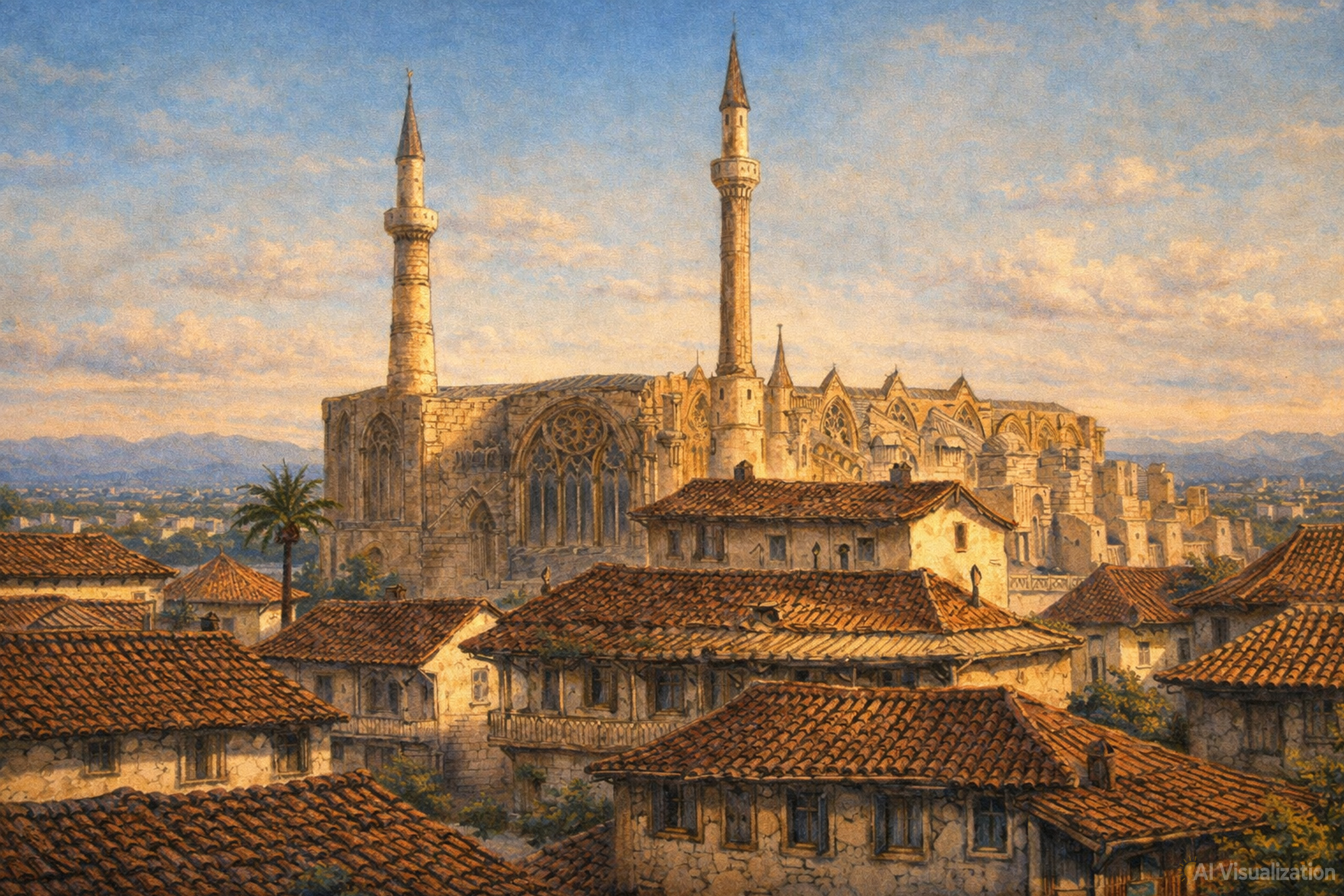
During the Ottoman siege of Nicosia in 1570, the cathedral became a shelter for many residents. When the city fell on September 9, 1570, after a 50-day siege, the Bishop of Paphos gave the last Christian sermon, asking for God’s help. Ottoman soldiers then entered the cathedral, broke down the doors, and killed the bishop and others who had taken refuge inside.
The building was converted into a mosque immediately. Ottoman forces removed Christian furnishings, decorations, choir seats, and religious images. Tombs and statues were defaced to remove symbols of Lusignan rule. The interior was cleaned for the first Friday prayer, which was held on September 15, 1570, attended by Ottoman commander Lala Mustafa Pasha.
In the same year, two minarets were added to the unfinished bell towers on the western side. Islamic features, including the mihrab (prayer niche) and minbar (pulpit), were installed. The first imam was Moravizade Ahmet Efendi from the Morea province. A tradition began where all imams would climb the minbar before Friday prayers while leaning on a sword used during the conquest, symbolizing the city’s capture.
The mosque was first called Hagia Sophia, keeping the dedication to Holy Wisdom. On August 13, 1954, the Mufti of Cyprus officially renamed it Selimiye Mosque, in honor of Sultan Selim II, who ruled the Ottoman Empire when Cyprus was conquered.
The 1491 Earthquake and Venetian Repairs
The 1491 Cyprus earthquake badly damaged the eastern part of the cathedral. A pilgrim visiting at the time wrote that much of the choir had collapsed, the chapel behind it was destroyed, and a tomb believed to belong to Hugh III was damaged. The earthquake exposed the king’s body in royal clothing along with golden relics, which the Venetians later removed.
The Venetian Senate ordered major repairs and set up a special commission. The archbishop had to pay 250 ducats each year to fund the work. The restoration was extensive and careful. By 1507, Pierre Mésenge noted that although the cathedral had been “totally demolished” 20 or 22 years earlier, it now looked very beautiful.
When the Venetians built their defensive walls around Nicosia in the 1560s, St. Sophia Cathedral was at the center of the new city. This placement followed medieval European planning, where a cathedral usually marked the heart of a town.
Architectural Features
The cathedral is a clear example of French Gothic architecture brought to the eastern Mediterranean. Its western front has three pointed-arch doors, decorated with sculptures of kings, prophets, apostles, and bishops.
The large main door and the carved stone window above it show excellent Gothic craftsmanship. Four columns at the front were said to come from the ancient ruins of Salamis.
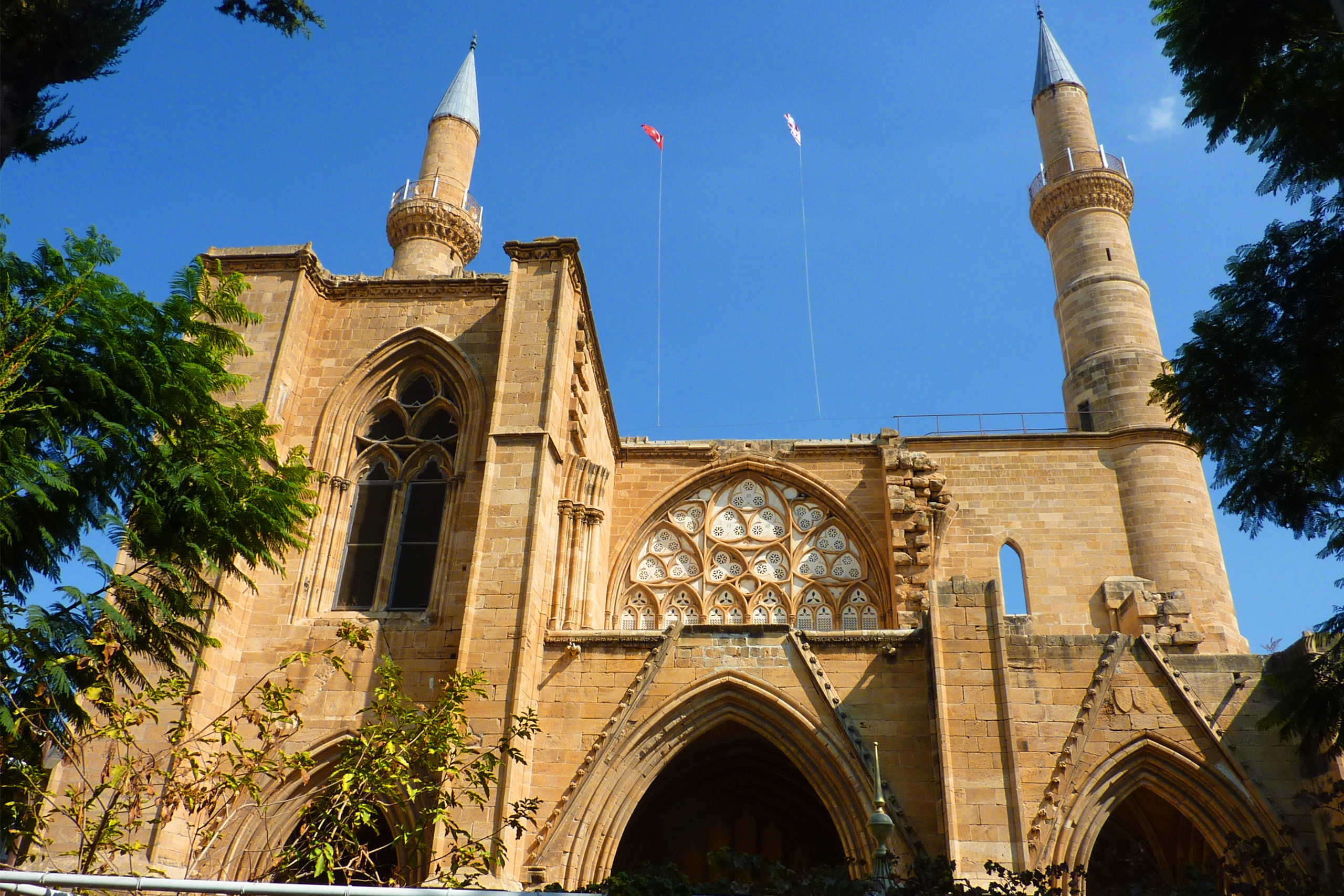
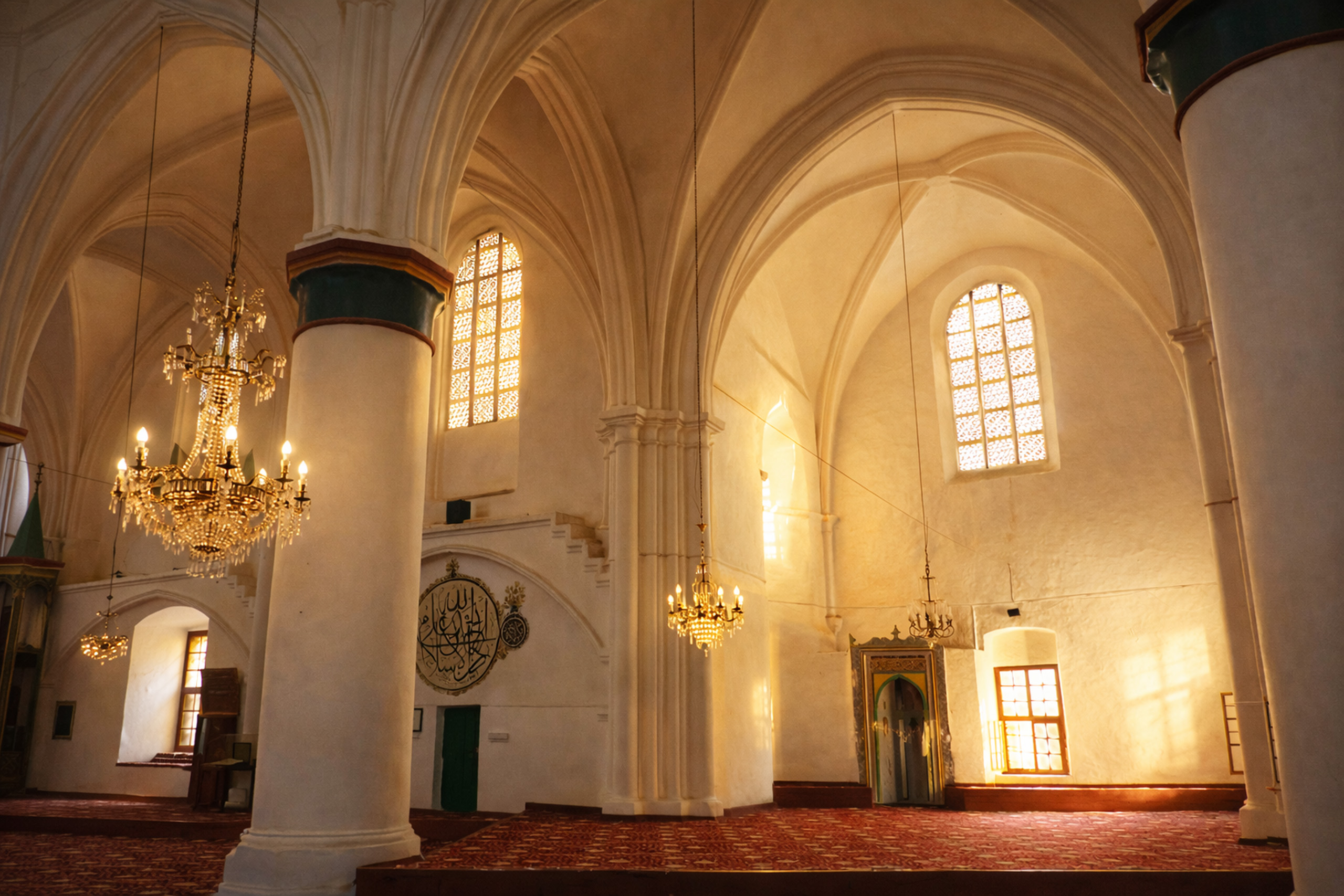
Inside, the cathedral has three aisles divided by six sections, with side chapels dedicated to different saints. The north chapel honors St. Nicholas, while the south chapels are for the Virgin Mary and St. Thomas Aquinas.
The choir has a surrounding walkway similar to Notre-Dame de Paris, though it does not have radiating apse chapels. The transepts include chapels at the same height as the aisles, following the design of Poitiers Cathedral.
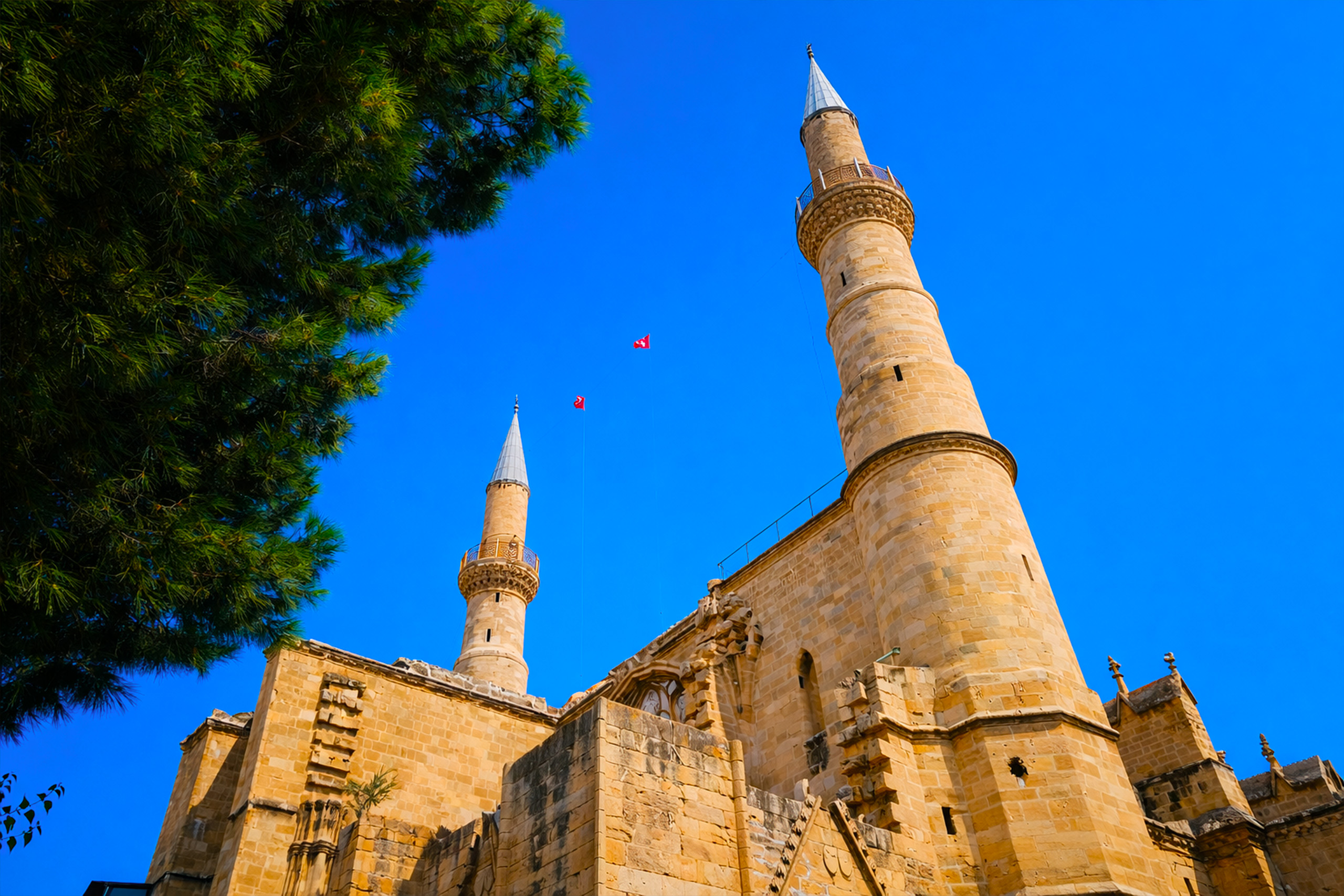
The building was made from Kyrenia limestone, giving it a pale golden color. Gothic arches, ribbed vaults, and pointed windows are still intact, creating a strong contrast with the Islamic features added later. The two 50-meter-high minarets, built in Ottoman style, rise above the unfinished bell towers and form the building’s most recognizable shape.
Modern Conservation Efforts
The building went through major restoration in the 2020s, which took about five years. The work focused on fixing the structure, repairing materials, and conserving the building.
Experts in architecture and conservation were consulted regularly to make sure the work followed international standards, especially the Venice Charter. In 2019–2020, non-invasive surveys were done using georadar, 3D electrical resistivity, and seismic tomography to check the ground, foundations, and hidden weaknesses in the structure.
In 2021, structural analysis and 3D digital modeling were done to see how the building would behave in case of an earthquake, ensuring that any work would be necessary and safe.
In 2023, structural reinforcement was carried out. Stainless steel rods and anchors were added to key walls, and the roof trusses and masonry were strengthened. The restoration was managed by Turkish Cypriot authorities with international oversight, reflecting the mosque’s importance as cultural heritage.
Visiting Selimiye Mosque
The mosque is in central Nicosia, about a 10-minute walk from the Ledra Street checkpoint. Visitors from Nicosia can cross the Green Line with a passport or EU ID card. The building is open every day, though visiting hours change around the five daily prayer times.
Entry is free, but visitors should follow Islamic rules. Shoes must be removed before entering. Women should dress modestly and cover their hair with a scarf, which is available at the entrance if needed. Photography is allowed, but flash should not be used during prayers. Visitors should be quiet and avoid entering areas blocked off for prayer.
The area around the mosque has been renovated recently. There are authentic restaurants, antique shops, and cultural venues nearby, making it popular with both tourists and locals. Büyük Han, the restored Ottoman caravanserai, is just a few steps away, and Arasta Street leads through a traditional market with spices, textiles, and local crafts.
A Monument to Cultural Transformation
St. Sophia Cathedral is important because it shows how a building can survive big political and religious changes. Over its 800-year history, it has served Latin Christianity, Orthodox Christianity (if an earlier church existed), and Islam. Each period left its mark without completely removing what came before.
The cathedral-turned-mosque shows continuity through change. The Lusignan kings built it to show Catholic authority in the eastern Mediterranean. The Ottomans converted it for Islamic worship. Today, modern Cyprus preserves it as part of the island’s shared history. This layered story makes the building more important than if it had stayed only a cathedral or only a mosque.