Panagia Chrysopolitissa stands as one of the most significant early Christian sites in Cyprus. This archaeological complex in Kato Paphos preserves the remains of the largest Byzantine basilica ever built on the island, along with one of Christianity’s most powerful symbols, St. Paul’s Pillar.
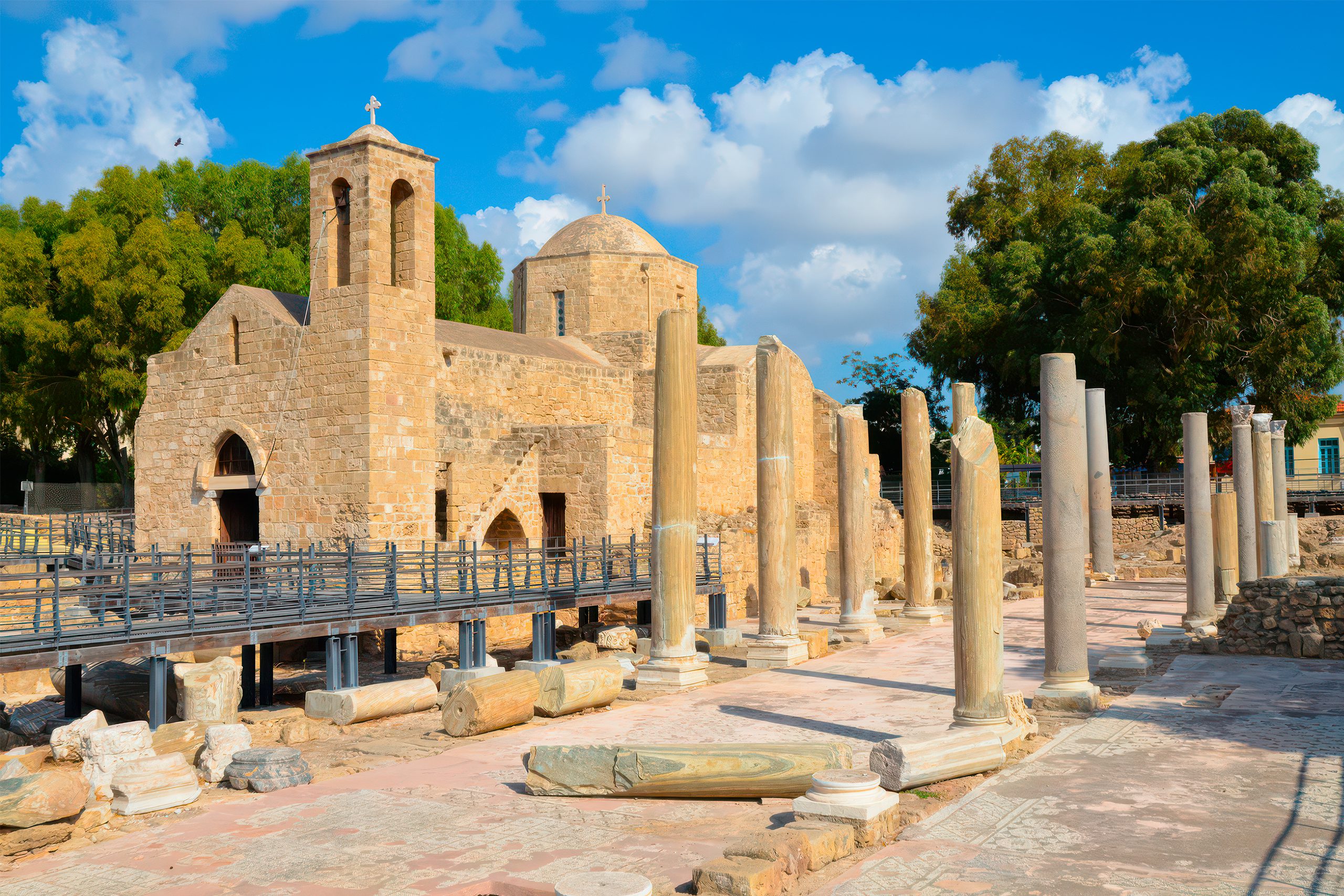
The Chrysopolitissa site brings together multiple layers of Christian history in one location. The complex includes the ruins of a massive 4th-century Byzantine basilica covering approximately 1,600 square meters, the remains of a 13th-century Franciscan Gothic church, the active stone church of Agia Kyriaki built around 1500 AD, and the famous marble pillar where St. Paul was reportedly flogged. The site combines active worship spaces with archaeological preservation, creating a unique blend of past and present.
Historical Background
According to Christian tradition and the Acts of the Apostles, St. Paul visited Cyprus around 45 AD during his first missionary journey with Barnabas and John Mark. The trio arrived to preach Christianity in an empire where the new faith faced persecution. In Paphos, Paul encountered resistance from a false prophet and faced the Roman governor Sergius Paulus.
Tradition states that Paul was tied to a marble column and received 39 lashes for spreading Christianity. The punishment used a special whip with 13 heads attached to a single handle, so each strike delivered 13 lashes. Paul endured three strikes before falling to his knees, receiving the total of 39 lashes. This event had a remarkable outcome. Rather than deterring the governor, Paul’s endurance and conviction during the flogging reportedly led Sergius Paulus to convert to Christianity, making him one of the first Roman officials to embrace the new faith.
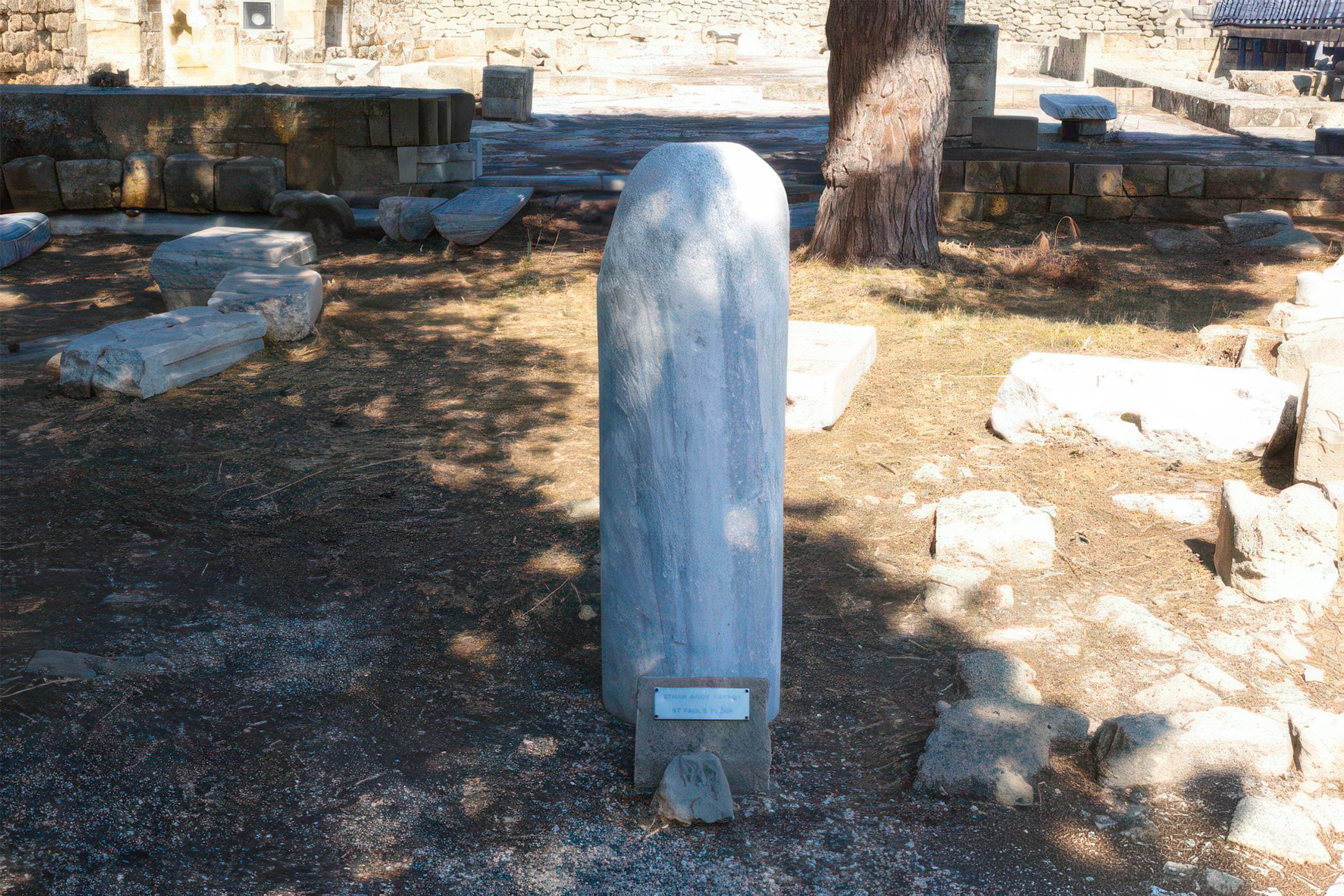
The white marble pillar where this took place stands 1.7 meters high and remains one of the most visited Christian pilgrimage sites in Cyprus. While the Acts of the Apostles mentions Paul’s time in Paphos and the conversion of Sergius Paulus, it does not specifically describe the flogging or mention the pillar. The tradition connecting this particular column to St. Paul’s punishment developed over centuries of Christian worship at the site.
Building the Largest Church in Cyprus
Construction of the original Chrysopolitissa Basilica began in the late 4th century AD, shortly after Christianity became the official religion of the Byzantine Empire. The builders chose this site deliberately, possibly because early Christians had already been worshipping here since the apostolic age. Some sources suggest a small basilica existed on this spot as early as 45 AD, built by St. Paul and St. Barnabas themselves.
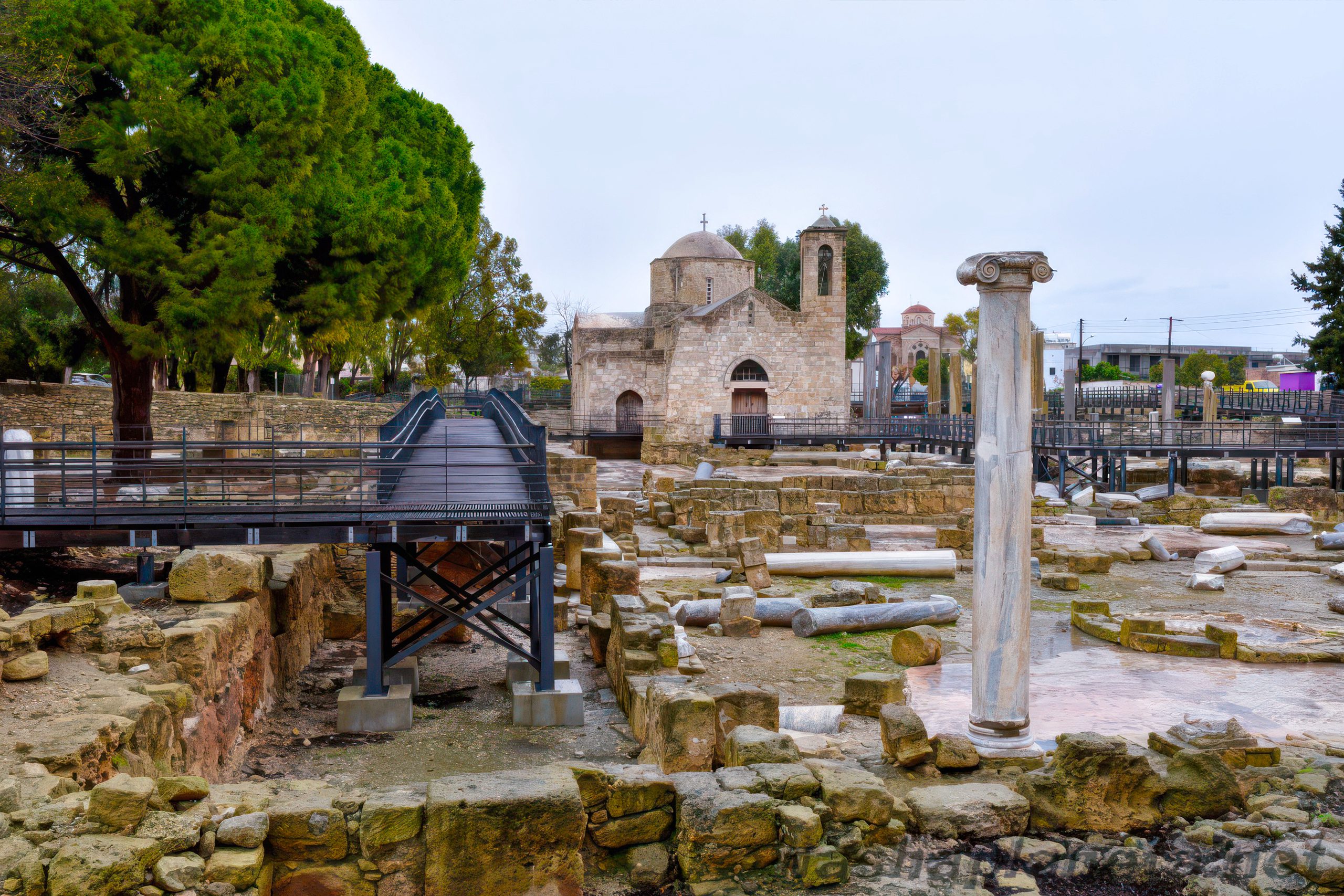
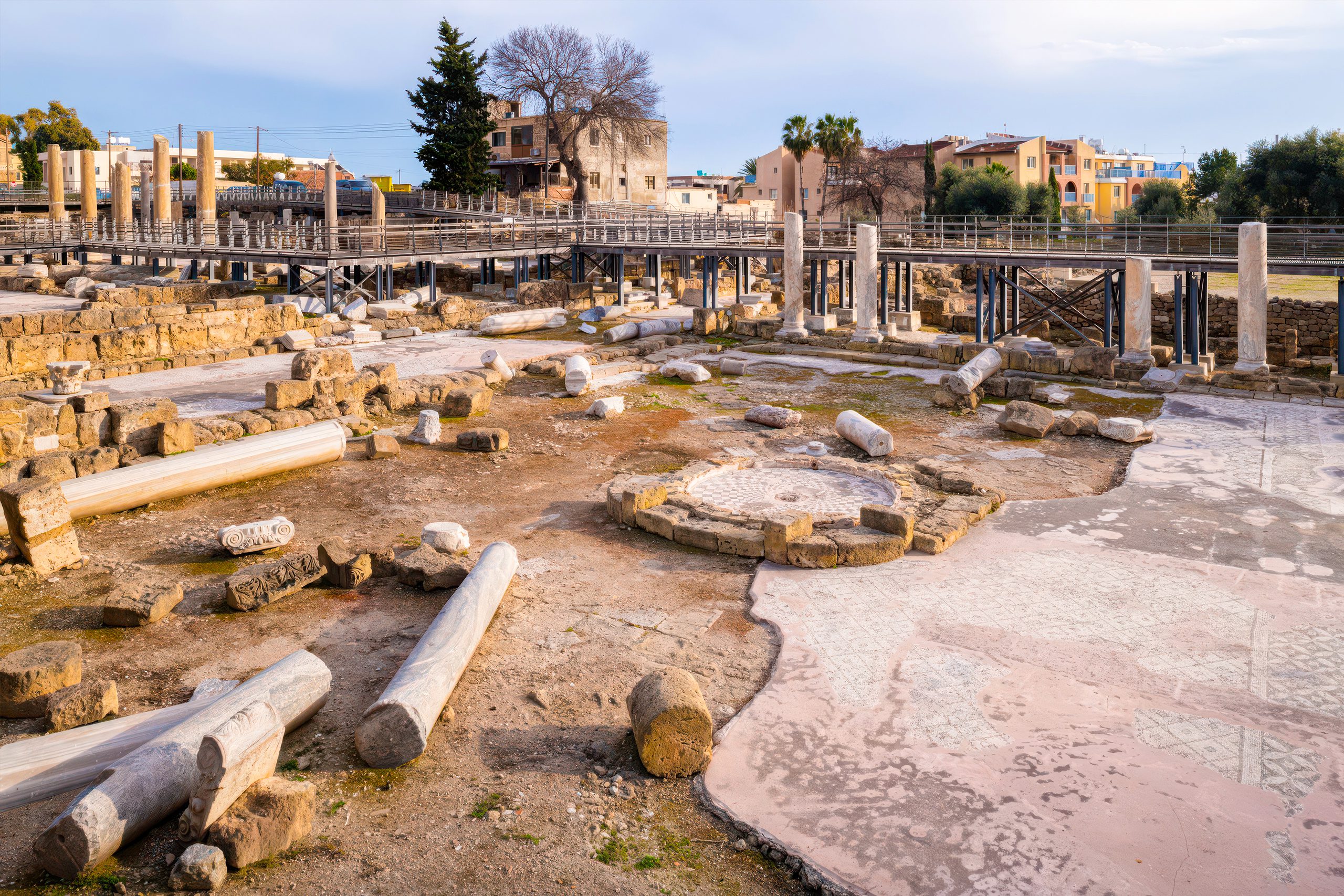
The basilica’s scale demonstrated the growing power and confidence of Christianity in Cyprus. The original structure featured seven aisles separated by six rows of columns, making it one of the most ambitious church constructions of its time. Four massive granite columns, each standing 7.15 meters tall and nearly one meter in diameter, supported the central sanctuary. These columns were topped with beautifully carved Corinthian capitals that showcased the artistic skills of Byzantine craftsmen.
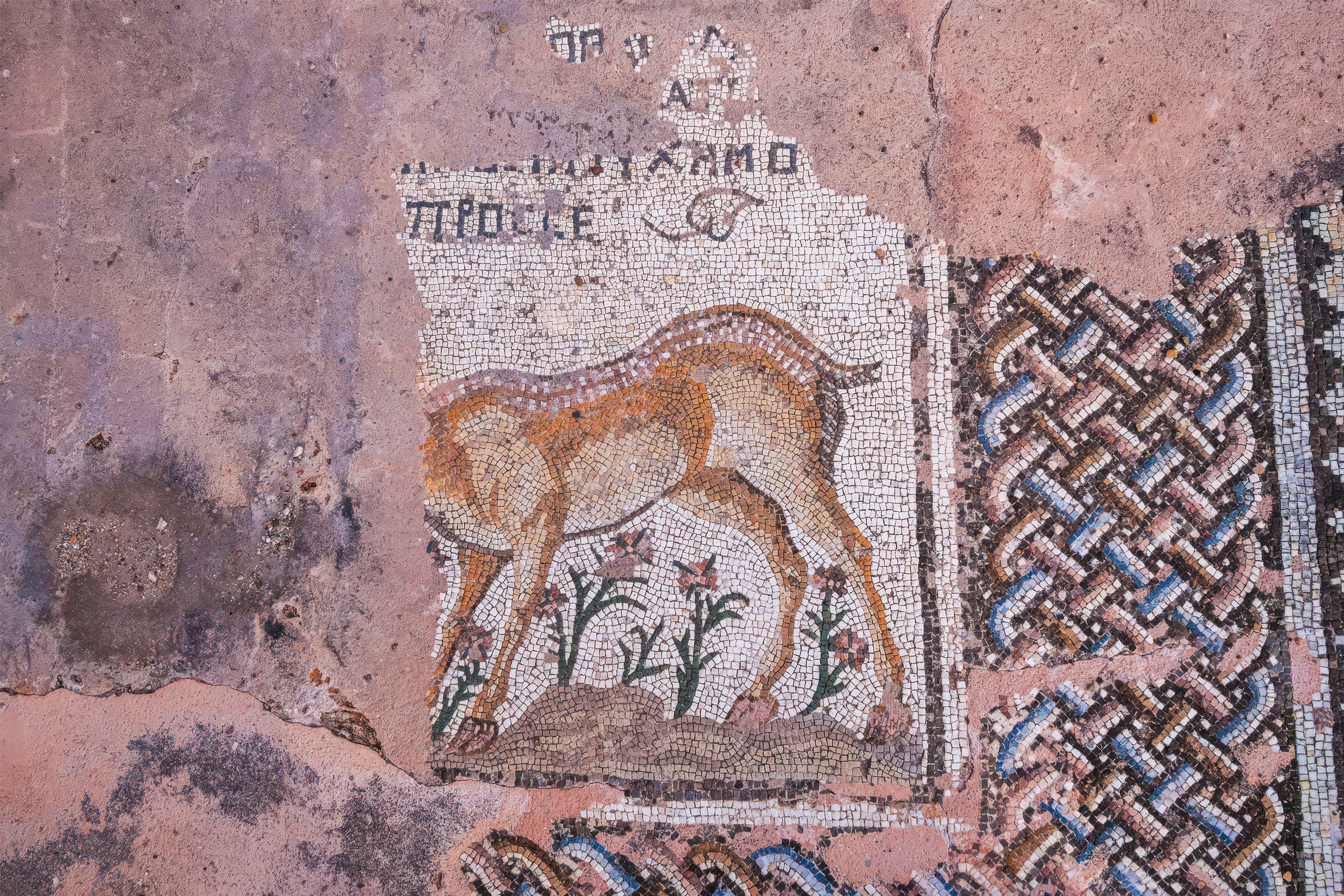
The floor of the entire basilica was covered with intricate mosaics featuring geometric patterns and Christian symbols. Three unique figural scenes in the central aisle depicted Christian allegories drawn from the New Testament and Psalms. These mosaics used artistic techniques borrowed from pagan traditions but applied them to Christian themes, creating a visual bridge between the classical and Christian worlds.
Adjacent to the basilica, a two-story building served as the episcopal residence. As Chrysopolitissa functioned as an episcopal church, this attached palace housed the Bishop of Paphos, underscoring the building’s administrative importance within the church hierarchy. An atrium with a circular fountain and four surrounding porticoes provided a formal entrance to the complex from a stone-paved street to the west.
Medieval Churches Rise on the Ruins
After the destruction of the original basilica, Christians returned to the site and built a smaller Byzantine church during the 11th century. This structure used some of the foundations and materials from the earlier building but operated on a much reduced scale. The Byzantine church marked the site’s return to active worship after centuries of abandonment.
During the Frankish Lusignan period, a Gothic church was constructed around 1300 AD to the north of the basilica ruins. This church belonged to a Franciscan monastery and represented the Catholic presence in Cyprus under Latin rule. The Gothic structure featured three aisles divided by two rows of rectangular pillars and included semi-circular apses. The church operated until around 1600 AD, when it fell into ruin during the early Ottoman period and was gradually abandoned.
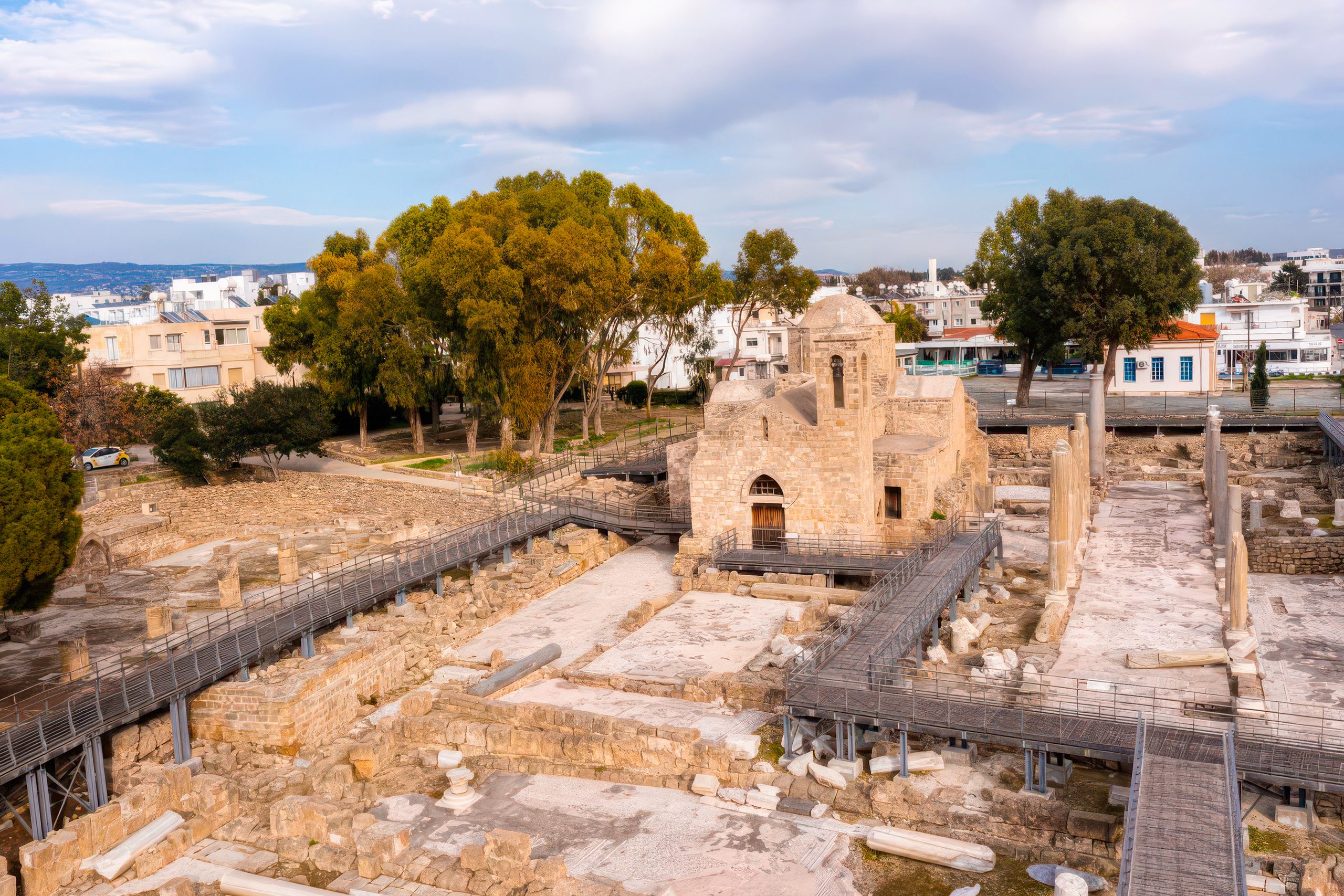
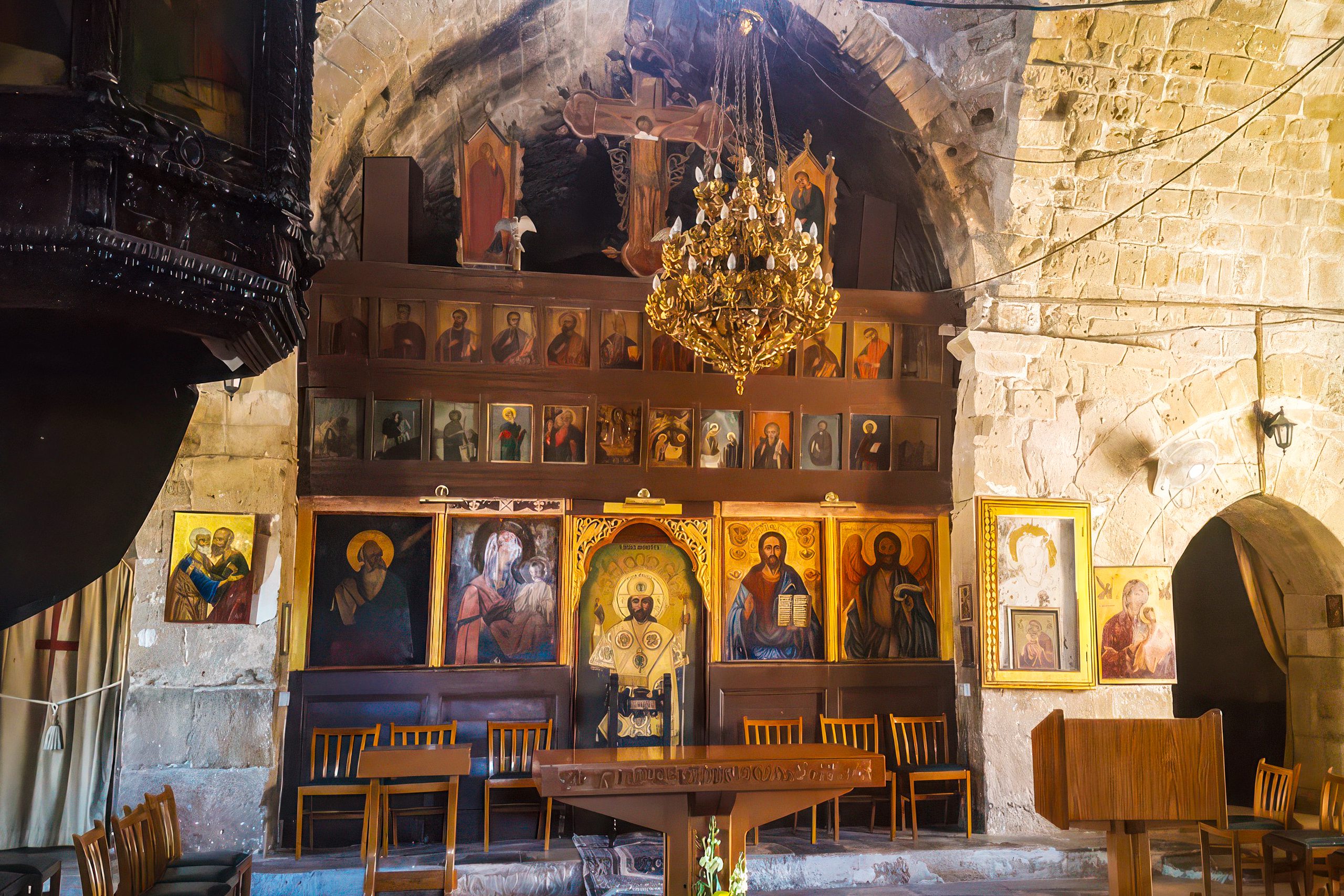
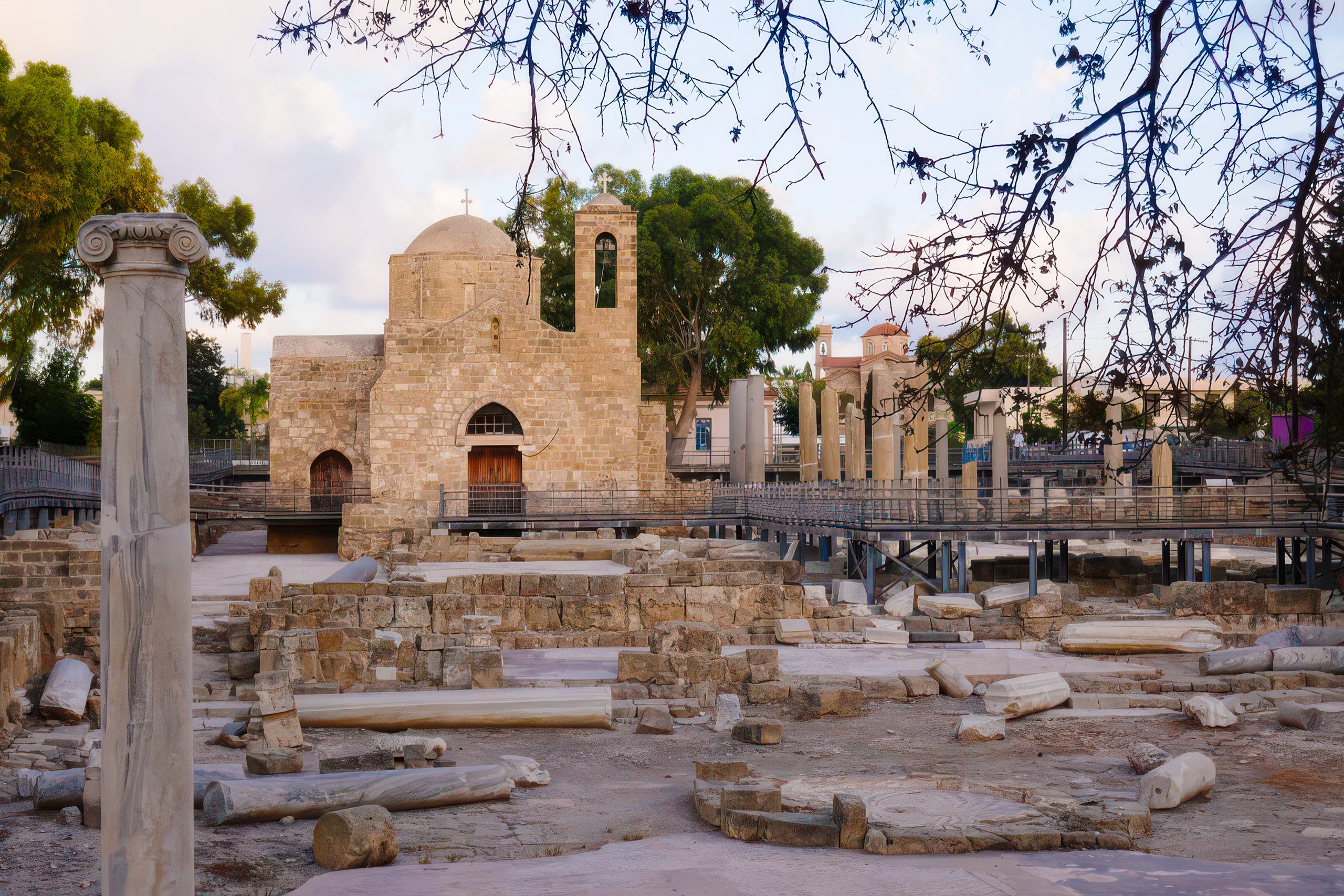
The current church of Agia Kyriaki was built around 1500 AD, during the final years of Venetian control over Cyprus. Constructed of stone, this modest building sits on some of the foundations of the earlier Byzantine church. Unlike the massive basilica that once dominated the site, Agia Kyriaki serves as a simple parish church. The building has received many additions and improvements over the past 500 years but maintains its basic medieval character.
Architectural Details
The excavated remains reveal remarkable construction quality and artistic achievement. Marble columns with Corinthian capitals still stand among the ruins, their carved details visible despite centuries of exposure. The mosaic floors, though fragmentary, display sophisticated geometric patterns and Christian imagery. Beetles, vine leaves, and crosses appear in the decorative schemes alongside more elaborate allegorical scenes.
The elevated wooden walkways installed by modern archaeological authorities allow visitors to observe the mosaics and architectural elements without damaging them. These pathways provide different viewing angles and perspectives on the site’s various construction phases. The contrast between the ruined ancient basilica and the intact medieval church of Agia Kyriaki creates a powerful visual representation of historical continuity and change.
Medieval-Ottoman baths from the Roman and Byzantine periods occupy the northern part of the complex. These baths combine architectural features from Roman steam baths with Byzantine, Arabic, and Ottoman Turkish bathing traditions. Like their Roman predecessors, they consist of a series of cold, warm, and hot rooms through which bathers passed successively.
Why Chrysopolitissa Remains Important
The basilica complex represents Christianity’s deep roots in Cyprus. The tradition connecting the site to St. Paul’s missionary work places it at the very beginning of the Christian story on the island. The massive scale of the 4th-century basilica demonstrates how quickly and powerfully Christianity established itself after becoming the empire’s official religion.
The site also illustrates the forces that shaped Cypriot history: Byzantine religious authority, Arab invasions, medieval Crusader kingdoms, Venetian rule, and Ottoman conquest. Each period left its mark in stone and mortar, creating a physical timeline of the island’s past. The survival of these remains through earthquakes, raids, abandonment, and rebuilding makes Chrysopolitissa a testament to the enduring importance of this particular ground.
For Christian pilgrims, St. Paul’s Pillar connects them directly to apostolic times and the price early believers paid for their faith. The tradition states that chips from the pillar can cure believers’ ailments, though removing pieces is now forbidden to preserve the monument. The pillar’s religious significance brings thousands of Christian visitors annually, particularly from Orthodox and Catholic communities.
The architectural and artistic achievements preserved in the ruins demonstrate Byzantine craftsmanship at its height. The mosaics, marble work, and monumental construction provide evidence of the resources and skills the early church commanded. The blend of classical artistic traditions with Christian themes visible in the mosaics shows how the new religion adapted and transformed existing cultural forms.
Visiting the Archaeological Complex Today
The Chrysopolitissa complex is open to visitors year-round with free admission. Summer hours run from 8:30 AM to 7:30 PM, while winter hours are 8:30 AM to 5:00 PM. The site occupies central Kato Paphos, about 500 meters from the harbor and easily reachable on foot from most tourist accommodations. The entrance lies on a small side road running parallel to Apostolou Pavlou Avenue, the main road connecting Kato Paphos with Paphos town.
Cyprus’s Connection to Early Christianity
Chrysopolitissa Basilica reminds visitors that Cyprus played a crucial role in Christianity’s spread beyond Palestine. St. Paul chose Cyprus for his first missionary journey, recognizing the island’s strategic position in the eastern Mediterranean. The conversion of a Roman governor on Cypriot soil showed that Christianity could win over the imperial elite, not just common people.
The massive basilica built three centuries after Paul’s visit proved that his mission succeeded beyond measure. By the 4th century, Christianity dominated Cyprus so completely that the island could support one of the largest churches in the eastern empire. The ruins standing today represent both the faith of those early believers and the architectural ambition of their successors who built monuments to glorify their God and honor the apostles who brought them Christianity.