Explore Cyprus with Our Interactive Map

Explore our top stories and discover ideas worth your time.

Traditional Songs of Cyprus

Traditional Songs of Cyprus

Traditional songs in Cyprus are not preserved in glass cases or frozen in formal performances. They live in memory, in village squares, in family celebrations, and in quiet moments where voices carry stories across generations. Long before recordings and concert halls, music on the island existed as a shared language, passed from person to person, shaped by experience, and reshaped by time. To listen to these songs is to hear how ordinary Cypriots worked, loved, struggled, and remembered. spotify-com Cyprus, as an island at the crossroads of continents, has always absorbed influences without losing its own identity. Its traditional music reflects centuries of encounters, migrations, and coexistence. Yet beneath the layers of history, the songs remain deeply rooted in everyday life. An Island That Never Sang Alone Cyprus has always been a meeting point of cultures and empires. Byzantines, Franks, Venetians, Ottomans, and British administrators each left traces on the island’s social fabric, and those traces found their way into music. Rather than erasing local traditions, each period added new textures, melodic structures, and storytelling styles. anassa-com Eastern modal systems blended with Western narrative forms. Sacred chant influenced secular melodies, while village storytelling shaped poetic lyrics. Over time, this layering produced a musical identity that feels familiar to multiple cultures yet remains unmistakably Cypriot. The songs reflect not a single…

Read more

Omodos – Traditional Cypriot Village and Monastery

Omodos – Traditional Cypriot Village and Monastery

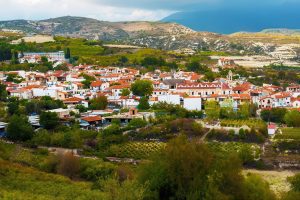
Omodos is a historic mountain village in Cyprus’s Troodos range, known for its Byzantine monastery, traditional architecture, and wine-making heritage. Located 42 kilometers northwest of Limassol at an elevation of 800 meters, the village lies within the Krasochoria district, the traditional wine-producing region of Cyprus. Its location in this wine heartland has shaped the local economy and identity for centuries. The village centers around a large cobblestone square, possibly the largest in Cyprus at 3,000 square meters, dating back to 1910. Stone houses with red-tiled roofs, wooden balconies, and flower-filled courtyards line narrow streets that wind through the settlement. The architecture reflects a careful balance between preservation and modern use, with many traditional homes now serving as guesthouses, wine cellars, and small museums. globeguide-ca Historical Foundation According to local legend, the village formed around a miraculous discovery. Residents from the neighboring villages of Ano and Kato Koupetra, which no longer exist, observed a mysterious fire appearing in the bushes at night. When they investigated at dawn, they found no trace of fire. After this event repeated over several nights, they excavated the site and uncovered a small cave that contained a wooden cross. A chapel was built above the cave to house the sacred relic, and this structure became the foundation of the Monastery of the Cross. orthphoto-net The monastery…

Read more
Football and Sports Culture in Cyprus

Football and Sports Culture in Cyprus

Football dominates the sporting landscape of Cyprus, but the island nation embraces a diverse athletic culture that extends far beyond the pitch. From passionate club rivalries to individual Olympic achievements, sports unite communities across this Mediterranean island of 1.14 million residents. ipla.pluscdn-pl The British introduced football to Cyprus in the early 20th century, and locals embraced it with enthusiasm. By September 1934, the Cyprus Football Association was formed to regulate what had become the island's favorite sport. The organization joined FIFA in 1948 and UEFA in 1962, officially connecting Cypriot football to the international stage. The Cypriot First Division serves as the top tier of the country's football league system, with 14 teams currently competing in the 2025-26 season. Teams play 26 matches in the first round against each other, twice at home and away. The league then splits into two groups for the second round. The top six teams compete for the championship and European qualification spots, while the bottom eight fight to avoid relegation. APOEL Nicosia stands as the most successful club in Cypriot football history, holding 29 national championships and 21 cup titles. The club made history in the 2011-12 season when they became the first and only Cypriot team to reach the Champions League quarter-finals. APOEL won their group that included Porto, Shakhtar Donetsk, and Zenit…

Read more