Explore Cyprus with Our Interactive Map

Explore our top stories and discover ideas worth your time.

Teucer of Salamis

Teucer of Salamis

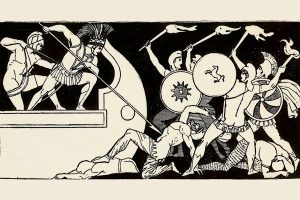
Teucer of Salamis was a legendary Greek hero from the Trojan War, famed as a skilled archer and half-brother to the mighty Ajax. Banished from his homeland after the war, he journeyed to Cyprus under divine guidance and founded the ancient city of Salamis, naming it after his lost island home. His tale of exile, resilience, and renewal weaves into Cyprus's cultural fabric, turning personal tragedy into a founding myth that still inspires thoughts on identity and fresh starts. The Legendary Archer Who Bridged Worlds Think of Teucer as more than just a side character in epic tales - he's a bridge between the chaos of war and the hope of new beginnings. In Greek mythology, he's the son of King Telamon of Salamis Island and Hesione, a Trojan princess captured during a raid on Troy long before the famous war. This mixed heritage made him a natural outsider: Greek by upbringing but with Trojan blood, nephew to King Priam and cousin to Hector and Paris. As an archer rather than a frontline brute, Teucer embodied precision and strategy, fighting from behind his brother's massive shield. But his real legacy lies in Cyprus, where he didn't conquer but created, founding Salamis as a haven for exiles like himself. It's a story that captures the island's essence - a melting pot…

Read more
Cyprus Rock Rose

Cyprus Rock Rose

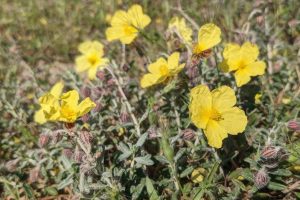
Springtime in Cyprus brings a splash of sunshine to rocky hills with Cyprus Rock-rose Helianthemum obtusifolium, a wildflower that's like a mini sunrose hugging the ground. This tough little plant, found only on the island, turns dry slopes into cheerful displays. But why does it follow the sun, and what ancient stories hide in its petals? Just What Is This Sunny Cypriot Native? Helianthemum obtusifolium is a small, shrub-like wildflower from the rockrose family, the kind of plants that love sunny, dry spots around the Mediterranean. It's a perennial that pops up year after year, adding bright yellow touches to Cyprus's wild landscapes without needing much care. Roots in Cyprus's Ancient Earth and Botanical Tales Millions of years ago, as ancient seas dried up and tectonic shifts shaped Cyprus's rocky hills, plants like this one adapted to the island's isolation, evolving into unique species. First named in 1824 by French botanist Michel Félix Dunal, it draws from Greek words for "sun flower," reflecting how explorers in the 19th century uncovered Cyprus's floral secrets during Mediterranean expeditions. It's part of a broader story of how Cyprus, like a natural time capsule, preserved these gems from prehistoric times. A Fuzzy Bush with Crinkly Yellow Charms This low-growing plant reaches about 25-30 cm tall, with woody stems that spread out like a cozy…

Read more

Vouni Palace Reliefs

Vouni Palace Reliefs

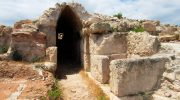
Vouni Palace was a Cypro-Classical hilltop complex built around 500 BC to control coastline movement and project authority over a contested landscape near Soli. Its architectural reliefs and capitals show Persian imperial symbols, including Hathor imagery, rosettes, and royal protection motifs, translated through local limestone carving and later blended with Greek spatial elements as political alignment shifted. This article explains why the site’s position mattered, how decoration was used to regulate experience inside the palace, and what the surviving fragments reveal about Cyprus negotiating empire without simply copying it. A Hilltop Built to Watch Soli Vouni was never meant to be subtle. Rising roughly 250 meters above sea level, the hill offers uninterrupted views across the coast and inland plains. From here, movement along the shoreline could be monitored with ease, especially the nearby territory of Soli, a city-kingdom that repeatedly resisted Persian authority. The location makes the palace’s purpose immediately clear. Vouni was built to watch, to assert presence, and to project authority outward. Comfort and urban life were secondary. This was a place where geography itself became part of governance. 500 BC: A Palace of Tension The palace was constructed around 500 BC, during a period when Cyprus stood at the intersection of competing powers. The island was under the control of the Achaemenid Persian Empire, yet many…

Read more