Explore Cyprus with Our Interactive Map

Explore our top stories and discover ideas worth your time.

Traditional Cypriot Rural Life

Traditional Cypriot Rural Life

Cyprus's rural economy developed around livestock farming for thousands of years before modern tourism. Goats, sheep, and donkeys formed the backbone of village life, providing milk, meat, wool, transportation, and labor. These animals adapted perfectly to the island's hot, dry climate and rocky terrain. Families raised small herds using methods passed through generations, with women typically managing milk production and cheese making while men handled field work and shepherding. The livestock fit naturally into Cyprus's agricultural cycle, grazing on wild plants during rainy months and consuming crop residues during summer. This system created self-sufficient communities where nearly every household maintained animals. Archaeological evidence shows Cypriots domesticated these species during the Aceramic Neolithic Period around 7000 BCE, making livestock farming one of the island's oldest continuous traditions. Ancient Origins of Cypriot Animal Husbandry Prehistoric settlers brought domesticated animals to Cyprus during the early Bronze Age around 2500 BCE. These people possessed navigation skills that allowed them to transport household goods and livestock across the Mediterranean. They introduced pigs, sheep, goats, and cattle to the island. Evidence from Bronze Age sites like Politiko Troullia shows communities consumed sheep, goat, cattle, and pig while also hunting fallow deer for ritual feasts. The indigenous Cyprus Fat-tailed sheep developed over millennia of breeding in local conditions. This triple-purpose breed produced milk, coarse wool, and meat,…

Read more
Rugged Coastlines of Cyprus

Rugged Coastlines of Cyprus

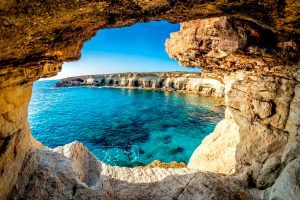
The rugged coastlines of Cyprus display dramatic geological contrasts where limestone cliffs plunge into turquoise Mediterranean waters, creating landscapes that combine raw natural beauty with mythological significance. The island's 648-kilometer coastline features two primary wild areas, the Akamas Peninsula in the northwest and Cape Greco in the southeast, both protected under the Natura 2000 European network. These areas showcase calcitic sandstones formed during glacial periods over the last 100,000 years, raised marine terraces representing ancient coastlines lifted by Cyprus's gradual tectonic uplift, and deep gorges carved through limestone bedrock by erosion. The Akamas covers 230 square kilometers with elevations reaching 419 meters, while Cape Greco's lower terrain emphasizes coastal features including sea caves, natural rock bridges, and vertical cliffs popular for cliff diving despite safety restrictions. Beyond their geological significance, these coastlines harbor rare endemic species including the Akamas tulip with only 200 plants worldwide and provide critical nesting sites for endangered Mediterranean monk seals and green sea turtles. Geological Formation and Ancient Uplift The coastline of Akamas is dominated by calcitic sandstones called Aiolianites formed during the glacial period in the last 100,000 years, with very characteristic raised marine terraces. Each terrace ledge represents an old coastline formed by wave action and raised as a result of Cyprus's tectonic uplift. This process continues today as the southern margin of…

Read more
Cyprus Folk Art Museum

Cyprus Folk Art Museum

The Cyprus Folk Art Museum preserves the island's traditional crafts in a building that once housed archbishops and witnessed moments that changed Cypriot history. The museum occupies the Old Archbishopric building on Archbishop Kyprianos Square in central Nicosia. This location places it beside St. John's Cathedral, the Byzantine Museum, the National Struggle Museum, and the current Archbishop's Palace. The building itself dates to the 15th century and features Gothic architecture with later additions. In the 13th century, the area was controlled by French rulers and served as a monastery for the Benedictine order. Later, the Order of St. John erected a church dedicated to their patron saint on the grounds. In 1218, Hugo I was buried in this church. When the Ottoman period ended in 1878, the Greek Orthodox Church took over the premises. Historical Background The Society of Cypriot Studies founded the museum in 1937. A group of pioneering scholars led by Constantinos Spyridakis established the society in 1936 with the goal of collecting and preserving Cypriot folk art. Adamantios Diamantis, a painter and art teacher who had studied at the Royal College of Art in London alongside Henry Moore and Barbara Hepworth, became the first director when the museum opened. The Society approached Archbishop Makarios III in the early 1960s after the seat of the Archbishop moved to…

Read more