Explore Cyprus with Our Interactive Map

Explore our top stories and discover ideas worth your time.

Othello Castle, Famagusta Medieval Fortress

Othello Castle, Famagusta Medieval Fortress

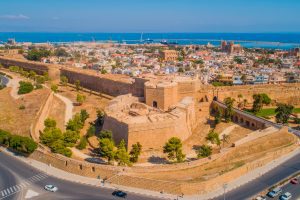
Othello Castle, also known as Othello's Tower, is a medieval fortress in Famagusta in in the Turkish-occupied part of Cyprus. The castle sits at the northeastern corner of the city's fortified walls, directly controlling access to the historic harbor. This location made it both the primary defensive stronghold and the main entrance to the walled city during the medieval period. The site had fortifications even before the current castle. A tower and defensive works were built here by the Prince of Tyre around 1310. The Lusignan rulers of Cyprus recognized the strategic importance of this harbor entrance and constructed a more substantial fortress in the 14th century. Originally called the Harbour Citadel, it served dual purposes as a military stronghold and possibly a residence for members of the royal family and their entourage. The castle's position allowed defenders to monitor all ship traffic entering or leaving Famagusta. In medieval times, a massive iron chain could be stretched across the harbor mouth to block enemy vessels. Modern ships continue to use the same harbor entrance that was active during Famagusta's golden age from 1300 to 1400. Historical Background When Cyprus was sold to the Republic of Venice in 1489, Famagusta became essentially a military base. The Venetians immediately recognized the need to upgrade the city's defenses against the threat of Ottoman…

Read more
Cyprus Youth Leadership Networks

Cyprus Youth Leadership Networks

In Cyprus, civic life is often learned long before formal politics, through scouts, youth clubs, cultural groups, and community projects where responsibility has real consequences. These organisations teach leadership through practice, from organising festivals and rehearsals to running clean-ups and coordinating volunteers, so accountability becomes a habit rather than an idea. This article explains the main youth pathways into civic participation, how they build trust across communities, and why these structures remain one of Cyprus’s most resilient sources of social cohesion. Civic learning outside the classroom Much of Cyprus's youth engagement happens through non-formal education. Unlike school curricula, these settings emphasise participation over instruction. Young people learn by organising events, managing groups, resolving disagreements, and working toward shared goals that have visible outcomes in their communities. Scout groups, youth clubs, and cultural associations function as practical training grounds. Leadership is learned by doing, whether that means coordinating a village festival, leading a patrol on a hike, or managing volunteers during a clean-up campaign. These experiences teach decision-making, accountability, and cooperation in ways that formal education rarely replicates. Scouting as a long-standing leadership pathway Scouting has existed in Cyprus for more than a century and remains one of the most structured systems for youth leadership development. Its model is built around gradual responsibility, where young members progress from participation to coordination…

Read more
Cavo Greco Sunrise Viewpoint, Cyprus

Cavo Greco Sunrise Viewpoint, Cyprus

The Cavo Greco sunrise viewpoint sits at the southeastern edge of Cyprus, positioned at 95 meters above sea level on a small limestone mountain within Cape Greco National Forest Park. This protected area spans 385 hectares between the resort towns of Ayia Napa and Protaras. The viewpoint marks the easternmost point of both the Republic of Cyprus and the European Union, offering unobstructed panoramas of the Mediterranean Sea, Famagusta Bay, and the surrounding coastline. Visitors come here primarily for the spectacular sunrise displays that occur daily, with the sun rising directly from the sea in vibrant colors that illuminate the limestone cliffs and turquoise waters below. Historical Background The limestone cliffs and formations seen today were created through a combination of tectonic activity and the erosive forces of the sea and wind over millions of years. The karst topography has produced numerous caves and natural arches throughout the area. The cape was known as Cape Pedalion in antiquity, and according to Strabo the trapezoidal hill lying above it was sacred to Aphrodite. Archaeological evidence shows the area has been inhabited since Neolithic times, with one of the oldest settlements in Cyprus discovered here in 1992. Cape Greco was designated as a National Forest Park in 1993 to preserve its unique ecosystems and prevent further degradation. Between 1910 and 1920, the…

Read more