Explore Cyprus with Our Interactive Map

Explore our top stories and discover ideas worth your time.

Ayia Napa Sea Caves

Ayia Napa Sea Caves

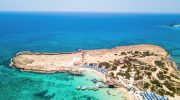
The Ayia Napa Sea Caves represent one of Cyprus's most photographed coastal features. Located just outside the resort town, these caves attract visitors year-round with their combination of geological beauty and recreational opportunities. The sea caves form part of the rugged coastline around Cape Greco National Forest Park, positioned between Ayia Napa and Protaras on the southeastern edge of Cyprus. The caves themselves are carved into limestone cliffs that rise 6 to 12 meters above the sea. Some caves extend up to 80 meters into the rock. The area marks the western boundary of the 385-hectare Cape Greco National Forest Park, designated as protected land in 1993. Historical Background The formation of these caves demonstrates basic geological erosion over thousands of years. The cliffs consist of layered limestone, with each layer having different hardness levels. The middle layer is softer limestone that erodes more easily when waves crash against it repeatedly. The upper layer, made of harder rock, resists erosion better and creates a protective cap over the caves. This prevents collapse while the waves continue hollowing out the softer material underneath. The lowest layer, also harder, forms a natural platform or ledge several meters wide. Because the layers are not perfectly horizontal, parts of this ledge sit underwater while other sections remain dry. The irregular erosion patterns created by…

Read more
Sacred Rhythms of Cyprus

Sacred Rhythms of Cyprus

Religious celebrations in Cyprus are not confined to church interiors or specific dates. They shape the pace of the year, the movement of villages, and the shared memory of communities across the island. Rooted primarily in the traditions of the Orthodox Church, these celebrations blend formal liturgy with local customs, seasonal rhythms, and deeply human moments of gathering, mourning, and joy. To understand Cyprus is to understand how sacred time is lived here, not as an abstraction, but as part of everyday life. Time measured in faith, not months In Cyprus, time has long been understood through a sacred rhythm rather than a purely civil one. The Orthodox liturgical calendar does not simply mark holidays; it structures the year around cycles of preparation, anticipation, and renewal. Days begin at sunset rather than sunrise, and weeks unfold with specific spiritual themes attached to each day. This layered sense of time creates continuity. Even those who are not regular churchgoers often know when Lent begins, when Easter approaches, or when a village panigyri is near. Sacred time quietly runs alongside modern schedules, shaping habits and expectations without demanding constant attention. Easter as a season, not a single day Pascha, or Easter, is the emotional and spiritual centre of the Cypriot year. It is not experienced as a single celebration, but as a…

Read more
Cyprus Copper Tradition

Cyprus Copper Tradition

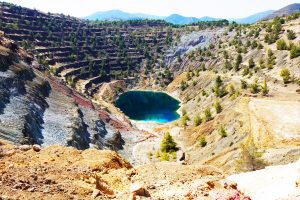
Natural Resources and Mythological Meaning In the ancient Mediterranean world, natural resources were rarely understood as mere economic assets; they were seen as signs of divine favor and expressions of cosmic order. Cyprus, renowned for its abundant copper deposits, became a central example of how material wealth could shape sacred identity. The island’s mineral resources played a decisive role in its early development, supporting trade, craftsmanship, and social organization. Over time, the prominence of copper in Cypriot life encouraged mythological interpretations that linked the island’s prosperity to divine blessing. The belief that valuable materials came from the generosity of the gods helped transform Cyprus into a land associated with sacred abundance. Copper mining on the island dates back to the Bronze Age, when the metal became essential for the production of tools, weapons, and ritual objects. Because survival and success depended on access to such materials, the communities that controlled copper sources gained economic and political influence. Yet in the symbolic imagination of the time, prosperity on this scale required explanation beyond human effort. Myths emerged that connected mineral wealth to divine presence, reinforcing the idea that Cyprus was specially favored in the cosmic order. Copper as a Sacred Material Metals in antiquity often carried symbolic meaning, and copper was no exception. Its reddish color and malleability associated it with…

Read more