Explore Cyprus with Our Interactive Map

Explore our top stories and discover ideas worth your time.

Vertical Cyprus Rising Landscapes

Vertical Cyprus Rising Landscapes

Most visitors meet Cyprus at sea level, through beaches and coastal towns. But the island's character is shaped just as much by what rises behind it. From volcanic peaks and forested ridges to monastery balconies and fire lookout stations, Cyprus's high ground offers a different kind of understanding. These elevated viewpoints are not simply scenic stops. They explain how the island was formed, how people survived, and how geography quietly directed history, belief, and daily life. This is Cyprus seen vertically, where altitude changes perspective. An island lifted from the sea Cyprus’s mountainous backbone exists because the island itself was pushed upward from the ancient Tethys Ocean. The Troodos Mountains are one of the world’s most complete examples of exposed oceanic crust, known as an ophiolite. What was once seabed now reaches nearly 2,000 metres above sea level, creating an interior landscape that feels unexpectedly vast for an island. This geological lift matters visually. Dark volcanic rock, steep valleys, and broad domed summits give the highlands a sense of scale that contrasts sharply with the coast. From many viewpoints, you can see both shores of Cyprus on a clear day, a reminder of how compact yet varied the island really is. The calm authority of the Troodos peaks At the centre of this vertical world stands Mount Olympus (Chionistra), the…

Read more
Best Villages to Visit in Cyprus

Best Villages to Visit in Cyprus

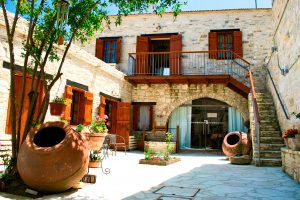
Cyprus villages offer something that coastal resorts cannot provide: the authentic rhythm of island life unchanged over centuries. Stone houses, narrow cobbled streets, old churches, local tavernas, and village squares where elderly men sip coffee define these settlements. Most sit within the Troodos mountain range or on its foothills, where cooler temperatures and fertile land shaped communities for millennia. Unlike sanitized tourist attractions, these villages remain lived in places where generations of the same families have stayed. Each settlement carries its own character, from lace making Lefkara to wine country Omodos to the perfectly preserved ghost village of Fikardou. A visit to even one of these places reveals more about Cyprus than a week spent on any beach. Lefkara and the lace that reached Leonardo da Vinci Lefkara divides into upper Lefkara and lower Lefkara, both offering stone architecture and peaceful streets on the southern slopes of the Troodos Mountains. The name combines the Greek words lefka meaning white and ori meaning hills. The village is internationally famous for lefkaritika, intricate handmade lace with patterns inspired by nature and environment. Local women sit outside their homes working these patterns using techniques passed through generations, a sight that has remained unchanged for centuries. Historical accounts claim Leonardo da Vinci visited Lefkara in 1481 to purchase a tablecloth for Milan Cathedral, though…

Read more
Ancient Soli A Hellenistic Coastal City

Ancient Soli A Hellenistic Coastal City

Soli was one of the ten ancient city kingdoms that ruled Cyprus from the 6th century BC until the Roman conquest. The city occupied an ideal location beside the Kambos River on Morphou Bay, with an acropolis on high ground and a lower town next to the harbor. Rich copper deposits lay just south of the city, good water flowed from nearby sources, and fertile soil stretched across the plains. These advantages made Soli prosperous for over a thousand years until Arab raiders destroyed it in the 7th century AD. Historical Background Several legends explain how Soli got its name. One Greek story claims the mythical Athenian hero Acamas founded the city after the Trojan War, accompanied by Phalerus. Another version tells of King Philocyprus, who ruled the nearby town of Aipeia around 580 BC. The famous Athenian lawmaker and philosopher Solon visited Cyprus during his travels and met the king. According to ancient sources, Solon noticed that Aipeia sat in a strong position on rough, elevated ground but suffered from poor access and cramped conditions. He persuaded Philocyprus to abandon the old site and move his capital down to the coastal plain, where there was more space, better water, and easier access to the harbor. Solon stayed to help plan and organize the new city. In gratitude, Philocyprus named…

Read more