Explore Cyprus with Our Interactive Map

Explore our top stories and discover ideas worth your time.

Buffavento Castle Cyprus

Buffavento Castle Cyprus

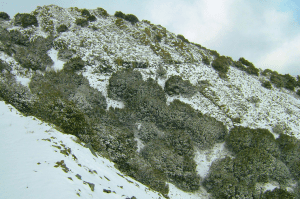
Buffavento Castle stands at 960 meters above sea level in the Kyrenia mountain range of Cyprus. This medieval fortress is the highest and least preserved of three Byzantine strongholds built along the mountains. The name comes from Italian and means "Defier of the Winds," a fitting description for a castle constantly exposed to mountain winds at this elevation. The castle sits between St. Hilarion Castle to the west and Kantara Castle to the east, forming a defensive line across the Kyrenia Mountains. All three castles are visible from each other, allowing them to pass signals and warnings. Buffavento guarded the mountain passage from Kythrea to the north coast, controlling movement between the coastal plain and the interior. The location provides views in every direction. Looking north across the Mediterranean Sea, visitors can see the Turkish coast approximately 65 kilometers away on clear days. To the south, the Mesaoria Plain stretches toward Nicosia. On exceptionally clear days, Famagusta to the east and the Troodos Mountains to the south are visible. The castle overlooks nearly half the island from its rocky peak. The steep cliffs surrounding the fortress made it naturally defensible. The north, east, and west sides are protected by sheer drops, with only the southern approach allowing access. Historical Background The exact construction date remains unknown, though most historians believe…

Read more
Deneia Necropolis Cyprus Bronze Age Site

Deneia Necropolis Cyprus Bronze Age Site

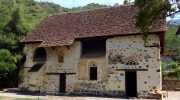
Just southeast of the modern village of Deneia in the Nicosia district lies one of Cyprus's most significant Bronze Age burial grounds. This ancient necropolis contains over 1,250 tombs that document nearly a thousand years of funerary practice, from approximately 2500 BCE through 1650 BCE, making it among the most extensively used cemeteries in prehistoric Cyprus. The Deneia necropolis represents an extraordinary concentration of chamber tombs carved into natural rock during the Early and Middle Bronze Age periods. Unlike many smaller cemeteries scattered across Cyprus that served individual villages, Deneia appears to have functioned as a regional burial ground that drew communities from a wider area. The tombs follow the standard Bronze Age design, with a dromos or entrance passage leading down to one or more roughly circular burial chambers. These chambers typically held multiple interments as families reopened tombs over generations to add new dead. Grave goods found at the site include red-polished pottery, copper tools and weapons, jewelry made from gold and precious stones, and clay figurines. Historical Background The people who used this cemetery lived during a critical transformation in Cypriot history. Around 2500 BCE, newcomers from Anatolia introduced new pottery styles and burial customs to Cyprus. These immigrants are identified by archaeologists as the Philia Culture, and they brought with them the knowledge to exploit Cyprus's…

Read more
Cyprus State Gallery of Contemporary Art

Cyprus State Gallery of Contemporary Art

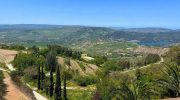
The State Gallery of Contemporary Art operates from two main locations in Nicosia as Cyprus's premier institution for modern and contemporary art. The original building sits at the corner of Stasinou Avenue and Kritis Street in a beautifully restored colonial-style structure.  The second branch, known as SPEL, opened to the public for the first time on January 31, 2019, following extensive renovations of a modernist building on Ammochostou Street near the historic Famagusta Gate. Both galleries house paintings and sculptures by 20th and 21st century Cypriot artists. The institution falls under the management of the Cultural Services of the Ministry of Education and Culture and is expected to form part of the planned Cyprus Museum of Contemporary Art, known as MOCA Cyprus. The gallery maintains archives of artists' biographical and bibliographical information, a slide archive, and a photo archive. Historical Background The SPEL building hosts contemporary artworks from the State Collection starting from the 1950s onwards, including works that employ non-conventional and new media. The collection documents the dramatic transformation of Cypriot art during the island's transition from British colonial rule to independence in 1960.  The 1950s and 1960s marked a critical period when Cypriot artists sought to align with international art movements while developing their own distinctive voice. Artists of this generation experimented with abstraction, incorporated traditional Cypriot motifs…

Read more