Explore Cyprus with Our Interactive Map

Explore our top stories and discover ideas worth your time.

The Soli Basilica Frescoes

The Soli Basilica Frescoes

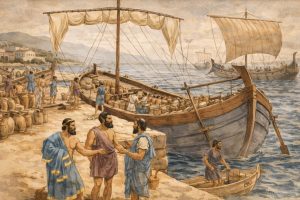
The Soli Episcopal Basilica preserves rare fragments of early Christian wall painting from a period when church imagery in Cyprus was still being invented rather than standardised. Painted above the site’s famous mosaics, the fresco remains show Roman decorative habits being adapted into a new visual language for worship, before later Byzantine rules became fixed. This article explains Soli’s rise as an ecclesiastical centre, what the surviving plaster fragments suggest about the original interior, and why the basilica’s destruction ended up preserving an important artistic transition. Trade, Farmland, Copper, Harbour Ancient Soli, also known as Soloi, occupied a strategic position near fertile farmland, copper-rich foothills, and a natural harbour. This combination sustained the city for centuries, from its legendary foundation in the Archaic period through its Roman peak and into the Christian era. By Late Antiquity, Soli was no longer just a trading hub. It had become an important ecclesiastical centre, serving the surrounding region as Christianity spread across Cyprus. The basilica that rose here in the 4th century was not a modest village church. It was one of the largest early Christian complexes on the island, reflecting both wealth and confidence during a period of profound cultural change. A Basilica Built on Confidence The Soli Episcopal Basilica went through multiple phases, mirroring the development of Christian worship itself. The…

Read more
Teaching Traditional Crafts in Cyprus Villages

Teaching Traditional Crafts in Cyprus Villages

Learn a craft even if you don't need to and if you get hungry, practice it." This old Cypriot folk saying reflects the pragmatic wisdom of village life where craftsmen held backup skills to supplement income during agricultural hardship. Not so long ago people living at Cyprus villages were either farmers or shepherds and at the same time practiced a craft. People had to be creative and multi-talented, able to supplement their income if they faced difficulties, and a craft always came in handy. They engaged in basket weaving, icon painting for rich churches and landlords, silversmithing, wood carving, ceramic and pottery making, mosaic making, embroidery, wine and Commandaria making, and many more. The Cyprus Handicraft Service System In 1975 the Ministry of Commerce, Industry and Tourism undertook the responsibility for the preservation of Cyprus Folk Art, its development and encouragement into modern cottage industry and handicrafts. Specialised members of staff made studies and started projects initially funded by the High Commission for Refugees with the main target of offering employment to refugees and other affected persons and in parallel, the long-term development of cottage industry and handicrafts. For the implementation of these goals the Cyprus Handicraft Service created the Handicraft Centre in Nicosia in 1979 with experimental workshops such as Embroidery, Weaving, Woodcarving, Pottery, Metalwork, Basketry and General Handicrafts,…

Read more
Mesaoria Plain, Cyprus

Mesaoria Plain, Cyprus

The Mesaoria Plain stretches 96 kilometres across central Cyprus between two mountain ranges. Mesaoria, meaning "between the mountains" in Greek, is a broad central plain that extends from Morphou Bay in the west to Famagusta Bay in the east. The Troodos Mountains rise to the south, while the Kyrenia Range forms a wall to the north. The plain covers approximately 1,000 square kilometres with elevations ranging from 100 metres on average up to 325 metres at its highest points. Nicosia, the capital of Cyprus, sits roughly in the centre of the plain along the Pedieos River. This positioning reflects centuries of strategic thinking, as the location provided access to both coasts. The plain contains dozens of villages and several major towns, making it the most densely populated region on the island despite its harsh summer climate and winter-dependent water supply. Historical Background Twenty million years ago, Cyprus existed as two separate islands corresponding to what would become the Kyrenia and Troodos mountain ranges. Approximately one million years ago, tectonic forces pushed up the land between these islands, creating the Mesaoria Plain and joining them into the single landmass known today as Cyprus. The Mediterranean Sea covered and exposed the plain multiple times as sea levels changed, but it has remained in its current form since the end of the Pleistocene…

Read more