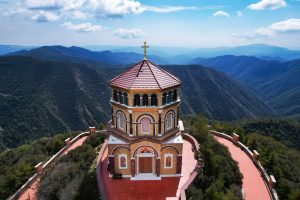
Church of Panagia Podithou
The Church of Panagia Podithou, located near the village of Galata in the Troodos Mountains of Cyprus, is one of the monuments included in the UNESCO World Heritage group known as the Painted Churches of the Troodos Region. Built in 1502, during the period of Venetian rule over Cyprus, the church represents a distinctive moment in the island’s artistic history when Byzantine traditions interacted with Western Renaissance influences. While the building maintains the architectural form typical of Cypriot mountain churches, its wall paintings reveal stylistic changes that reflect exposure to Italian artistic trends. The church stands as a visual document of cultural exchange in the eastern Mediterranean at a time when political authority had shifted but Orthodox religious identity remained strong. Under Venetian administration, Cyprus became more closely connected to Italian artistic currents, particularly those associated with the Renaissance. Venetian merchants, officials, and clergy moved between Cyprus and the Italian mainland, facilitating the circulation of ideas and artistic models. Despite these influences, Orthodox communities continued to commission church decoration rooted in Byzantine iconographic tradition. Panagia Podithou exemplifies this balance, preserving the theological framework of Orthodox art while incorporating stylistic features inspired by Western painting. The monument therefore illustrates how Cypriot artists and patrons negotiated cultural change without abandoning their spiritual heritage. Architectural Form and Mountain Adaptation Architecturally, Panagia Podithou follows…
Read more