Explore Cyprus with Our Interactive Map

Explore our top stories and discover ideas worth your time.

Cyprus Crossroads That Accumulated

Cyprus Crossroads That Accumulated

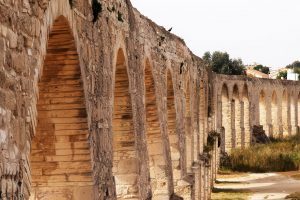
Cyprus is best understood as a layered island, where newcomers rarely erased what came before, and daily life absorbed languages, customs, and beliefs over centuries of close contact. Positioned between Europe, the Levant, and Anatolia, it became a crossroads early through trade, then accumulated Roman, Byzantine, Arab, Latin, Venetian, Ottoman, and British influences without turning into any single one of them. This article traces how those layers formed, where coexistence was practical rather than ideal, and why "Cypriot" identity still carries many histories at once. Ten Thousand Years of Settlement Human settlement in Cyprus stretches back more than ten thousand years. Long before empires arrived, early communities established farming villages and ritual spaces that tied life closely to land and seasons. These foundations mattered because when later cultures arrived, they did not start from nothing. As Cyprus entered the Bronze Age, copper transformed the island into a hub of Mediterranean trade. This was not just an economic shift. It brought constant contact with Egypt, the Levant, and the Aegean, embedding Cyprus into international networks very early in its history. From that point on, isolation was no longer possible. The island’s identity was shaped by exchange. Greeks and Phoenicians Intertwined Greek-speaking settlers arrived in large numbers during the late Bronze Age, establishing language, myths, and social structures that would endure for…

Read more
Cyprus Baked Pasta Tradition

Cyprus Baked Pasta Tradition

Makaronia tou fournou means pasta baked in the oven and is a common dish in Cyprus, often served as a main course with a salad, but in Cyprus, it is an essential dish during all celebrations. The dish consists of three distinct layers: tubular pasta at the bottom, spiced ground meat sauce in the middle, and creamy béchamel on top. Pastitsio takes its name from the Italian pasticcio, a traditional casserole dish with pasta or pie crust that can be made with meat, fish, or pasta. The pasta used is typically bucatini or other long tubular varieties similar to macaroni. The entire assembly gets baked until the top develops a golden-brown crust. The use of halloumi and local spices gives makaronia tou fournou a distinctly Cypriot character. Italian Roots and Cypriot Adaptation The dish evolved from Italian pasta bakes that reached Cyprus through Mediterranean trade routes and centuries of cultural exchange. The Italian word pasticcio itself comes from Latin pastīcium, which means pie. Greek communities adapted this concept into pastitsio, which then traveled to Cyprus, where it underwent further transformation. The Cypriot version developed its own identity through specific ingredient choices and preparation methods. Unlike the Greek version that typically uses beef or veal, pork is typically favored over beef, veal, or lamb in makaronia tou fournou, although it is…

Read more
The Cyprus Golden Oak

The Cyprus Golden Oak

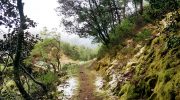
In the high, rocky landscapes of Cyprus's central mountains, one tree shines with a quiet golden glow. The Cyprus Golden Oak, an evergreen species found nowhere else on Earth, earns its name from the shimmering underside of its leaves. Walking through its groves offers a peaceful encounter with one of the island's most enduring natural wonders. Early history and naming The Cyprus Golden Oak, Quercus alnifolia, was first described in 1754 as a member of the genus Alnus (alders), hence the scientific epithet. Its local name, latzia (λατζιά), derives from Hylates — a title attributed by ancient Cypriots to the god Apollo. Hylates comes from the Greek word hyle (ὕλη), meaning forest. It’s an evergreen oak that grows only in Cyprus on basaltic and ultramafic rocks of Troodos ophiolite. Its most distinctive feature is the golden-coloured underside of its leaves, which gives the tree its common name. Notably, specimens cultivated outside their native habitat—such as those found in the Royal Botanic Gardens, Kew— fail to develop this characteristic golden coloration. Golden Oak ancestry and ecological role The Golden Oak branched off from its Turkish relatives to make a home on the volcanic rocks of the Troodos Mountains. It plays a crucial role on the mountain’s steep slopes, where its roots act as a natural anchor to stabilize the soil. Over…

Read more