Explore Cyprus with Our Interactive Map

Explore our top stories and discover ideas worth your time.

Olive Trees in Cyprus (Olea europaea)

Olive Trees in Cyprus (Olea europaea)

On rocky hillsides and gentle terraces across Cyprus, trees with shimmering silver-green leaves stand like wise elders, their twisted trunks telling stories of centuries under the Mediterranean sun. These are the olive trees, living treasures that have shaped the island’s landscape, diet and culture since the dawn of human settlement here. A Classic Evergreen of the Olive Family Known to science as Olea europaea, the olive belongs to the family Oleaceae within the order Lamiales. In Cyprus it thrives both as the familiar cultivated form in orchards and as the wild oleaster (Olea europaea var. sylvestris), a tougher, smaller-fruited version that grows naturally in maquis and garigue vegetation alongside carob and wild pistachio. Echoes from the Dawn of Cypriot Civilisation Olives have been part of Cyprus since at least the Bronze Age, with ancient pollen records and archaeological finds showing they were already valued for oil and fruit more than 4,000 years ago. Phoenician, Greek and Roman settlers expanded their cultivation, while the wild oleaster formed part of the original maquis shrublands described in 19th-century British forest reports. Over time, centuries of human care turned scattered wild trees into the productive groves that still cloak the island’s lower slopes today. Graceful Form and Enduring Strength The olive is an evergreen tree reaching 8–15 metres, with a short, often gnarled trunk…

Read more
Daily Village Life in Cyprus – Community and Support

Daily Village Life in Cyprus – Community and Support

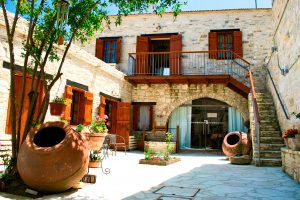
Daily village life in Cyprus revolved around close-knit family networks, communal labor, religious observances, and social gatherings that defined rural existence. Villages functioned as extended families where relatives lived in adjacent compounds, sharing courtyard spaces, agricultural tools, and economic responsibilities across generations. The rhythm of days followed agricultural cycles, with sunrise fieldwork interrupted by midday meals and coffee breaks, followed by afternoon labor and evening social gatherings in village squares. Women drew water from communal fountains where they exchanged information while washing clothes and filling vessels, creating female social networks parallel to male coffee shop culture. Children grew up supervised by grandparents, aunts, and neighbors who collectively ensured safety and transmitted traditional knowledge through daily interaction. This interconnected social structure provided economic security through mutual aid, emotional support during hardships, and collective celebration during festivals and life milestones. Morning Routines and Agricultural Work Village days began before sunrise, when women woke to prepare breakfast before men and children left for fields. The meal typically consisted of bread, olives, halloumi cheese, and yogurt with honey, supplemented by seasonal vegetables from kitchen gardens. Coffee brewed in long-handled pots called briki accompanied breakfast, providing caffeine for the day's physical labor ahead. Men departed for fields by 6:00 or 7:00 AM, carrying simple tools including hoes, sickles, and pruning shears. Donkeys transported heavier equipment…

Read more
How Infrastructure Overcomes Cyprus’s Rugged Terrain

How Infrastructure Overcomes Cyprus’s Rugged Terrain

The Troodos Mountains cover roughly one-third of Cyprus, stretching across most of the western portion. Mount Olympus rises to 1,952 meters, making it the island's highest peak. These mountains formed through the collision of African and European tectonic plates, pushing ancient seabed rock formations skyward over millions of years. The landscape varies dramatically within short distances. Coastal areas sit at sea level while mountain villages perch at elevations exceeding 1,000 meters. Steep valleys cut through the terrain, with rivers carving gorges that modern roads must somehow cross. In 2011, heavy rainfall triggered 128 separate landslide incidents in Paphos, causing significant damage to roads and buildings. These geological realities force engineers to constantly assess slope stability when planning new infrastructure. The island's geology includes unstable clay-rich soils and fractured rock formations that shift during rainfall, creating ongoing maintenance demands. Building Motorways Through Mountains Cyprus developed its motorway network relatively recently compared to European neighbors. The A1, completed in October 1985, became the island's first motorway. Despite this late start, Cyprus now leads all European Union members with 36.8 kilometers of motorway per 100,000 inhabitants. The network totals approximately 7,206 kilometers of paved roads and 4,387 kilometers of unpaved routes. No toll roads exist anywhere on the island. The Public Works Department manages motorways and major roads, while municipalities handle urban streets…

Read more