Explore Cyprus with Our Interactive Map

Explore our top stories and discover ideas worth your time.

How Feast Days Transform Cyprus Streets

How Feast Days Transform Cyprus Streets

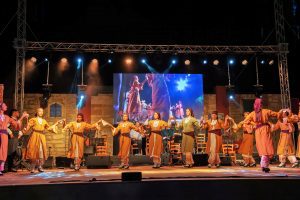
Easter in Cyprus, known as Pascha or "Lambri" meaning "the Bright One," represents the most important celebration in the Orthodox Ecclesiastical calendar. For nearly 82% of Cyprus' 1.1 million inhabitants who follow the Greek Orthodox Church, this period transforms the island into a living expression of faith, tradition and community identity. Unlike many Western holidays focused on individual celebration, Easter in Cyprus unfolds as a week-long social and spiritual event where neighbourhoods, villages and families reconnect through shared rituals that have remained largely unchanged for centuries. The streets fill with people, the air fills with the aroma of traditional foods and the island shifts into a rhythm that belongs entirely to the celebration of resurrection and renewal. Holy Week: The Sacred Framework of Celebration Easter in Cyprus follows the Orthodox Calendar, which places it as the first Sunday after the full moon that occurs at the spring equinox. This means the date shifts each year, typically falling between mid-April and early May. The week leading to Easter Sunday is called Holy Week, and each day carries distinct spiritual meaning and customs. Palm Sunday marks the beginning with people bringing palm and olive branches to churches, then carrying them around the church while following an icon of Christ to recall Jesus' Triumphal Entry into Jerusalem. These blessed branches then remain in…

Read more
Choirokoitia Settlement

Choirokoitia Settlement

Choirokoitia Settlement is a remarkable Neolithic village on Cyprus's southern coast, dating back to around 7000 BC, where early humans first built permanent homes and formed communities. Recognized as the most important site of its kind in the eastern Mediterranean, it reveals how people shifted from wandering hunters to settled farmers, laying foundations for civilization. This ancient spot whispers stories of innovation and survival, sparking interest in humanity's shared journey toward organized life. turbinatravels-com A Window into Early Human Life Choirokoitia stands as one of the earliest and best-preserved examples of a settled Neolithic community in the region, offering a detailed look at the transition from nomadic existence to village life. Located in the Larnaca District on a hillside overlooking the Maroni River Valley, the site's strategic position provided natural defenses, access to water, and fertile soil for early agriculture. Spanning about 3 hectares, it housed up to 300 people in circular dwellings, marking a pivotal shift in human history known as the Neolithic Revolution. This change involved domesticating plants like emmer wheat, barley, lentils, and animals such as sheep, goats, and pigs, which were introduced to the island by the first settlers from the Levantine mainland around 8500 BC. topwar-ru The settlement's layout reflects emerging social organization, with houses clustered in a semi-circular pattern around a central open space,…

Read more
Adaptation Imported Artistic Techniques

Adaptation Imported Artistic Techniques

Adaptation of Imported Artistic Techniques in ancient Cyprus involved incorporating styles from regions such as Greece, Egypt, and the Near East, then modifying them to align with local beliefs and values. Rather than exact replication, Cypriot artists infused these elements with distinctive island characteristics, resulting in art that felt authentically Cypriot - unique and rich in significance. This process of selective adaptation transformed external influences into innovative expressions, illustrating how an island on the periphery of empires developed a vibrant creative identity. A Creative Synthesis at a Mediterranean Crossroads Cypriot art emerged from the island's position as a nexus of cultural exchange, where imported techniques underwent transformation to reflect indigenous perspectives. External styles arrived through trade, migration, and conquest, but artists selectively reshaped them to emphasize themes central to Cypriot life, such as harmony with nature, divine protection, and communal resilience. Pottery, sculptures, and architectural elements bear witness to this blending, where foreign forms gained new meanings tied to the island's spiritual and social fabric. The outcome was a visual language that balanced innovation with tradition, capturing the essence of a society navigating diverse influences while preserving its core identity. The Beginnings of Cultural Adaptation The practice of adapting imported techniques traces back to the Bronze Age around 2500 BC, when Cyprus's copper resources attracted merchants from surrounding areas. Early…

Read more