Explore Cyprus with Our Interactive Map

Explore our top stories and discover ideas worth your time.

Cyprus City Kingdoms

Cyprus City Kingdoms

For over 3,000 years, Cyprus was home to powerful independent city-kingdoms that controlled trade routes, mined copper, and blended Greek, Phoenician, and local cultures into something uniquely Cypriot. These ancient cities left behind spectacular ruins - theaters still hosting performances, mosaic-floored villas, and temple foundations - that tell the story of a small island that punched far above its weight in the ancient world. A Patchwork of Powerful Cities Unlike many ancient lands ruled by a single king or empire, Cyprus developed as a collection of independent city-kingdoms. Each coastal city controlled its surrounding territory, built its own temples and palaces, minted its own coins, and conducted its own diplomacy with the great powers of Egypt, Persia, and Greece. At its height during the Iron Age (around 1000-300 BC), Cyprus had about a dozen of these city-kingdoms. Names like Kourion, Kition, Salamis, and Paphos appeared in ancient texts and on diplomatic correspondence. Some were founded by Greek colonists, others by Phoenician traders, but all developed distinctly Cypriot identities that blended Eastern and Western influences in architecture, religion, and daily life. From Bronze Age Towns to Iron Age Kingdoms Cyprus's city-kingdoms emerged from earlier Bronze Age settlements that had grown wealthy from copper mining and Mediterranean trade. By 1600-1050 BC, the island had become a crucial hub connecting the civilizations of…

Read more
Glyko tou Koutaliou Cyprus Sweet

Glyko tou Koutaliou Cyprus Sweet

In Cyprus, hospitality often begins with something small, deliberate, and deeply symbolic. Glyko tou koutaliou, the traditional spoon sweet, is offered not as dessert but as a gesture of welcome. Served in a single spoonful with cold water, it reflects patience, respect, and care. Rooted in preservation and shaped by celebration, this quiet tradition links everyday home life with festivals, milestones, and cultural memory across the island. A Welcome Measured in One Spoon Glyko tou koutaliou translates directly as “sweet of the spoon,” but its meaning goes far beyond the words. Unlike jams or spreads, these sweets preserve fruits, peels, nuts, or petals whole, suspended in clear sugar syrup and served in small portions. The act is intentional. A guest is not given abundance but attention. One spoonful is enough to signal generosity without excess. In Cypriot homes, this offering often comes before conversation, setting the tone for hospitality built on respect rather than display. Preservation That Became Tradition The origins of glyko tou koutaliou lie in necessity. Before refrigeration, Cypriot households preserved seasonal produce to ensure nothing went to waste. Sugar, honey, or grape must extended the life of fruits harvested at their peak. Over time, preservation turned into refinement. Families developed techniques that favored texture, clarity, and balance. What began as practical food storage gradually evolved into a…

Read more
Protecting Cyprus Endemic Reptile Habitats

Protecting Cyprus Endemic Reptile Habitats

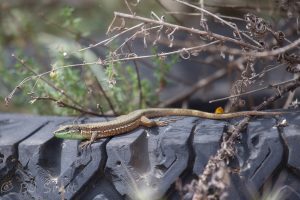
Cyprus hosts two endemic reptile species that exist nowhere else on Earth: the Cyprus rock lizard and the Cyprus whip snake. The Cyprus rock lizard, scientifically known as Phoenicolacerta troodica, represents the island's only endemic lizard species. The Cyprus whip snake, Hierophis cypriensis, stands as the sole endemic snake species in Cyprus and one of only two endemic island snake species in the entire Mediterranean, alongside the Cyclades viper. These species evolved in isolation over millions of years following Cyprus's separation from the mainland. Their unique genetic makeup and limited geographic range make their survival entirely dependent on habitat protection within Cyprus. Both species face threats from habitat loss, climate change, and human activities, making conservation efforts critical to prevent their extinction. Millions of Years on an Island The geological history of Cyprus shaped the evolution of its endemic reptiles. Cyprus formed through complex tectonic processes involving two independent landmasses that eventually merged around 5.2 million years ago. During this period, reptiles colonized the island through various means, including temporary land connections to Anatolia and dispersal across water. Image Credit: commons.wikimedia.org The Cyprus rock lizard belongs to the family Lacertidae, commonly known as wall lizards or true lizards. Austrian herpetologist Franz Werner first described the species in 1936 from specimens collected at Platres in the Troodos Mountains. Initially classified as…

Read more