Aphrodite’s Ancient Companion: The Cyprus Hare
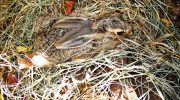
Long before the island became famous for its beaches and bronze, this fleet-footed creature was already racing through its fields – sacred, storied, and irreplaceable. If you have ever driven through the Cypriot countryside at dusk and caught a pair of amber eyes frozen in your headlights before vanishing into the darkness, there is a good chance you havealready met the Cyprus hare. This golden-brown creature – Lepus europaeus cyprius – is not just a wild animal. It is an endemic subspecies found nowhere else on Earth, a living thread woventhrough ten thousand years of Cypriot history, mythology, and daily life. And it is far more interesting than you might think. Ears Long, Heart Faster Still The hare belongs to the Order Lagomorpha – an ancient group of plant-eaters that includes hares, rabbits, and the small round-eared pikas of mountain regions. Despite their appearance,lagomorphs are not rodents. They form their own distinct branch of the mammal family tree, one that stretches back at least 53 million years into the geological past. There are around 32 speciesof hare in the world, from the Arctic hare of the frozen north to the Cape hare of Africa's savannahs. The European brown hare (Lepus europaeus) is one of the most widespread, ranging from Western Europe across Central Asia and into the Middle East. But the animal living on Cyprus issomething special – it has been isolated on this island long enough to develop its own identity. Formally described as a distinct subspecies in 1903 by British zoologist George Edward HamiltonBarrett-Hamilton, the Cyprus hare is recognised as unique to the island, shaped by millennia of island life into something subtly but meaningfully its own. Arrived with the First Farmers Cyprus was probably never connected to the mainland by a land bridge. Every land animal on the island arrived either by swimming, floating on driftwood, or – most commonly – being broughtby people. The Cyprus hare is believed to have been introduced by Neolithic settlers arriving from the Levant and Anatolia, probably around 10,000–9,000 years ago, during the same remarkablewave of human activity that also brought the island its first sheep, goats, foxes, and domestic cats. These early settlers were already accomplished farmers and hunters. Cyprus offered extraordinary hunting grounds, and the hare would have been a welcome and practical addition to theisland's fauna – fast-breeding, easily hunted, and nutritionally rich. Over the millennia that followed, with no wolves, bears, or large cats to challenge it, the hare flourished across the landscapeand quietly evolved into its own island form. Hare bones have been found at Neolithic sites across the island, confirming that this animal was a significant food source for Cyprus's earliest communities. In a very real sense, the hare has beenpart of Cypriot life longer than written history itself. The hare is the main and largest prey species on Cyprus – present in every district of the island in satisfactory numbers, remarkable given the intense hunting pressure it endures year after year. A Study in Speed and Stillness About the size of a small cat but leaner, longer, and built entirely for speed, the Cyprus hare weighs 3.5–5 kg and wears a warm tawny-brown coat that fades to white on the belly. Those famous long ears swivel independently to catch any sound – and double as a summer cooling system, radiating heat away from the body like living radiators. Unlike rabbits, hares never dig burrows. They rest in shallow ground hollows called forms, and their young – called leveret – are born fully furred and wide-eyed, ready to scatter within hours of birth. In late winter, something remarkable happens: normally shy and nocturnal, hares appear in broad daylight, chasing each other across fields and boxing. For years this was assumed to be rival males competing. It is almost always a female, either rejecting a male or testing his persistence. She is very much in charge. The Cyprus hare is entirely herbivorous – grass, herbs, wildflowers, and field crops in summer; twigs, bark, and buds in the leaner months of winter. It also practises a curious dietary habit sharedby many lagomorphs: it re-ingests its own soft green droppings directly from the body, recovering proteins and vitamins that were not fully absorbed the first time. Things Worth Knowing Over Coffee Hares can see almost 360 degrees around them – their only true blind spot is directly in front of their nose. They can even sleep with their eyes open. A young hare under one year of age has a special name: a leveret. A group of hares can be called either a husk or a down – two of the more poetic collective nouns in the animal kingdom. The Cyprus hare's breeding season runs from January to August – one of the longest of any European mammal. A female can produce up to four litters per year. In ancient Greece, the hare was considered so fertile that it was believed a female could conceive a second litter while already pregnant with the first – a reproductive phenomenon known assuperfetation, which has since been confirmed by science. The English phrase "as mad as a March hare" refers to exactly the same spring-boxing behaviour that any Cypriot farmer has likely observed at the edge of their olive grove in February orMarch. The natural predators of the Cyprus hare are birds of prey (including owls and buzzards) and the Cypriot fox (Vulpes vulpes indutus). There are no wolves, lynx, or large cats on the island tothreaten it. Two or three adult hares can consume as much vegetation as a single sheep. Sacred to the Goddess Born from the Sea Cyprus is the birthplace of Aphrodite – and the hare was one of her sacred animals. Because of its extraordinary fertility, it was seen as a living symbol of love, desire, and abundance. Young men in ancient Greece would gift a live hare to someone they admired: the meaning was clear without a single word.…
Read more