Explore Cyprus with Our Interactive Map

Explore our top stories and discover ideas worth your time.

The Cyprus Tulip (Tulipa cypria)

The Cyprus Tulip (Tulipa cypria)

Among the many wildflowers that brighten Cyprus in spring, few capture the imagination quite like the Cyprus Tulip. This rare beauty, found nowhere else in the world, emerges each year with its deep, velvety petals – often appearing almost black against the sunny landscape. Spotting one in the wild feels like uncovering a small treasure hidden on the island. How does it look like and where it grows The Cyprus Tulip, or Tulipa cypria, is a perennial bulbous plant that belongs to the lily family. There are three species of tulips on the island – Tulipa cypria, Tulipa akamasica and the parent specie of which both endemics originated – Tulipa agenensis. Tulipa cypria has been part of Cyprus’s flora for around 5 million of years, shaped by the island’s isolated geography into a separate specie during last Glacial cycles. It grows in Juniperus phoenicea maquis, pastures and cereal fields on limestone. The plant grows 15–40 cm tall, usually with four smooth, fleshy slightly bluish-green leaves, two at the base which are larger and lanceolate, and the two upper leaves which are much smaller and almost linear. Petals are deep blood-red colour with distinctive internal black blotch bordered by a yellow zone, earning the plant its nickname as the “black tulip” of Cyprus – a rare trait that makes it stand…

Read more
Cypriot Mouse (Mus cypriacus)

Cypriot Mouse (Mus cypriacus)

Hidden among the vineyards and dry stone walls of the Troodos foothills lives a mouse that science almost overlooked entirely. Smaller than your hand, rarely seen by day, it had been sharing the island with humans for thousands of years before anyone realised it was something genuinely new to science. When they finally did, the discovery made headlines around the world. Introducing the Island's Secret Rodent The Cypriot mouse is a small mammal, no bigger than your palm, belonging to the vast family of mice known as Muridae. Think of it as a cousin to the common house mouse, but with its own unique Cypriot twist – part of the broader rodent order that includes everything from squirrels to beavers. It's a nocturnal nibbler that thrives in the island's varied landscapes, from rocky hillsides to cultivated fields, quietly going about its business without much fanfare. A Tale from Cyprus's Ancient Shores Millions of years ago, during the geological upheavals of the Messinian Salinity Crisis around 6-5 million years back, the Mediterranean Sea almost dried up, narrowing sea passages that allowed early ancestors of mice to wander onto what would become Cyprus. Isolated as the seas refilled, these pioneers evolved into Mus cypriacus, diverging from relatives like the eastern Mediterranean mouse (Mus macedonicus) about half a million years ago. Fast-forward to…

Read more
Choirokoitia Settlement

Choirokoitia Settlement

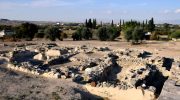
Choirokoitia Settlement is a remarkable Neolithic village on Cyprus's southern coast, dating back to around 7000 BC, where early humans first built permanent homes and formed communities. Recognized as the most important site of its kind in the eastern Mediterranean, it reveals how people shifted from wandering hunters to settled farmers, laying foundations for civilization. This ancient spot whispers stories of innovation and survival, sparking interest in humanity's shared journey toward organized life. turbinatravels-com A Window into Early Human Life Choirokoitia stands as one of the earliest and best-preserved examples of a settled Neolithic community in the region, offering a detailed look at the transition from nomadic existence to village life. Located in the Larnaca District on a hillside overlooking the Maroni River Valley, the site's strategic position provided natural defenses, access to water, and fertile soil for early agriculture. Spanning about 3 hectares, it housed up to 300 people in circular dwellings, marking a pivotal shift in human history known as the Neolithic Revolution. This change involved domesticating plants like emmer wheat, barley, lentils, and animals such as sheep, goats, and pigs, which were introduced to the island by the first settlers from the Levantine mainland around 8500 BC. topwar-ru The settlement's layout reflects emerging social organization, with houses clustered in a semi-circular pattern around a central open space,…

Read more