Lusignan and Venetian rule

Articles: Lusignan and Venetian rule

Stories in this category and its subcategories.

Famagusta, Cyprus – History & Facts

Famagusta, Cyprus – History & Facts

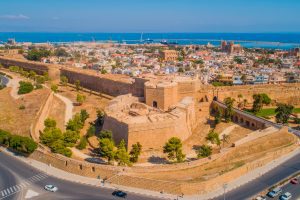
Famagusta sits on the eastern coast of Cyprus, surrounded by two miles of massive stone walls built when Venice controlled the Mediterranean. The old town contains ruins of over 300 churches from an era when the city rivaled Constantinople in wealth. During the Middle Ages, this port served as the gateway between Europe and the Levant, where merchants traded silks and spices in multiple languages. The deepest harbor in Cyprus made Famagusta essential for naval powers across eight centuries of occupation by Crusaders, Venetians, Ottomans, and the British. northcyprusinternational.com The city was founded around 274 BCE by Ptolemy II after an earthquake damaged nearby Salamis. Originally called Arsinoe after the Ptolemaic queen, the settlement grew from a small fishing village…

Read more
St. Sophia Cathedral Gothic Landmark Cyprus

St. Sophia Cathedral Gothic Landmark Cyprus

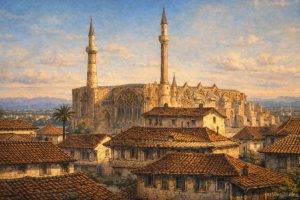
In the center of North Nicosia stands the largest Gothic building in Cyprus. Originally a cathedral, it was later turned into a mosque but still keeps its French Gothic style. Over 800 years, the building has seen coronations, earthquakes, sieges, and the rise and fall of kingdoms, making it one of the most important historic sites on the island. wikipedia-com St. Sophia Cathedral, now called Selimiye Mosque, was built in the 13th century. It was converted into a mosque in 1570 after the Ottoman conquest of Cyprus. The building measures 66 by 21 meters inside and can hold about 2,500 worshippers. It was the coronation church for the Lusignan kings of Cyprus and later for the titular kings of Jerusalem…

Read more
Kyrenia Castle: Fortress Facing the Sea

Kyrenia Castle: Fortress Facing the Sea

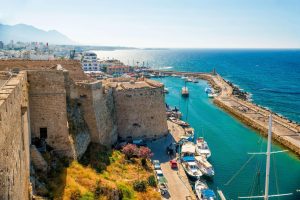
Kyrenia Castle stands at the edge of one of Cyprus’s most sheltered harbours, where land and sea have negotiated power, trade, and survival for centuries. Unlike hilltop fortresses built to dominate territory from afar, this castle was designed to watch the water closely. Its purpose has always been practical: to protect the harbour, control movement, and adapt to whoever ruled Cyprus at the time. That continuous adaptation rather than a single defining moment is what gives Kyrenia Castle its lasting significance. Adobe-Stock-com A Fortress Built for a Living Harbour Kyrenia Castle occupies a narrow strip of land between the town and the sea, positioned so that every vessel entering the harbour passes beneath its walls. From its earliest days, the…

Read more
Bellapais Abbey – Cyprus, Europe

Bellapais Abbey – Cyprus, Europe

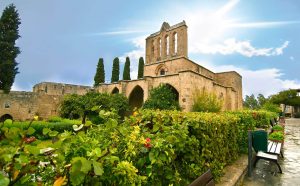
Bellapais Abbey is a 13th-century monastery ruin located in the village of Bellapais, about 5 kilometers from Kyrenia in the Turkish-occupied part of Cyprus. Built on a hillside at 220 meters above sea level, the abbey offers views across the coast to the Mediterranean Sea. This Gothic structure is considered one of the finest examples of medieval architecture in the Eastern Mediterranean and remains one of Cyprus's most visited historical sites. visaliv-com The site may have been known as Episcopia or Piscopia before the abbey was built, suggesting it served as a residence for the Bishop of Kyrenia and as a refuge during Arab raids in the 7th and 8th centuries. The elevated position and defensible location made it suitable…

Read more
Othello Castle, Famagusta Medieval Fortress

Othello Castle, Famagusta Medieval Fortress

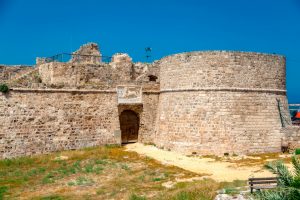
Othello Castle, also known as Othello's Tower, is a medieval fortress in Famagusta in in the Turkish-occupied part of Cyprus. The castle sits at the northeastern corner of the city's fortified walls, directly controlling access to the historic harbor. This location made it both the primary defensive stronghold and the main entrance to the walled city during the medieval period. visitncy-com The site had fortifications even before the current castle. A tower and defensive works were built here by the Prince of Tyre around 1310. The Lusignan rulers of Cyprus recognized the strategic importance of this harbor entrance and constructed a more substantial fortress in the 14th century. Originally called the Harbour Citadel, it served dual purposes as a military…

Read more