Ottoman period

Articles: Ottoman period

Stories in this category and its subcategories.

Ottoman Sebils Public Water Fountains

Ottoman Sebils Public Water Fountains

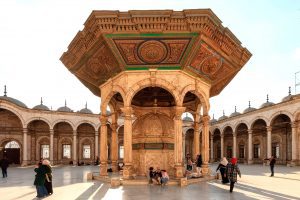
When the Ottoman Empire took control of Cyprus in 1571, the island experienced major changes in its architecture and daily life. Among the most practical contributions the Ottomans brought were sebils, public water fountains that became essential features of Cypriot cities. These structures served both religious and civic purposes, providing free drinking water to travelers and locals while allowing Muslims to perform ritual ablutions before prayer. photohound.co The word sabil comes from the Arabic root meaning to make available or to provide a way. In Islamic tradition, building a sabil was considered an act of charity, a way to earn religious merit by serving the community. The Ottoman authorities valued these fountains so highly that they granted tax exemptions to…

Read more
Ottoman Baths in Cyprus

Ottoman Baths in Cyprus

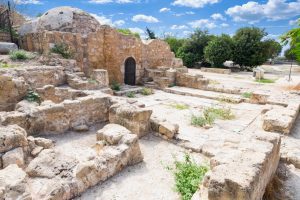
Ottoman baths, known as hamams, represent a distinctive cultural contribution to Cyprus architecture and social life. These public bathhouses served communities across the island for centuries, combining cleansing rituals with social gathering spaces. Several hamams survive today as monuments to Ottoman rule, with two still operating as functional spas. wikimedia.org1 The hamam tradition did not originate with the Ottomans. Its roots stretch back to Roman thermae and Byzantine bathing practices, which the Ottomans inherited and adapted to Islamic requirements for ritual cleanliness. The word hamam comes from the Arabic root meaning heat or heating, reflecting the central role of warmth in the bathing process. Islamic tradition emphasizes cleanliness as a prerequisite for prayer. This religious requirement, combined with social customs,…

Read more
Arabahmet Mosque (Nicosia)

Arabahmet Mosque (Nicosia)

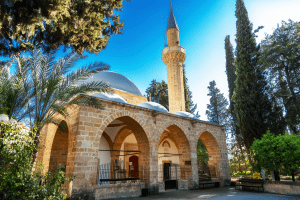
Arabahmet Mosque is a 16th-century Ottoman mosque located in the Arab Ahmet Quarter of Nicosia. Built in the late 1500s shortly after the Ottoman conquest of Cyprus in 1571, the mosque was named after Arab Ahmet Pasha, one of the commanders who led the Ottoman army during the invasion. He also served as Governor General of Rhodes. shutterstock-com The mosque is the only one in Cyprus to feature typical Turkish-style domes. A large central dome about 6 meters across covers the main prayer hall, three smaller domes protect the entrance porch, and four more tiny domes sit at the building's corners. This design follows the classical Anatolian style of placing a dome on a square building. Historical Background Arab Ahmet…

Read more
Ottoman Era Mosques Urban Architecture Cyprus

Ottoman Era Mosques Urban Architecture Cyprus

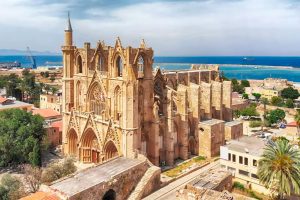
Ottoman architecture in Cyprus refers to the Islamic buildings and urban structures constructed or adapted during Ottoman rule from 1571 to 1878. This three century period significantly reshaped the physical appearance of Cypriot cities, especially Nicosia and Famagusta. The Ottomans introduced architectural forms developed in Istanbul and Anatolia, including domed mosques, hans or caravanserais, hammams or bathhouses, covered markets, and medrese schools. wikimedia.org Unlike other Ottoman territories where Islamic architecture replaced earlier structures, Cyprus presented a distinct situation. The Ottomans inherited large scale Gothic buildings from the Lusignan and Venetian periods, particularly cathedrals that were too monumental to demolish. Instead of destroying these structures, Ottoman authorities converted them for Islamic use through the addition of minarets, the removal of Christian…

Read more
Büyük Han Nicosia Ottoman Caravanserai Cyprus

Büyük Han Nicosia Ottoman Caravanserai Cyprus

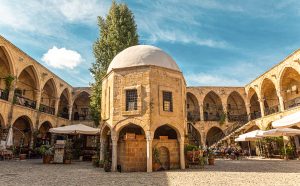
In the center of the Turkish-occupied part of Nicosia’s Old City stands a building that has had many lives. It has been a merchant’s inn, a prison, a home for displaced families, and today it is a lively cultural center. Built in 1572, just two years after the Ottomans took over Cyprus, Büyük Han is the largest and best example of caravanserai architecture on the island. visitncy-com The building is almost square, measuring 50.67 by 45.25 meters, and has 68 rooms on two floors arranged around a central courtyard. It was originally built for traveling merchants and traders who connected Cyprus with Anatolia, the Levant, and beyond. Büyük Han is considered one of the best surviving examples of Ottoman architecture…

Read more