Archaeological sites and excavations

Articles: Archaeological sites and excavations

Stories in this category and its subcategories.

Kition Temples

Kition Temples

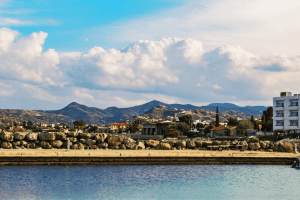
Kition, located beneath modern Larnaca on Cyprus's southeastern coast, served as a major Bronze Age settlement before the Phoenicians arrived. The site contains five successive temples dated from the late 13th to the late 11th century BC, built during the Late Bronze Age when Mycenaean Achaeans inhabited the city. arnakaregion-com These early temples were connected to copper smelting workshops, revealing an unusual integration of industrial and religious activities. The copper industry was central to Cyprus's prosperity, and scholars believe this placement suggests either worship of a deity related to copper production or a ritual significance attached to metallurgy itself. Around 1000 BC, the religious part of the city was abandoned, though life continued in other areas. This abandonment created a…

Read more
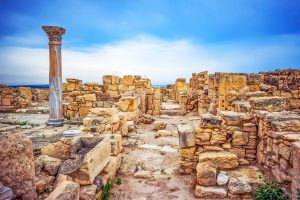
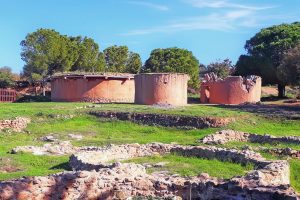
House of Eustolios In Cyprus Roman Villa Mosaics

House of Eustolios In Cyprus Roman Villa Mosaics

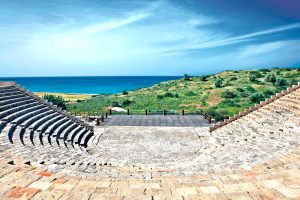
Perched on the southern cliffs of ancient Kourion near modern Limassol, the House of Eustolios stands as one of Cyprus's most fascinating archaeological sites. This late 4th-century complex blends Roman luxury with early Christian devotion, creating a unique window into a transformative period in Mediterranean history. britonthemove-com Originally built as a private villa, the structure evolved into a public recreation center that served Kourion's citizens for over two centuries. Historical Background traveladventures-org The House of Eustolios rose from the ruins of catastrophe. In 365 AD, a massive earthquake devastated the eastern Mediterranean, striking Kourion with particular force. The ancient city, which had thrived as one of Cyprus's major kingdoms since the 13th century BC, lay in rubble. Buildings collapsed, infrastructure…

Read more
Lemba Lakkous Archaeological Site

Lemba Lakkous Archaeological Site

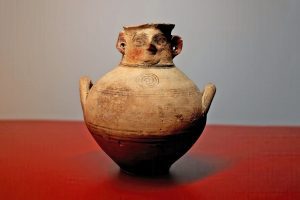
In the hills north of Paphos, a prehistoric village called Lemba-Lakkous offers a rare window into life 5,000 years ago. This Chalcolithic settlement produced some of Cyprus's most remarkable figurines and became the foundation for one of archaeology's most ambitious experiments: rebuilding an ancient village. cyprusmail-com Lemba-Lakkous sits just six miles north of Paphos in southwestern Cyprus, in a region known as the Ktima Lowlands. The settlement dates to the Late Chalcolithic period, from roughly 3500 to 2400 BC. This was a time when Cyprus saw remarkable cultural development, with around 100 villages spread across the island and communities mastering both stone tools and early copper metalwork. The site is part of a cluster of related settlements in the area,…

Read more
Pyrgos Mavroraki Sacred Site

Pyrgos Mavroraki Sacred Site

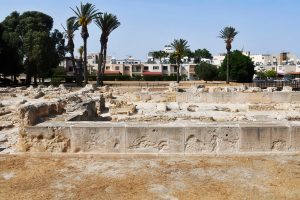
Pyrgos-Mavroraki is an Early to Middle Bronze Age settlement on the southern coast of Cyprus near modern Limassol. Excavations began in the early 2000s by the Italian Archaeological Mission of ITABC-CNR. Radiocarbon dating shows copper smelting started here as early as 4229–3960 BC during the Chalcolithic period. Even older copper slag from 8631–8291 BC was found, possibly from accidental metal use while making lime. This makes Pyrgos one of the earliest places for metal work in the Mediterranean. The settlement was on the slope of a small hill in a valley crossed by a stream. It sat on rocks with copper and had easy access to nearby mines at Mavrovouni and other sites. People lived there continuously from the 9th…

Read more
Archaeological Sites and Excavations in Cyprus

Archaeological Sites and Excavations in Cyprus

Beneath Cyprus's sunny beaches and pine-covered mountains lie layers of ancient civilizations waiting to be discovered. From 9,000-year-old Neolithic villages to Roman theaters still hosting performances, the island's archaeological sites tell the story of humanity's journey from Stone Age farmers to cosmopolitan Mediterranean traders - and remarkably, you can walk through most of them today. culture.gouv_fr A Living Museum Beneath Your Feet Cyprus is essentially one enormous archaeological site. Everywhere you turn - in downtown Larnaca, on clifftops overlooking the sea, hidden in mountain valleys - you'll find excavated ruins that reveal thousands of years of continuous human habitation. These aren't just piles of old stones; they're remarkably well-preserved windows into how people lived, worshipped, fought, and thrived across millennia.…

Read more
Marki Alonia Early Bronze Age Settlement

Marki Alonia Early Bronze Age Settlement

Nestled in central Cyprus, Marki-Alonia stands as one of the most revealing prehistoric settlements from the Early and Middle Bronze Age. Between 1990 and 2000, archaeologists David Frankel and Jennifer Webb from La Trobe University uncovered approximately 1,500 square meters of this ancient village. sciencedirect-com Their excavations revealed a remarkable window into how people lived, built their homes, and organized their communities from about 2400 BCE to around 1900 BCE. Unlike many archaeological sites where researchers can only piece together fragments of the past, Marki-Alonia offers an unusually complete picture of Bronze Age life in Cyprus. Historical Background The story of Marki-Alonia begins with a small group of settlers who arrived around 2400 BCE. The founding population numbered just 40…

Read more