Imagine strolling through a sun-drenched village square or along a quiet coastal road in late summer. A graceful tree with feathery, weeping branches catches your eye, its small greenish-white flowers having given way to clusters of shiny pink-red berries that sparkle like strings of tiny jewels. These are the Schinus species of Cyprus – elegant South-American guests whose light, peppery fragrance and airy beauty have quietly woven themselves into the island’s everyday scenery.
The Pepper Trees of the Cashew Family
Schinus belongs to the Anacardiaceae family – the same remarkable group that includes pistachios (Pistacia vera), mastic trees (Pistacia lentiscus), cashews, mangoes and even sumacs. This family is known for resinous bark, compound leaves and often aromatic fruits. The genus Schinus contains about 30 species, nearly all native to South America. In Cyprus the two most common are Schinus molle (Peruvian pepper tree or false pepper tree) and Schinus terebinthifolius (Brazilian pepper tree). Locally they are called Αρτυμαθκιά (Artumathkiá – “pepper tree”) for S. molle, and Μαστισιά (Mastisiá – “mastic-like”) or Σχίνος η τερεβινθόφυλλη for S. terebinthifolius, evoking their resinous family ties.
A Journey from the Andes to Cypriot Soil
Both species are native to subtropical and tropical South America. Schinus molle comes from the Andes foothills of Peru, Bolivia and neighbouring countries, while S. terebinthifolius hails from Brazil, Argentina and Paraguay. They reached Europe as ornamental curiosities in the 19th century and arrived in Cyprus during the British period (late 19th–early 20th century), planted for fast shade, privacy screens and their graceful habit. Like many Mediterranean introductions, they were welcomed for their drought tolerance and low maintenance in a land that knows long, dry summers.
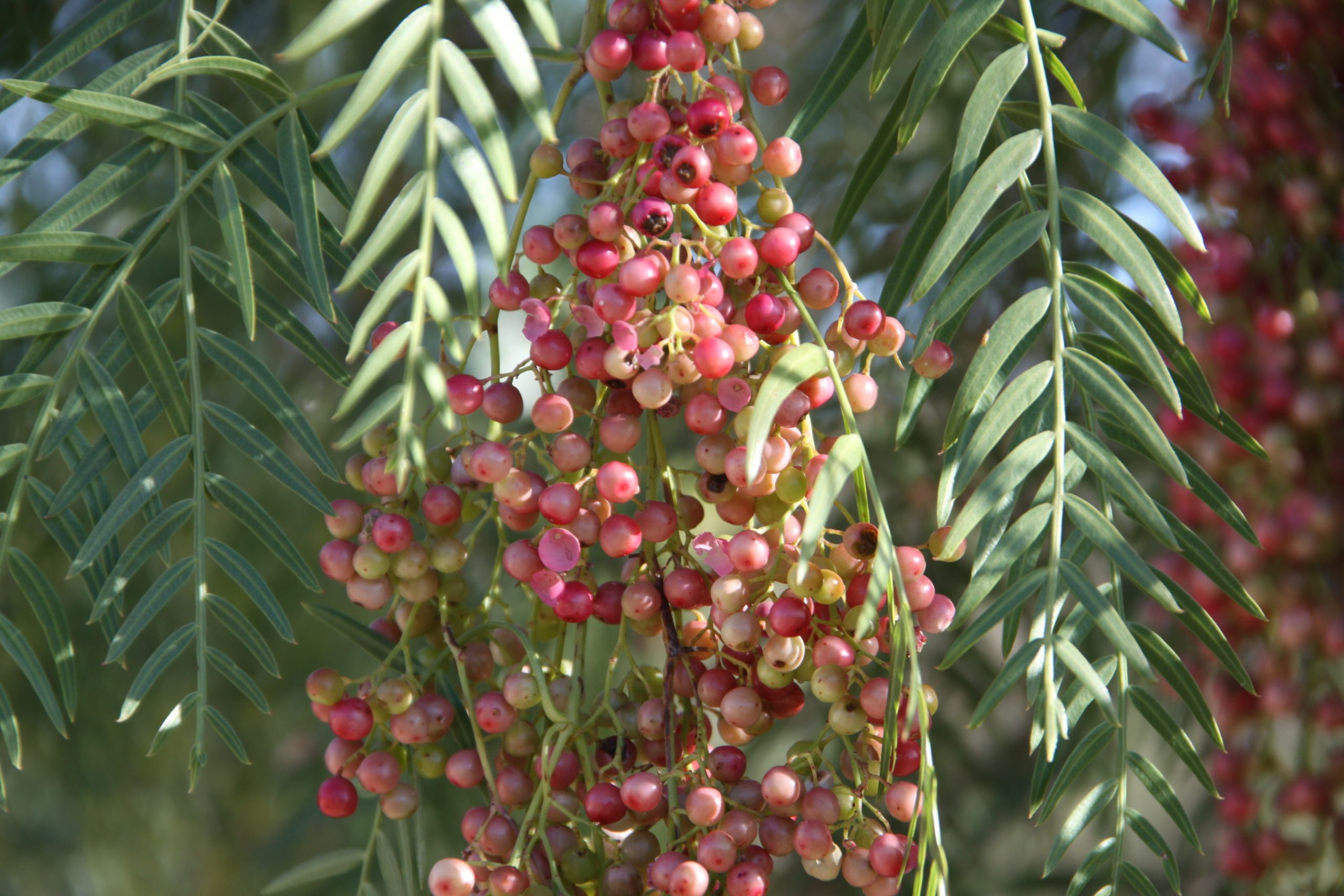
Delicate Feathers and Jewelled Berries
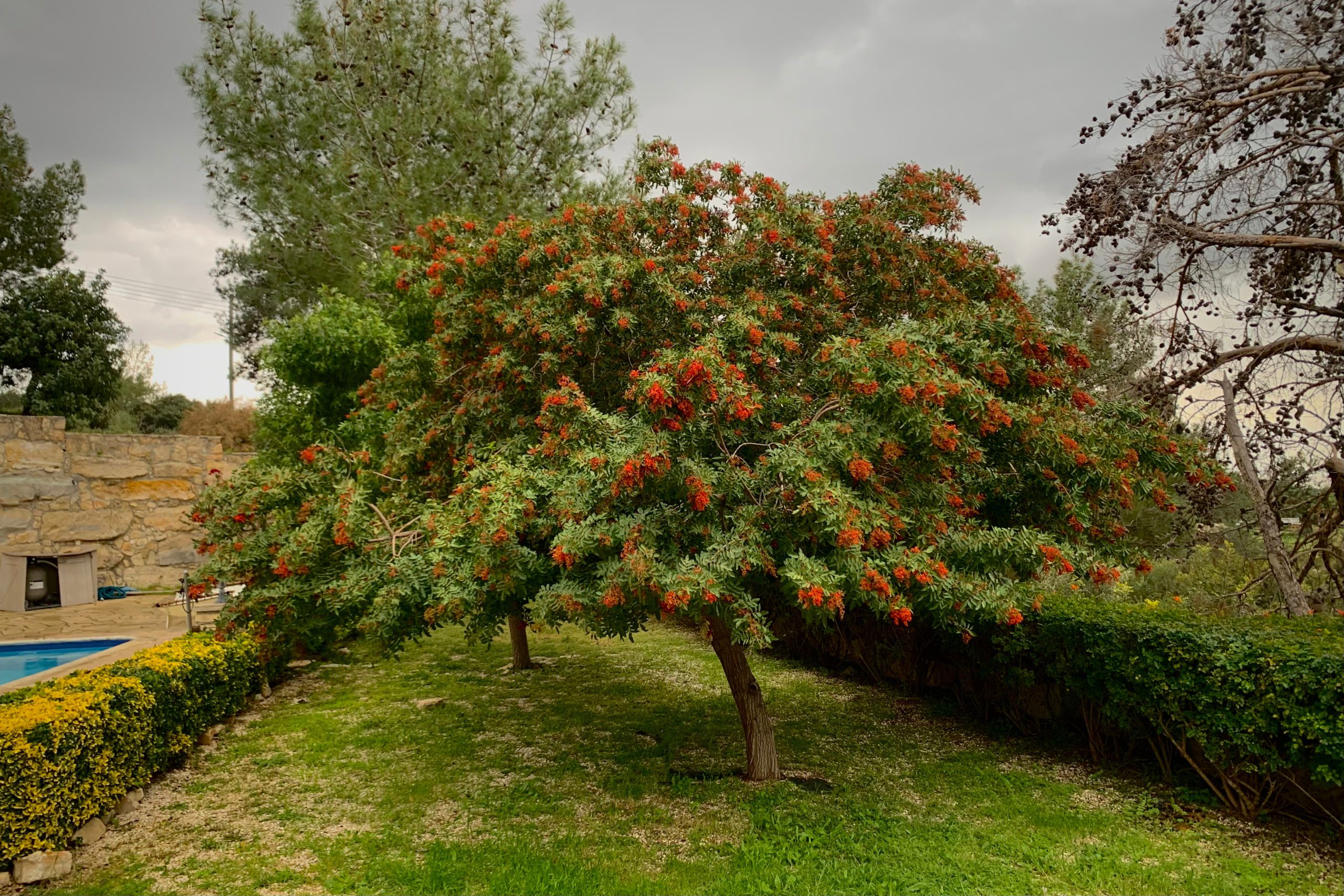
Schinus molle grows into a 10–15 m evergreen tree with a rounded, weeping crown and slender, pendulous branches. Its leaves are finely pinnate – feathery and light green – giving the whole tree an airy, willow-like appearance. Tiny greenish-white flowers appear in long, drooping panicles in spring and early summer, followed by abundant clusters of small, spherical pink-to-red berries that persist into winter. Schinus terebinthifolius is usually smaller and more upright, with denser, darker-green leaves and bright red berries. Both have smooth grey bark when young that becomes furrowed with age, and both exude a mild resinous aroma when leaves or twigs are crushed.
Fun Facts
- The pink berries of S. molle are the source of mild “pink peppercorns” used in gourmet cooking – they have a gentle peppery bite with citrus notes, but are not true pepper.
- Birds adore the berries and help spread the seeds – you’ll often see flocks feasting in autumn.
- The leaves contain compounds that naturally repel some insects, making the tree a traditional choice for garden borders.
- In its homeland the wood was used for saddles and the bark for medicine; in Cyprus the trees are prized simply for beauty and shade.
- The genus name Schinus comes from the ancient Greek schinos (mastic tree), reflecting the family resemblance in resin and aroma.
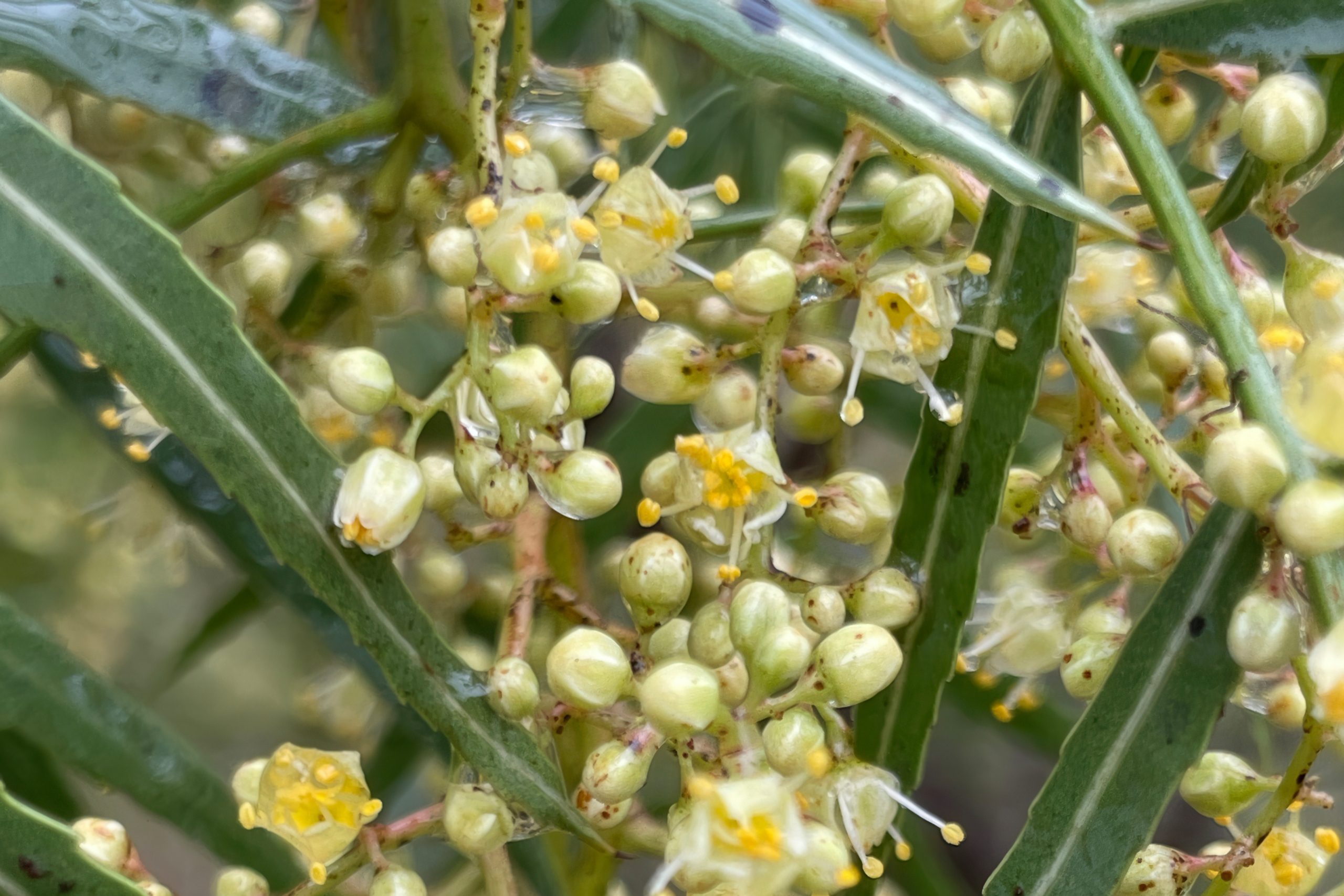
Additional Layers
Both species are fully naturalised in Cyprus but behave well here – they are not considered invasive like their Brazilian cousin can be in warmer, wetter climates. Schinus molle is especially common in villages, gardens and along roadsides for its fast growth and elegant form. Neither species is threatened; S. molle is assessed as Least Concern on the IUCN Red List. Their resinous nature places them firmly in the Anacardiaceae, a family famous for both delicious nuts and the occasional skin-irritating sap (though Schinus is usually mild).
Living with Us Today
In our era of hotter summers and water-wise gardening, Schinus species offer excellent low-maintenance shade and year-round interest. You’ll see mature specimens framing village entrances, shading schoolyards and lining rural roads. While modern projects rightly focus on native plants for wild hedgerows, these graceful pepper trees continue to earn their place in urban and garden landscapes – providing quick privacy, bird food and a soft, feathery beauty that softens the harsh Mediterranean light.
Finding and Experiencing Them
The easiest places to meet Cyprus’s Schinus trees are any older village or coastal town – look for the feathery crowns and dangling pink berries in places like Kouklia, Dali, Androlikou or the streets of Limassol and Paphos. In spring the sweet-scented flowers hum with bees; in autumn the golden-pink berry clusters glow against the green. Park safely, stand beneath a branch and crush a leaf gently between your fingers to release the fresh, peppery aroma. Many are in public spaces, offering perfect spots for photos or a shady rest.
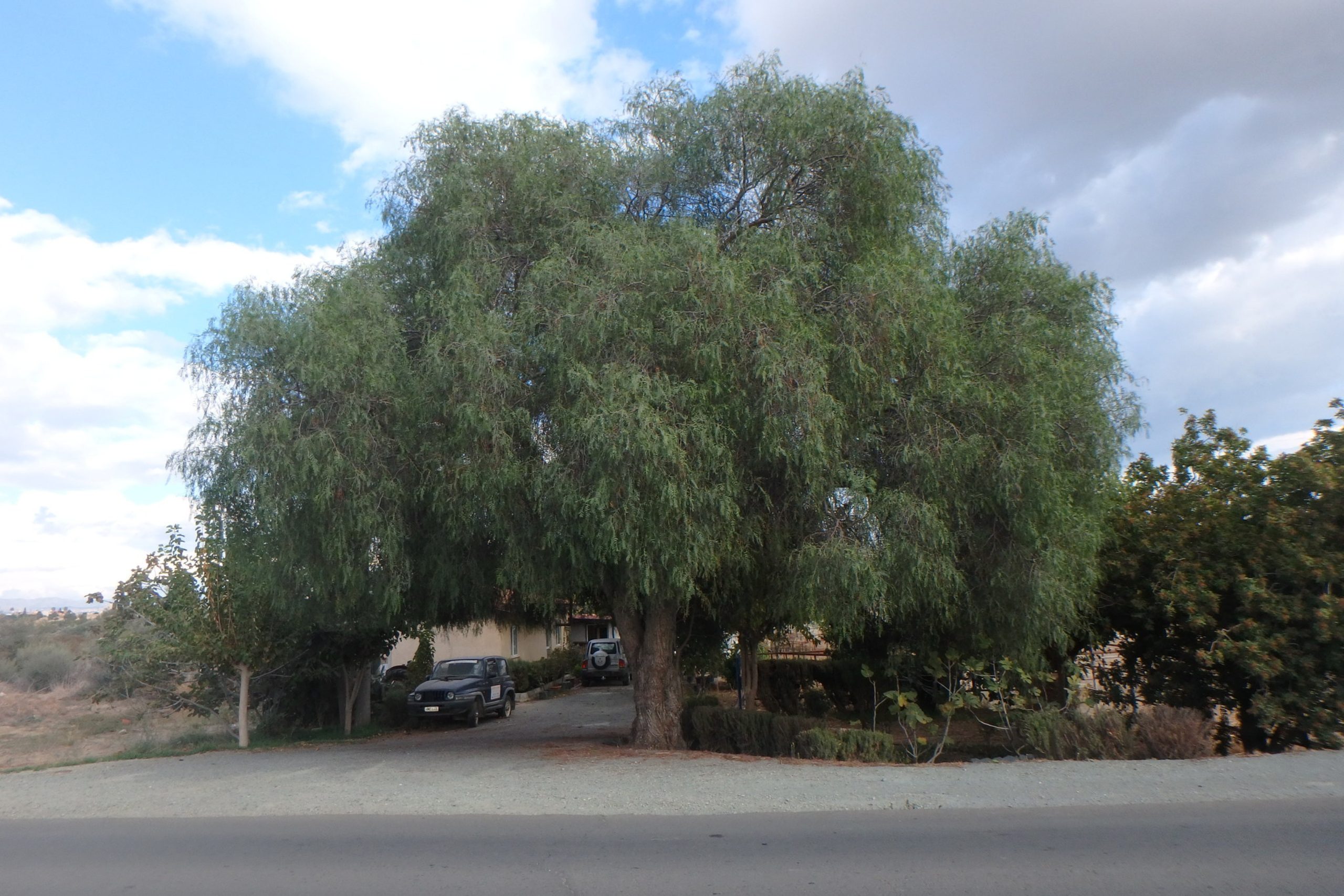
A Gentle Link Across Continents
Though they arrived from distant South-American shores, the Schinus species have become true characters of the Cypriot countryside – offering shade, fragrance and jewelled winter colour with hardly any fuss. Their story reminds us that thoughtful introductions can enrich our landscape beautifully and responsibly. Next time you pass beneath one of these graceful pepper trees, pause to enjoy its airy charm – a living reminder of Cyprus’s long tradition of welcoming useful and lovely green travellers and making them feel perfectly at home under our sunny skies.