Explore Cyprus with Our Interactive Map

Explore our top stories and discover ideas worth your time.

Tamassos Sacred Valley

Tamassos Sacred Valley

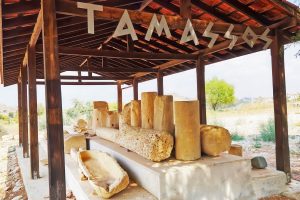
Tamassos was an inland city-kingdom that thrived from the Late Bronze Age to the Roman period, from around 1200 BC to the 10th century AD. The city appears in an Assyrian inscription from about 673 BC as Tamesi, a city-state that paid tribute to the Neo-Assyrian Empire. Homer may have mentioned it in the Odyssey as Temese, described as the main copper market on the island. culturespot-cy The archaeological site is next to the modern village of Politiko. Much of the ancient city center has not been excavated because it lies under the village and the nearby Monastery of Saint Herakleidios. Archaeologists have uncovered two large royal tombs from the 6th century BC, the foundations of a temple to Aphrodite, parts of city walls, and signs of extensive copper-processing workshops. Historical Background The region was inhabited since the Chalcolithic Age, and villages in the area were densely populated from the Early Bronze Age. Small farming settlements existed long before Tamassos became a unified city. The discovery and use of copper deposits transformed the farmland into an industrial center. The population grew significantly after the copper mines were exploited. Tombs and copper-processing workshops from the Late Bronze Age show this growth. Tamassos controlled major mines near its capital, like Mavrovouni and Kokkinopezoula, which made it a center of copper production. Classical…

Read more
Stone Columns Above Cyprus Blue Waters

Stone Columns Above Cyprus Blue Waters

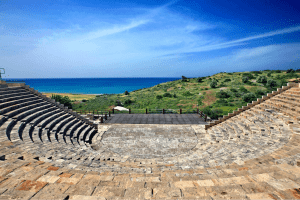
Cyprus coastal monuments showcase classical architecture where ancient stone columns rise against Mediterranean horizons, creating dramatic vistas that combine archaeological significance with natural beauty. The most impressive examples include the Greco-Roman theatre at Kourion perched on coastal cliffs 70 meters above sea level, the Sanctuary of Apollo Hylates with its partially restored temple columns, and the Tombs of the Kings in Paphos featuring underground burial chambers decorated with Doric pillars. Shutterstock-com These structures date primarily from Hellenistic and Roman periods between the 4th century BC and 4th century AD, when Cyprus prospered under successive empires. The architectural elements follow classical Greek orders with refinements from Roman building techniques, creating monuments that have withstood earthquakes, invasions, and two millennia of Mediterranean weather. The coastal positioning of these sites provided strategic advantages for ancient communities while offering modern visitors spectacular combinations of archaeological ruins and sweeping sea views that define Cyprus as a destination where history meets landscape. Kourion's Clifftop Theatre and Coastal Views The ancient theatre at Kourion was built in the 2nd century BC and extended during the 2nd century AD to accommodate 3,500 spectators. The structure occupies the most southern part of the city, positioned on dramatic coastal cliffs that provided both practical acoustics and majestic views toward the Mediterranean. The semicircular seating arrangement carved from limestone faces the…

Read more
Mythological Locations and Legends of Cyprus

Mythological Locations and Legends of Cyprus

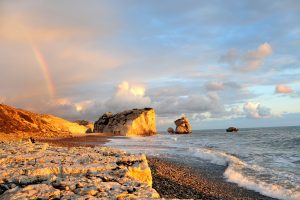
Cyprus isn't just an island of beaches and ancient ruins - it's the legendary birthplace of Aphrodite, the goddess of love and beauty. For thousands of years, pilgrims, poets, and lovers have traveled here seeking the divine magic said to linger in its shores, and the myths born on this island have shaped Western culture in ways that still resonate today. Adobe-Stock-com An Island Steeped in Divine Legend Cyprus holds a unique place in Greek mythology as the earthly home of Aphrodite. According to legend, the goddess emerged from the sea foam near Cyprus's shores, making the island sacred ground. The connection runs so deep that Aphrodite herself was often called "Kypria" - the Cyprian goddess - a title that linked her identity inseparably to this Mediterranean island. wikipedia-org Beyond Aphrodite, Cyprus is woven into myths involving tragic love, divine kings, and miraculous transformations. These stories explained the island's remarkable fertility, legendary copper wealth, and status as a crossroads of cultures. Today, these myths remain alive in the landscape itself. From Ancient Cults to Eternal Legends Long before classical Greek myths were written down, Cyprus was home to fertility cults dating back to Neolithic times. When Mycenaean Greeks arrived around the 12th century BC, they built temples and gradually merged local worship traditions with their own pantheon, creating a unique…

Read more