4 minutes read 2 views See on map

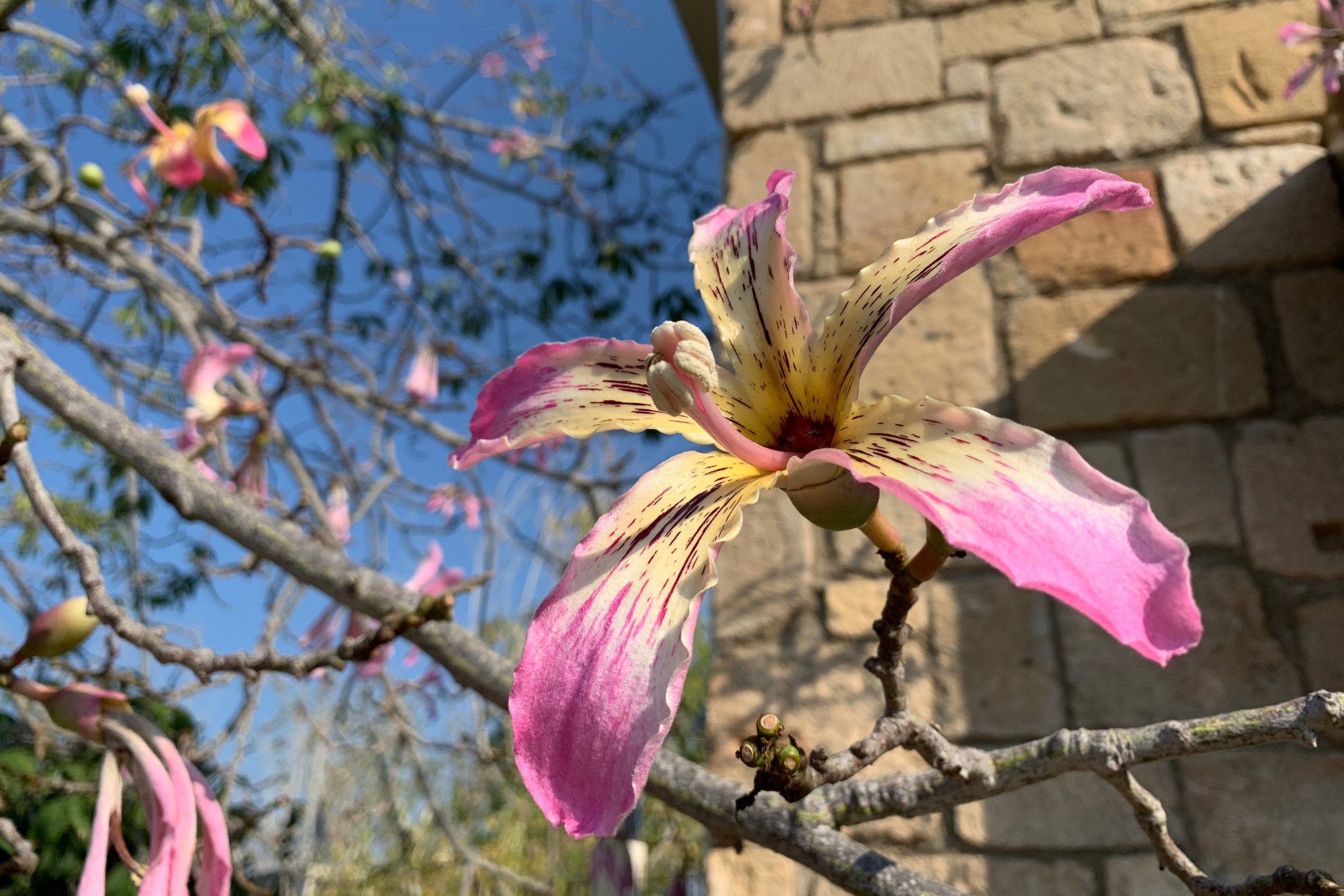
Imagine walking through a sunny park in Nicosia or Limassol when a tree catches your eye with its trunk covered in sharp thorns and branches bursting with pink flowers like fluffy cotton candy. Perhaps one of the most bizarre trees you’ll encounter is the floss silk tree this South American visitor that’s found a home in Cyprus, hiding surprises in its spiky exterior that make you wonder what other secrets it holds.
Konstantin-Solovev

Getting to Know This Exotic Guest

The floss silk tree is a large, deciduous tree known for its striking appearance and fluffy seeds. It’s part of the broader world of flowering plants, fitting into the Malvaceae family alongside everyday wonders like cotton and hibiscus, all sharing a love for warm climates and showy blooms.

A Journey from Rainforests to Island Parks

Native to the lush tropical forests of South America, where ancient peoples used its fibers for ropes and padding, this tree crossed oceans during the age of exploration. In Cyprus, it likely arrived in the early 20th century under British influence, planted as an ornamental to add flair to gardens and streets, much like other far-flung arrivals that helped shape our island’s green landscape over the last century.

Spikes, Blooms, and Fluffy Surprises

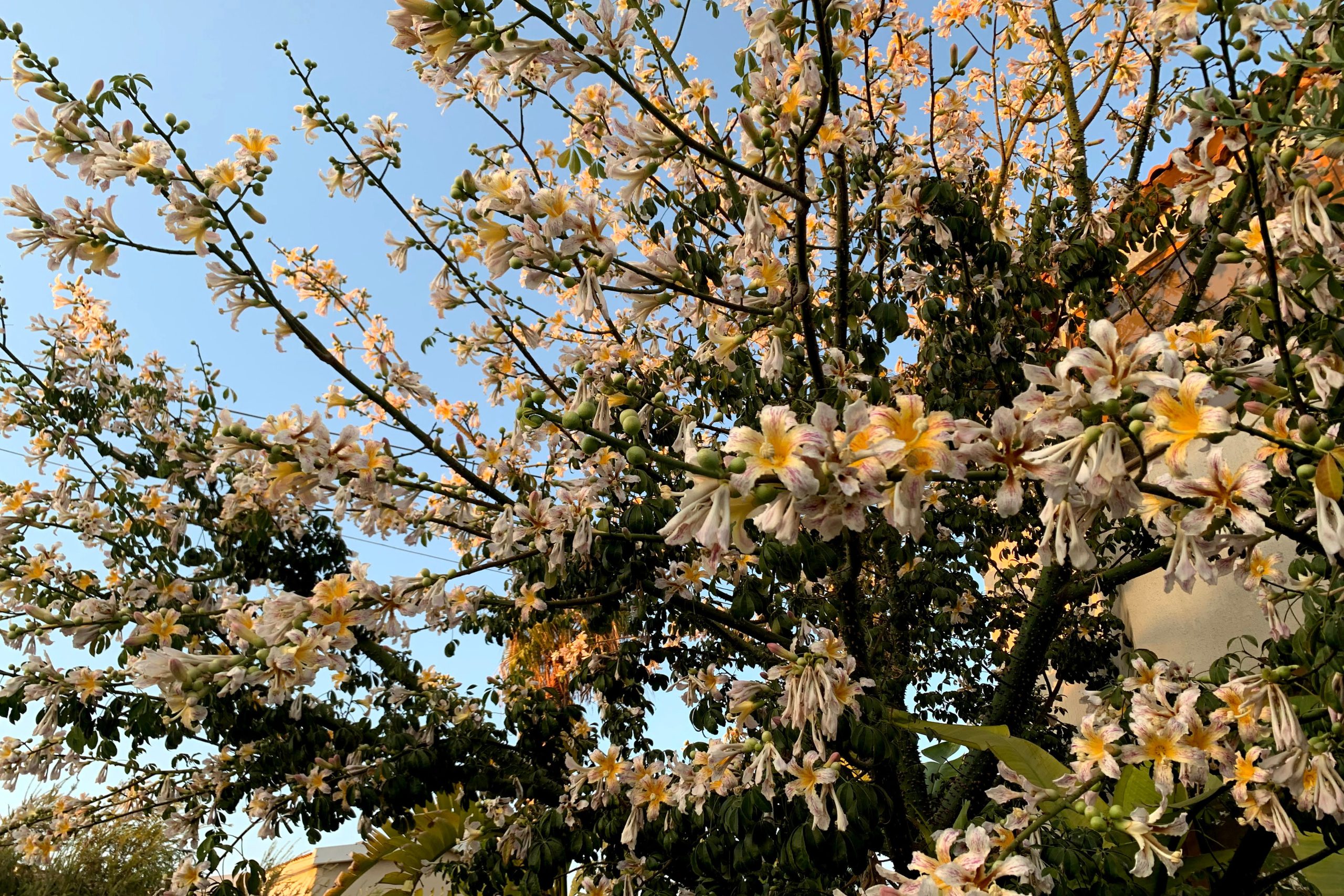
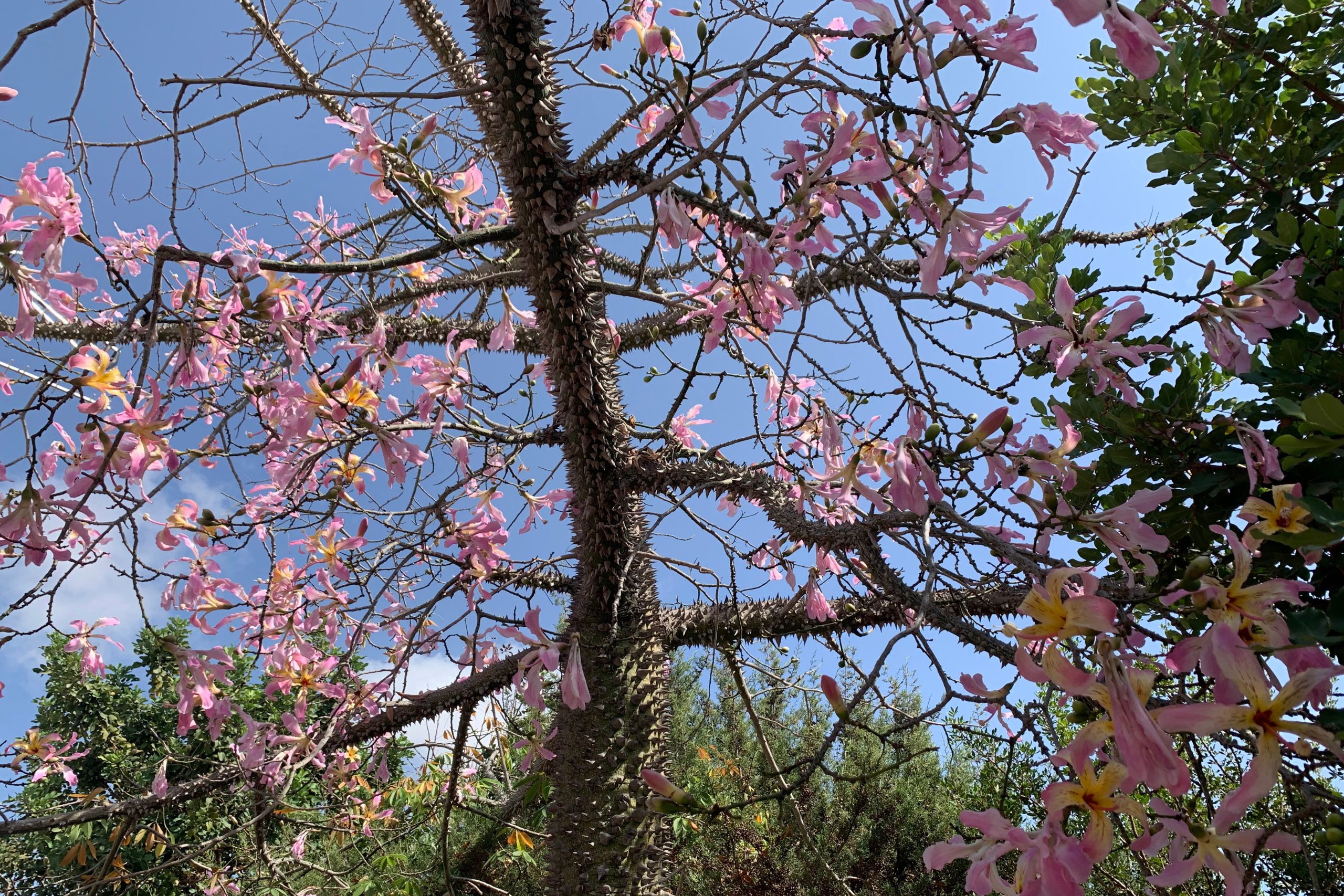
What stands out most is its swollen, bottle-shaped trunk armored with large, conical thorns that deter climbers and protect against animals. In its native lands, blooming aligns with the rainy season for best pollination by hummingbirds and insects. Here in Cyprus, our Mediterranean weather – hot summers and wet winters – fits this to autumn, typically from September to November, when cooler days signal the start. As part of the bombax family, broader cousins to cotton plants, it uses this timing to scatter seeds wrapped in silky floss, carried by winds like tiny parachutes.
Konstantin-Solovev

The leaves are palmate, like a hand with fingers spread wide, turning yellow before falling in spring.

Delightful Discoveries

  • The trunk’s thorns can grow up to 15 cm long, earning it the nickname “drunken stick” in Spanish (palo borracho) because mature trees sometimes lean as if tipsy!
  • The fluffy seed covering is so soft it was once used to stuff pillows and life jackets, giving it the fun name “floss silk tree.”
  • Bees and butterflies flock to its nectar-rich flowers, turning the tree into a buzzing party spot during bloom time.
  • In its homeland, indigenous groups roasted the seeds as a snack, tasting a bit like peanuts – though the thorny harvest makes it an adventure!
  • Young trunks are green and photosynthesize like leaves, helping the tree grow fast even in tough spots.

A Bit More Beneath the Bark

Belonging to the Ceiba genus, which includes sacred trees in Mayan lore symbolizing the connection between earth and sky, this species stores water in its trunk to survive dry spells. In Cyprus, it’s not native but adapts well, with no major pests bothering it here, and it’s assessed as Least Concern by the IUCN, thriving widely in cultivation.
Konstantin-Solovev

Part of Our Island Tapestry Today

In modern Cyprus, the floss silk tree brightens urban areas with its shade and color, helping combat heat in cities as we face warmer climates. It fits into efforts like the LIFE-ArgOassis project, where resilient plants restore degraded lands, showing how introduced species can support our push for greener, more sustainable surroundings.

Spotting the Spectacle

You can find these trees in parks like those along Byronos Avenue in Nicosia or near the sea in Larnaca, where their thorny trunks stand guard. One noble example greets visitors of the Paphos Zoo. Visiting during bloom feels like discovering a hidden festival – the air fills with a sweet scent, and the pink petals create a soft carpet for a relaxing walk or picnic, blending tropical charm with our Mediterranean breeze.

Why This Tree Touches the Heart

The floss silk tree reminds us that Cyprus’s wildlife is a beautiful mix of local roots and global travelers, each adding resilience and wonder to our shores. Knowing about it deepens our appreciation for the island’s living history, where even a spiky stranger can bloom into a symbol of enduring beauty and adaptation.
Explore our top stories and discover ideas worth your time.

Purple Haze Over Cypriot Streets

Purple Haze Over Cypriot Streets

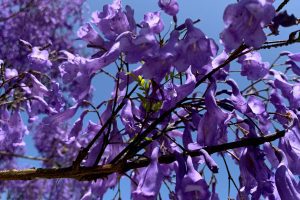
Drive through the avenues of Limassol or Nicosia in late April and you may feel you have stepped into a dream: entire streets and parks vanish beneath a shimmering canopy of lavender-blue. The source of this magic? The jacaranda – a South-American beauty whose clouds of trumpet-shaped flowers turn ordinary city corners into places of pure wonder every spring. Konstantin-Solovev The Trumpet-Tree Family Jacaranda belongs to the Bignoniaceae family the same group that gives us the African tulip tree and the catalpa. This family is famous for its showy, tubular flowers and woody pods. The genus Jacaranda contains about 49 species, nearly all native to tropical and subtropical South America. In Cyprus the star is Jacaranda mimosifolia, the blue jacaranda, sometimes still listed under the older name J. acutifolia. Locally it is known as Τζακαράντα (Tzakaránta), a direct adoption of the scientific name. The word comes from the Tupi-Guarani languages of Brazil and means “fragrant” (or, in some translations, “hard core”, referring to its durable heartwood). A Long Journey to the Mediterranean Native to the foothills of the Andes in north-western Argentina, southern Bolivia and parts of Brazil and Paraguay, jacaranda first travelled to Europe in the early 19th century as an ornamental curiosity. Like many warm-climate exotics, it reached the Mediterranean via botanical gardens and private collectors. In Cyprus…

Read more
Wattles of Cyprus

Wattles of Cyprus

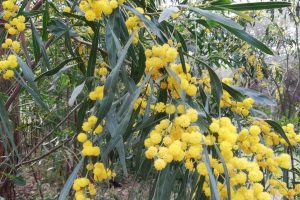
Picture a roadside verge or coastal slope in late February, when the Mediterranean light turns sharp and warm. Suddenly, whole thickets explode into vivid, butter-yellow spheres that light up the landscape like thousands of tiny suns. These are the wattles of Cyprus Australian guests that arrived with good intentions but have written their own lively, sometimes challenging chapter in the island’s green story. www.inaturalist.org Wattles in the World of Legumes Wattles belong to the enormous Acacia genus within the Fabaceae (legume) family – the same botanical clan as peas, beans, carobs and acacias of the ancient world. Most of the 1,000-plus Acacia species are native to Australia, where they are proudly called “wattles”. In Cyprus the star of the show is Acacia saligna, the golden wreath wattle or orange wattle, though a handful of other species (A. farnesiana, A. ligulata, A. karroo) appear in small numbers. Locally they are simply known as Ακακία (Akakia) – a name that echoes the ancient Greek “akakia”, used two thousand years ago by Dioscorides for the gum of Egyptian acacias. From Australian Shores to Cypriot Soil When British foresters took charge in 1878 they faced an island stripped of much of its woodland by centuries of grazing and fuelwood cutting. Following earlier recommendations by French arborist P.G. Madon (1881), they turned to fast-growing exotics.…

Read more
Whispers from the Antipodes

Whispers from the Antipodes

Imagine strolling across the sun-drenched plains of central Cyprus on a warm spring morning. Tall, graceful trees with silvery, peeling bark rise above the dry grasses, their narrow leaves whispering in the breeze and filling the air with a fresh, camphor-like scent. These are the eucalypts of Cyprus – not ancient natives, but fascinating newcomers whose story weaves together botany, colonial history, and the island’s fight against desertification. www.inaturalist.org Getting to Know the Genus Eucalyptus belongs to the vast Myrtaceae family, a group of flowering plants that also includes myrtles, guavas, and bottlebrushes. The genus Eucalyptus alone contains over 700 species, nearly all native to Australia, where they dominate woodlands and riverbanks. In Cyprus we mainly encounter Eucalyptus camaldulensis, the river red gum, though other species such as E. gomphocephala and E. torquata appear in small numbers. Locally they are known as Ευκάλυπτος (Efkalyptos), from the ancient Greek words “eu” (well) and “kalyptos” (covered), referring to the neat little cap that protects each flower bud until it is ready to bloom. Their Journey to Cypriot Soil When the British took control of Cyprus in 1878, the island had lost much of its original forest cover to centuries of grazing, firewood cutting and fires. In 1876 the French arborist P.G. Madon, working for the Ottoman administration, had already recommended eucalypts in…

Read more