Explore Cyprus with Our Interactive Map

Explore our top stories and discover ideas worth your time.

Panagia Chrysopolitissa Basilica Cyprus Heritage Site

Panagia Chrysopolitissa Basilica Cyprus Heritage Site

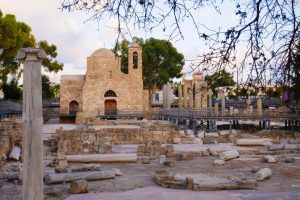
Panagia Chrysopolitissa stands as one of the most significant early Christian sites in Cyprus. This archaeological complex in Kato Paphos preserves the remains of the largest Byzantine basilica ever built on the island, along with one of Christianity's most powerful symbols, St. Paul's Pillar. nashaplaneta-net The Chrysopolitissa site brings together multiple layers of Christian history in one location. The complex includes the ruins of a massive 4th-century Byzantine basilica covering approximately 1,600 square meters, the remains of a 13th-century Franciscan Gothic church, the active stone church of Agia Kyriaki built around 1500 AD, and the famous marble pillar where St. Paul was reportedly flogged. The site combines active worship spaces with archaeological preservation, creating a unique blend of past and present. Historical Background According to Christian tradition and the Acts of the Apostles, St. Paul visited Cyprus around 45 AD during his first missionary journey with Barnabas and John Mark. The trio arrived to preach Christianity in an empire where the new faith faced persecution. In Paphos, Paul encountered resistance from a false prophet and faced the Roman governor Sergius Paulus. Tradition states that Paul was tied to a marble column and received 39 lashes for spreading Christianity. The punishment used a special whip with 13 heads attached to a single handle, so each strike delivered 13 lashes. Paul endured…

Read more
Kition Temples – Phoenician to Hellenistic Transition

Kition Temples – Phoenician to Hellenistic Transition

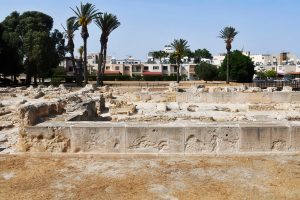
Kition, located beneath modern Larnaca on Cyprus's southeastern coast, served as a major Bronze Age settlement before the Phoenicians arrived. The site contains five successive temples dated from the late 13th to the late 11th century BC, built during the Late Bronze Age when Mycenaean Achaeans inhabited the city. arnakaregion-com These early temples were connected to copper smelting workshops, revealing an unusual integration of industrial and religious activities. The copper industry was central to Cyprus's prosperity, and scholars believe this placement suggests either worship of a deity related to copper production or a ritual significance attached to metallurgy itself. Around 1000 BC, the religious part of the city was abandoned, though life continued in other areas. This abandonment created a gap in the archaeological record until the Phoenicians revitalized the site two centuries later. Historical Background The Phoenicians arrived at Kition near the end of the 9th century BC, first as traders and later as permanent settlers. Around 850 BC, they built a large temple dedicated to Astarte on the foundations of an earlier Mycenaean temple. This temple became the most important religious building in the city and stayed in use for more than five centuries. researchgate-net The Temple of Astarte was a major architectural achievement. The rectangular building measured 35 by 22 meters, with walls made of large ashlar…

Read more
The Tall Green Spires of Cyprus Hills

The Tall Green Spires of Cyprus Hills

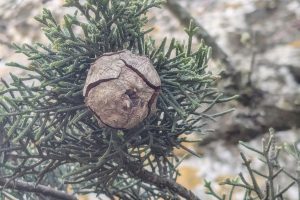
High on limestone slopes and along quiet village paths, tall, dark-green columns rise like living sentinels against the blue Mediterranean sky. Their narrow, flame-shaped crowns and fragrant wood have offered shade, shelter and symbolism to Cypriots for thousands of years. This is the Mediterranean cypress, Cupressus sempervirens – Cyprus’s own elegant guardian of roads, churches, monasteries and mountain passes. www.inaturalist.org A Classic of the Cypress Family Known scientifically as Cupressus sempervirens, this evergreen conifer belongs to the genus Cupressus within the Cupressaceae family in the order Pinales. It is the only native cypress in Cyprus and shows remarkable variation: the strict upright var. sempervirens (pyramidal form) and the spreading var. horizontalis. Both forms are fully indigenous and part of the island’s natural heritage. Ancient Companion of Cyprus Forests Cypresses formed part of the dense primeval forests that covered Cyprus 10,000 years ago. Greek mythology tells how the youth Kyparissos, grieving for a deer he accidentally killed, was transformed by Apollo into this very tree – making the cypress a timeless symbol of mourning and eternity. In 2002 it was honoured as Tree of the Year, celebrating its beauty, durability and high ecological value. Distinctive Features That Define It The Mediterranean cypress reaches 15–30 metres in Cyprus, with a narrow conical or columnar crown. Its tiny, scale-like leaves are dark green,…

Read more