Explore Cyprus with Our Interactive Map

Explore our top stories and discover ideas worth your time.

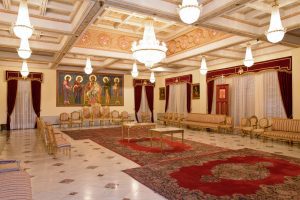
Archbishop’s Palace Nicosia Cypriot Orthodoxy Center

Archbishop’s Palace Nicosia Cypriot Orthodoxy Center

The Archbishop's Palace in Nicosia serves as the official headquarters of the Orthodox Church of Cyprus and the residence of the Archbishop. sciencedirect-com The Archbishop's Palace functions as both the administrative center of the Cypriot Orthodox Church and a major cultural complex. The building houses the offices of the archdiocese, the residence of the Archbishop of Nova Justiniana and All Cyprus, the Byzantine Museum with over 200 icons spanning 1,000 years, the Library of the Archbishopric, and an art gallery displaying European paintings from the 15th to 19th centuries. The palace stands adjacent to the Old Archbishop's Palace, which now contains the Folk Art Museum and the EOKA Struggle Museum. The complex represents the enduring power and influence of the Orthodox Church in Cypriot society, while also serving as a guardian of the island's cultural heritage. Historical Background The current Archbishop's Palace was constructed between 1956 and 1960, during the final years of British colonial rule and the lead-up to Cypriot independence. Archbishop Makarios III commissioned the palace, recognizing the need for a modern building to reflect the importance of the Church of Cyprus. The timing of construction proved significant, as Makarios would soon become not just the spiritual leader of the Orthodox community but also the first president of the Republic of Cyprus in 1960. wikipedia-org Greek architect George…

Read more
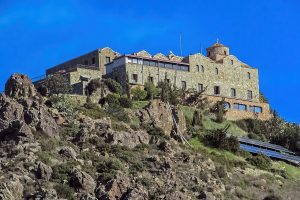
Cyprus Holy Site Pilgrimages

Cyprus Holy Site Pilgrimages

Cyprus has been a destination for religious pilgrims for over 1,700 years. The island holds a unique place in Christian history as one of the first regions to embrace Christianity and the first territory in the world to have a Christian ruler. Dozens of monasteries, churches, and holy sites dot the landscape from the coastal cities to the mountain peaks. kiprguru-com These locations preserve relics, icons, and traditions that connect believers to the earliest days of the faith. Pilgrims from around the Orthodox world, as well as from Catholic and other Christian communities, journey to Cyprus to experience these sacred places. Religious tourism in Cyprus combines spiritual devotion with remarkable natural beauty. Pilgrimage sites exist in diverse settings, from ancient coastal cities to remote mountain monasteries accessible only by winding roads. Visitors encounter Byzantine frescoes, miracle-working icons, holy relics, and architecture spanning centuries. The experience offers both worship and cultural education, as these sites preserve artistic and historical treasures alongside their religious significance. Whether visiting for personal faith, scholarly interest, or simple curiosity, travelers find that Cyprus's holy sites reveal much about the development of Eastern Christianity. Historical Background The tradition of Christian pilgrimage to Cyprus began with the island's conversion in the first century. Around 45 AD, the apostles Paul and Barnabas arrived at Salamis on the eastern coast.…

Read more

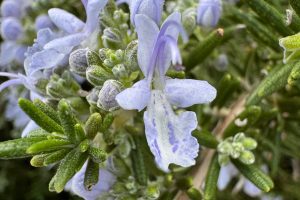
Wild Rosemary in Cyprus

Wild Rosemary in Cyprus

Imagine a resilient shrub clinging to sun-baked rocks along Cyprus' rugged coastlines, its fragrant leaves releasing a piney aroma that evokes ancient rituals and modern kitchens alike. This is the story of wild rosemary, a Mediterranean icon thriving in Cyprus' diverse landscapes. But what secrets does this humble plant hold in its evergreen needles? www.inaturalist.org A Fragrant Survivor of the Mediterranean Wild rosemary, known scientifically as Salvia rosmarinus, is an evergreen shrub belonging to the Lamiaceae family – a group of aromatic plants that includes mints, sages, and thymes, all sharing square stems and opposite leaves. It's a classic example of the broader mint family, which has evolved to produce essential oils as a defense against herbivores and harsh environments. In Cyprus, it's a native wildflower that dots the island's scrublands, embodying the tough, adaptive spirit of Mediterranean flora. Echoes from Ancient Shores Rosemary's history stretches back to the cradle of civilizations around the Mediterranean Sea. Ancient Greeks and Romans revered it as a sacred plant, weaving it into wreaths for scholars and athletes, symbolizing memory and fidelity – perhaps due to its invigorating scent believed to sharpen the mind. In Cyprus, influenced by these classical roots, it appears in folklore tied to Byzantine and Ottoman eras, where islanders used it in religious ceremonies and as a protective charm against…

Read more