Explore Cyprus with Our Interactive Map

Explore our top stories and discover ideas worth your time.

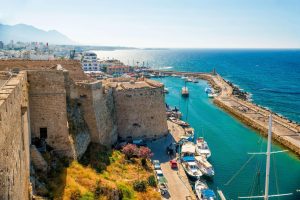
Kyrenia Castle: Fortress Facing the Sea

Kyrenia Castle: Fortress Facing the Sea

Kyrenia Castle stands at the edge of one of Cyprus’s most sheltered harbours, where land and sea have negotiated power, trade, and survival for centuries. Unlike hilltop fortresses built to dominate territory from afar, this castle was designed to watch the water closely. Its purpose has always been practical: to protect the harbour, control movement, and adapt to whoever ruled Cyprus at the time. That continuous adaptation rather than a single defining moment is what gives Kyrenia Castle its lasting significance. Adobe-Stock-com A Fortress Built for a Living Harbour Kyrenia Castle occupies a narrow strip of land between the town and the sea, positioned so that every vessel entering the harbour passes beneath its walls. From its earliest days, the castle was inseparable from daily life. Trade ships, fishing boats, and naval vessels all moved through the same space, watched over by stone walls that were never purely symbolic. Adobe-Stock-com This closeness to the harbour distinguishes Kyrenia Castle from many medieval fortifications. It was not a distant refuge, but an active participant in the rhythms of the town. Its defensive role was intertwined with commerce, communication, and maritime control. Byzantine Foundations and the First Line of Defence The earliest phase of Kyrenia Castle dates to the Byzantine period, when coastal settlements across the Eastern Mediterranean were reinforced against Arab naval…

Read more

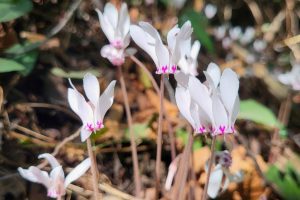
The Cyprus Cyclamen

The Cyprus Cyclamen

The Cyprus Cyclamen (Cyclamen cyprium) is far more than a delicate wildflower; it is a symbol of the island’s natural beauty and the resilience of its people. Formally designated as the national flower of Cyprus, this endemic treasure thrives in the cool, rocky shadows of the island's mountain ranges. seedscape.net The Mediterranean Rhythm: Growth in Winter In the unique climate of Cyprus, the seasons of life are reversed compared to northern latitudes. For the Cyprus Cyclamen, the scorching, dry summer is a period of "estivation" (summer dormancy), where it hides underground as a tuber to survive the heat. As the autumn rains arrive in September and October, the plant awakens. It uses the mild, wet winter to bloom and grow its biomass, taking advantage of the moisture before the landscape dries out again in May. Botanical Features and Identification While Cyprus is home to three cyclamen species, C. cyprium is the only one that is truly endemic—found nowhere else in the world. Key Characteristics • The Flower: Small, white to pale pink petals that sweep upward and twist at the tips. Each petal features a distinct magenta M-shaped mark at its base.• The Fragrance: It is famous for its intense, sweet lily-like scent that fills the winter air.• The Leaves: Heart-shaped with toothed edges. They are dark green with silver-grey…

Read more
Pistacia Atlantica

Pistacia Atlantica

High on rocky hillsides where the Mediterranean sun bakes the earth, a sturdy, wide-crowned tree stands like an ancient sentinel. Its twisted trunk oozes fragrant resin, and in autumn its golden leaves and clusters of red-to-black fruits light up the landscape. Meet the wild pistachio, a true survivor and one of the quiet heroes of Cyprus’s native woodlands. wikimedia.org A Proud Member of the Cashew Family Scientifically known as Pistacia atlantica, this deciduous tree belongs to the genus Pistacia within the Anacardiaceae family – the cashew or sumac clan, which also includes the closely related mastic tree (Pistacia lentiscus), another iconic native of Cypriot maquis. Both species thrive in the island’s dry, rocky slopes and garigue, sharing the family’s trademark resin canals and compound leaves. Ancient Roots in Cyprus Landscapes Wild pistachios have been part of Cyprus since prehistoric times, forming part of the original maquis vegetation alongside carobs and olives. Ancient settlements like Tremithounta took their name from the tree (tremithos), and its resin called “Paphitiki pissa” or Cyprus turpentine was chewed as natural gum and traded across the Mediterranean. wikimedia.org British foresters in the 19th century recorded it in degraded shrublands, while today one of the island’s oldest living trees, estimated at over 1,500 years, still shades a village square as a protected natural monument. Distinctive Features That…

Read more