Explore Cyprus with Our Interactive Map

Explore our top stories and discover ideas worth your time.

Cyprus Olympic Museum Nicosia Sports History

Cyprus Olympic Museum Nicosia Sports History

The Cyprus Olympic Museum preserves the athletic heritage of the island. It exhibits 400 artifacts that document Cyprus's participation in the Olympic Games and international sporting competitions since 1980. cyprushighlights-com The museum occupies all three floors of the Olympic House, the headquarters of the Cyprus Olympic Committee, located at 21 Amfipoleos Street in Nicosia. The Olympic House opened on September 16, 2006, in a ceremony attended by President Tassos Papadopoulos and International Olympic Committee President Jacques Rogge. The three-story building covers 7,500 square meters and cost 5.63 million Cyprus pounds to construct. The Cyprus Olympic Museum began operations in 2012, six years after the building's inauguration. The facility houses almost every sporting federation on the island, including sports not on the Olympic schedule. This centralized location makes the Olympic House a hub for athletic administration and a resource center for Cyprus's sporting community. The museum component transforms the building from merely an administrative center into an educational space that celebrates Cyprus's Olympic journey. Historical Background The Cyprus Olympic Committee was founded on June 10, 1974, and gained membership in the International Olympic Committee in 1979. Before this recognition, Cypriot athletes competed internationally under the Greek flag. Notable Cypriots who represented Greece include Ioannis Frangoudis, who won three shooting medals at Athens 1896, and Aristidis Konstantinidis, who claimed cycling gold at…

Read more

Palaepaphos Kouklia – Aphrodite Cult Center

Palaepaphos Kouklia – Aphrodite Cult Center

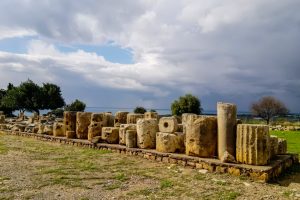
Kouklia is a village in the Paphos District built over the site of the ancient city of Palaepaphos, mythical birthplace of Aphrodite, which became the centre for her worship in the ancient world. This modest village 16 kilometers east of modern Paphos holds the remains of one of the longest continuously operating religious sanctuaries in human history. tripadvisor-com From around 1200 BC, Palaepaphos was a major religious centre famous all over Cyprus and throughout the Mediterranean. The city served as both a political capital and a sacred site, where the ancient goddess of fertility transformed over centuries into the Greek deity known as Aphrodite. The Sanctuary of Aphrodite is the most famous of the Ancient Greek Goddess' sanctuaries, and its ancient remains date back to the 12th century BC, whilst it remained a place of worship until the 3rd to 4th centuries AD. The sanctuary occupied a commanding position on a limestone plateau overlooking what was once a harbor and lagoon. According to Professor Maria Iacovou from the University of Cyprus, the sanctuary would have been located very close to the original port authority of ancient Paphos. The strategic location connected the religious site directly to sea routes, which brought pilgrims from across the Mediterranean world. Historical Background The Cypriots worshipped a goddess of fertility from as early as the…

Read more
Purple Haze Over Cypriot Streets

Purple Haze Over Cypriot Streets

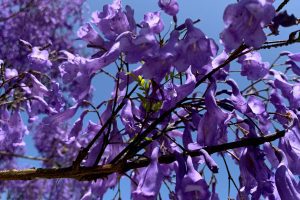
Drive through the avenues of Limassol or Nicosia in late April and you may feel you have stepped into a dream: entire streets and parks vanish beneath a shimmering canopy of lavender-blue. The source of this magic? The jacaranda – a South-American beauty whose clouds of trumpet-shaped flowers turn ordinary city corners into places of pure wonder every spring. Konstantin-Solovev The Trumpet-Tree Family Jacaranda belongs to the Bignoniaceae family the same group that gives us the African tulip tree and the catalpa. This family is famous for its showy, tubular flowers and woody pods. The genus Jacaranda contains about 49 species, nearly all native to tropical and subtropical South America. In Cyprus the star is Jacaranda mimosifolia, the blue jacaranda, sometimes still listed under the older name J. acutifolia. Locally it is known as Τζακαράντα (Tzakaránta), a direct adoption of the scientific name. The word comes from the Tupi-Guarani languages of Brazil and means “fragrant” (or, in some translations, “hard core”, referring to its durable heartwood). A Long Journey to the Mediterranean Native to the foothills of the Andes in north-western Argentina, southern Bolivia and parts of Brazil and Paraguay, jacaranda first travelled to Europe in the early 19th century as an ornamental curiosity. Like many warm-climate exotics, it reached the Mediterranean via botanical gardens and private collectors. In Cyprus…

Read more