Whispers from the Antipodes
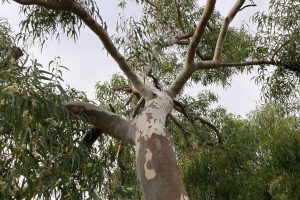
Imagine strolling across the sun-drenched plains of central Cyprus on a warm spring morning. Tall, graceful trees with silvery, peeling bark rise above the dry grasses, their narrow leaves whispering in the breeze and filling the air with a fresh, camphor-like scent. These are the eucalypts of Cyprus – not ancient natives, but fascinating newcomers whose story weaves together botany, colonial history, and the island’s fight against desertification. www.inaturalist.org Getting to Know the Genus Eucalyptus belongs to the vast Myrtaceae family, a group of flowering plants that also includes myrtles, guavas, and bottlebrushes. The genus Eucalyptus alone contains over 700 species, nearly all native to Australia, where they dominate woodlands and riverbanks. In Cyprus we mainly encounter Eucalyptus camaldulensis, the river red gum, though other species such as E. gomphocephala and E. torquata appear in small numbers. Locally they are known as Ευκάλυπτος (Efkalyptos), from the ancient Greek words “eu” (well) and “kalyptos” (covered), referring to the neat little cap that protects each flower bud until it is ready to bloom. Their Journey to Cypriot Soil When the British took control of Cyprus in 1878, the island had lost much of its original forest cover to centuries of grazing, firewood cutting and fires. In 1876 the French arborist P.G. Madon, working for the Ottoman administration, had already recommended eucalypts in…
Read more