Explore Cyprus with Our Interactive Map

Explore our top stories and discover ideas worth your time.

Freshwater Wetlands and Ponds Cyprus

Freshwater Wetlands and Ponds Cyprus

Freshwater Wetlands and Seasonal Ponds are temporary ecosystems in inland depressions across Cyprus, supporting amphibians, migratory waterfowl, and rare fish. These habitats form during winter rains, transforming dry basins into vibrant pools that host diverse life before evaporating in summer heat. Facebook.com They play a crucial role in the island's biodiversity, offering breeding grounds and stopovers in an otherwise arid landscape, highlighting nature's cyclical resilience. A Temporary Ecosystem Inland Freshwater wetlands and seasonal ponds in Cyprus represent ephemeral water bodies that appear in low-lying inland areas, filling with rainwater and runoff to create shallow, nutrient-rich habitats. These depressions, scattered across the Mesaoria Plains and Troodos foothills, range from small ponds of a few square meters to larger wetlands like the one at Paralimni, covering up to 2 square kilometers in wet seasons. wikipedia.org They support amphibians like the green toad, migratory waterfowl such as teals, and rare fish species adapted to fluctuating water levels. This temporary nature - flooding in winter (November-March) and drying in summer (June-September) - fosters a dynamic ecosystem where life cycles sync with rainfall, making them vital for species survival in Cyprus's semi-arid climate. Historical Formation and Evolution These ecosystems formed during the Holocene epoch around 10,000 years ago, as post-glacial climate shifts created depressions from river erosion and tectonic subsidence, per geological studies by the…

Read more
Temple of Aphrodite at Amathus

Temple of Aphrodite at Amathus

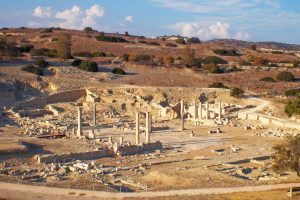
Located on the acropolis of Amathus, this sanctuary was a major rival to Paphos and featured two giant stone vases symbolizing the city's wealth. The Temple of Aphrodite at Amathus stands as an enduring symbol of Cyprus's ancient religious landscape, where devotion to the goddess of love and fertility rivaled the famed sanctuary at Paphos, drawing pilgrims from across the Mediterranean. Perched on the acropolis of the ancient city-kingdom of Amathus, near modern Limassol, this site blended indigenous Cypriot traditions with Phoenician, Greek, and Roman influences, reflecting the island's role as a cultural melting pot. Dedicated to Aphrodite, often syncretized with the earlier Astarte, the temple highlighted Amathus's prosperity through monumental features like two colossal stone vases, each weighing around 14 tons and standing over 1.85 meters tall, which served as emblems of the city's wealth and engineering prowess. As a key center for rituals tied to fertility, beauty, and renewal, it competed with Paphos for prestige, underscoring regional rivalries in ancient Cyprus. Today, the ruins offer insights into millennia of worship, from prehistoric roots to Roman grandeur, fostering appreciation for the island's layered heritage amid ongoing archaeological discoveries. A Major Sanctuary on the Acropolis The Temple of Aphrodite crowned the acropolis of Amathus, a strategic hilltop overlooking the southeastern coast, providing both defensive advantages and panoramic views of the…

Read more

Ancient Idalion Dali – City-Kingdom & Idalion Tablet

Ancient Idalion Dali – City-Kingdom & Idalion Tablet

Idalion was an ancient city in Cyprus, in modern Dali, Nicosia District. The city was founded on the copper trade in the 3rd millennium BC. Located in the fertile Gialias valley between two hills, this powerful kingdom left behind one of the most important historical documents in ancient Cyprus, a bronze tablet that recorded a social welfare system 2,500 years old. wikimedia.org1 The ancient city was located in the fertile Gialias valley and flourished there as an economic centre due to its location close to the mines in the eastern foothills of the Troodos Mountains and its proximity to the cities and ports on the south and east coast.Idalion prospered and became so wealthy that it was listed as the first among the ten Cypriot kingdoms on the prism of the Assyrian king Esarhaddon (680-669 BC). This ranking shows how important the city was in the ancient Mediterranean trade network. Historical Background The ancient city was founded by the Achaean hero of the Trojan war, Chalcanor, descendant of Teucer, the founder of Salamis. This foundation legend connects Idalion to the wave of Greek colonization that followed the Bronze Age collapse around 1200 BC. The worship of Apollo Amyclae reveals that the Greeks came from Laconia. This detail shows that the settlers originated from the Peloponnese in southern Greece, bringing their…

Read more