Explore Cyprus with Our Interactive Map

Explore our top stories and discover ideas worth your time.

Cyprus Honey

Cyprus Honey

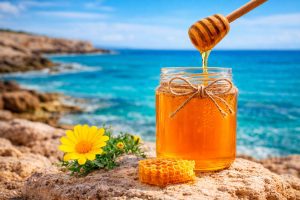
Honey in Cyprus is not simply a food product. It reflects landscape, climate, and survival shaped over centuries. Produced mainly in mountain and rural areas, Cypriot honey carries the character of wild thyme, pine forests, citrus groves, and seasonal movement across the island. Long before sugar became common, honey served as the primary sweetener, a form of medicine, and a symbol of hospitality. Its role has never disappeared. Instead, it has evolved alongside changing lifestyles and technologies. thegreekvibe-com An Island That Shapes Its Honey Cyprus’s geography plays a decisive role in how honey is produced. Two mountain ranges, varied elevations, and sharply contrasting microclimates allow flowering to unfold in stages rather than all at once. Coastal plains warm early in the year, while foothills and high mountain slopes bloom later, extending the foraging season for bees. This vertical landscape makes beekeeping in Cyprus inherently mobile. Apiaries are often moved throughout the year, following blossoms from lowland citrus groves to the thyme-covered slopes of the Troodos Mountains. Honey here is shaped as much by movement as by place, with each harvest reflecting a specific altitude, season, and environment. The Native Bee and Local Resilience At the heart of Cypriot honey production is a native honeybee adapted to the island's demanding conditions. This bee has developed endurance in heat, wind, and drought…

Read more

Famagusta Cultural Heritage Museum Cyprus Europe

Famagusta Cultural Heritage Museum Cyprus Europe

The Famagusta Cultural Heritage Museum stands as a solemn witness to one of Cyprus's most painful chapters. Built in 1998 on the edge of the United Nations buffer zone in Deryneia, this center offers visitors a rooftop view across barbed wire into Varosha, the abandoned resort district that has remained frozen in time since August 1974. pixabay-com The Cultural Centre of Occupied Famagusta operates as both a museum and an observation point. The facility houses a multipurpose room where visitors watch audiovisual presentations about Famagusta before the 1974 Turkish invasion, when it served as the island's premier tourist destination and cultural hub. The museum displays photographs, posters, and artifacts documenting daily life in Famagusta when the city was home to 40,000 residents. Historical Background Deryneia village sits 2 kilometers south of Famagusta, positioned directly on the dividing line that has split Cyprus since 1974. The village lost approximately 75% of its territory to the Turkish occupation, including the lower part of the settlement known as Kato Deryneia and most of its agricultural land. Before 1974, residents could walk to the sea in minutes. After the invasion, barbed wire and military posts blocked their access. serene-property-com The village population includes about 1,000 refugees who fled from other areas during the invasion and settled in Deryneia. Another 3,000 former residents of Kato…

Read more
Washingtonia Palms

Washingtonia Palms

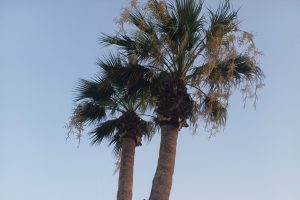
Wander along a bustling coastal promenade in Limassol or through a quiet park in Nicosia, and you might spot these towering fan-shaped trees swaying gently in the breeze. These are the Washingtonia palms of Cyprus – elegant imports from distant deserts that have become familiar landmarks across the island. But how did these American natives find a home in our Mediterranean paradise? www.inaturalist.org A Palm for Dry Lands Washingtonia belongs to the vast palm family, Arecaceae, which includes over 2,500 species worldwide, from the date palms we know so well to the coconut trees of tropical shores. In simple terms, it's a type of fan palm, known for its wide, spreading leaves that look like giant hands fanning the air. Here in Cyprus, we mainly see two varieties: the sturdy Washingtonia filifera and its slimmer cousin, Washingtonia robusta, along with their natural hybrid blends. From Desert Oases to Island Avenues These palms hail from the hot, dry deserts of southwestern America and northwestern Mexico, where they've thrived for thousands of years around precious water sources. Named in 1879 after George Washington, the first U.S. president, they caught the eye of European botanists in the 19th century and were soon shipped across the seas as ornamental wonders. In Cyprus, they likely arrived during the British colonial era around the early 1900s,…

Read more