Explore Cyprus with Our Interactive Map

Explore our top stories and discover ideas worth your time.

Cyprus International Music Festivals Sound Stone Identity

Cyprus International Music Festivals Sound Stone Identity

Cyprus hosts a small but distinctive network of international music festivals that unfold across ancient theatres, medieval abbeys, and open Mediterranean landscapes. Rather than existing as isolated events, these festivals reflect how the island uses music to connect heritage, geography, and contemporary cultural life. This article explains how Cyprus’s major international music festivals developed, why their venues matter as much as the performances, and how they continue to shape the island’s cultural identity today. cyprusholidayadvisor-com Music Festivals as Cultural Bridges Cyprus sits at the crossroads of Europe, the Middle East, and the Eastern Mediterranean, and its music festivals mirror that position. From classical chamber concerts to jazz, opera, and cross-genre experimentation, festival programming is deliberately international in scope. Rather than focusing on a single musical tradition, Cyprus’s festivals operate as cultural bridges. They bring together artists from Europe, the Middle East, and beyond, often in places shaped by centuries of layered history. Music becomes a neutral language in spaces once defined by empire, religion, or conflict. The Core Festivals That Define the Scene Several institutions form the backbone of Cyprus’s international music calendar. In the Turkish-occupied area, the so-called “International Music Festival”, held illegally by the Turkish authorities, has grown into a long-running annual event, typically held in early autumn. Organised by the so-called “Northern Cyprus Musical Association”, it features…

Read more
Major Infrastructure Projects in Cyprus

Major Infrastructure Projects in Cyprus

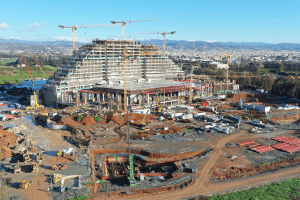
Cyprus has committed over 1.3 billion euros to infrastructure development in 2025, representing one of the most ambitious public investment programs in the island's recent history. President Nicos Christodoulides announced this figure in January 2025, emphasizing the government's determination to modernize public works legislation and introduce electronic systems to increase transparency and efficiency. shutterstock-com The infrastructure push covers multiple sectors, from road networks and smart city technologies to hospital construction and educational facilities. These projects aim to transform Cyprus into a more connected, sustainable, and economically competitive nation. However, several flagship projects have faced significant setbacks, including the troubled 1.2 billion euro Larnaca port and marina redevelopment, which saw its original concession terminated in 2024 after years of delays and financing problems. The Road Network Modernization Program The Ministry of Transport, Communications, and Works has prioritized road infrastructure development, allocating 439.3 million euros through September 2026 for a comprehensive highway and road network upgrade. The program includes ten major projects designed to reduce travel times, improve safety, and decrease urban congestion. These infrastructure interventions represent the most significant road construction effort in Cyprus in over a decade. shutterstock-com The Nicosia Perimeter Motorway represents the centerpiece of this program. Phase A1, which connects the Lakatamia Industrial Area to the Dali Industrial Area, includes 7.5 kilometers of four-lane highway plus approximately 10…

Read more
Trahanas Preserving In Cyprus

Trahanas Preserving In Cyprus

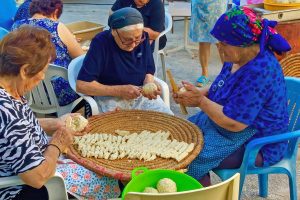
Trahanas is not a soup in the usual sense. It is a solution shaped by necessity. Long before refrigeration, electricity, or supermarkets, Cypriot households needed a way to preserve the abundance of summer milk and turn it into nourishment for the colder, damp months that followed. Trahanas emerged as a practical answer to this challenge, turning perishable ingredients into a stable, nourishing reserve. homeiscyprus-com Tangy, filling, and deeply comforting, trahanas sits at the centre of Cyprus’s food memory not because it is impressive, but because it worked when it mattered most. To eat trahanas is to taste the logic of survival shaped by land, climate, and patience. A Food Designed to Last, Not Impress At its core, trahanas is made from sour sheep’s or goat’s milk combined with cracked wheat, often called konari in Cyprus. The mixture is fermented, cooked, shaped, and then dried under the summer sun until it becomes hard and shelf-stable. Months later, it is rehydrated with water or stock and slowly boiled into a thick, warming soup. cyprusfoodmuseum-com This transformation is the point. Trahanas begins as liquid, becomes solid, and returns to liquid again, with every stage designed to extend life rather than enhance appearance. The rough texture, the sourness, and the muted colour are not flaws. They are evidence of a food designed with intention,…

Read more