Explore Cyprus with Our Interactive Map

Explore our top stories and discover ideas worth your time.

Whispers of the Wild Marathos

Whispers of the Wild Marathos

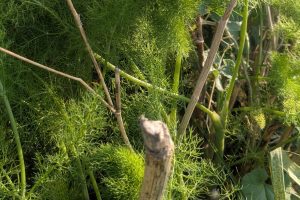
Imagine wandering through the sun-drenched hills of Cyprus, where a tall, feathery plant sways gently in the breeze, releasing a sweet, licorice-like aroma that hints at ancient secrets. This is wild fennel, a humble herb that has flavored Cypriot life for millennia, blending culinary delight with healing wisdom. But what tales does this unassuming plant hold, and why does it thrive so vibrantly on this island paradise? www.inaturalist.org A Fragrant Member of the Carrot Clan Wild fennel, known scientifically as Foeniculum vulgare, belongs to the Apiaceae family – a vast group that includes everyday favorites like carrots, parsley, and dill. This broader taxonomy places it among plants celebrated for their aromatic seeds and leaves, which have sustained Mediterranean communities for generations. In its simplest form, it's a perennial herb that pops up in unexpected places, offering both beauty and utility without demanding much in return. From Ancient Myths to Island Shores The story of wild fennel stretches back to the dawn of Mediterranean civilization, intertwined with human history and mythology. In ancient Greece, it was so abundant on the plain of Marathon – where a legendary battle unfolded in 490 BC – that the site was named after the plant itself; "marathos" in Greek means fennel, evoking images of vast fields swaying like a green sea. Greek scholars like Pliny…

Read more

Sanctuary of Apollo Hylates at a Glance

Sanctuary of Apollo Hylates at a Glance

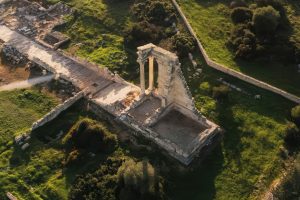
The Sanctuary of Apollo Hylates was one of the most important religious centres in ancient Cyprus, set within the wooded landscape near Kourion. Dedicated to Apollo in his role as protector of forests and nature, it combined Greek religious traditions with older local beliefs and attracted pilgrims for centuries. The sanctuary reveals how religion, nature, and daily life were closely connected in the ancient world. cyprusalive-com A Sacred Place in the Forest The Sanctuary of Apollo Hylates lies west of ancient Kourion, surrounded by gentle hills and woodland. Unlike urban temples built into city centres, this sanctuary was deliberately placed in nature, reflecting the character of the god worshipped there. limassoltourism-com Apollo Hylates was not the sun god or musician known from classical myths, but a guardian of forests, wild landscapes, and natural balance. The setting itself was part of the sacred experience, where worshippers felt close to both the god and the land. Roots Older Than the Greeks The origins of the sanctuary reach back to the Late Bronze Age. Before Greek settlers arrived, local communities already worshipped a nature deity connected to trees and the wilderness. When Greek culture spread to Cyprus, this local god was identified with Apollo. chatgpt-com Rather than replacing older beliefs, Greek religion absorbed them. The result was Apollo Hylates, a uniquely Cypriot form…

Read more
Salamis City, Cyprus – History & Facts

Salamis City, Cyprus – History & Facts

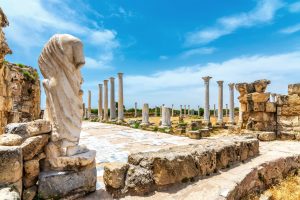
Salamis stands as one of the most important archaeological sites on the island of Cyprus. Located on the eastern coast near modern Famagusta, this ancient city flourished for over 1,800 years before nature forced its abandonment. The ruins spread across one square mile along the coast, offering visitors a remarkable glimpse into ancient Mediterranean civilization. cyprusparadise.com According to Greek legend, Salamis was founded by Teucer, son of King Telamon. After the Trojan War ended, Teucer could not return home because he failed to avenge his brother Ajax. Banished by his father, Teucer sailed to Cyprus and established a new city named after his birthplace, the island of Salamis near Athens. Archaeological evidence dates the earliest settlement to the 11th century BC during the Late Bronze Age. The city likely emerged as a replacement for nearby Enkomi, which was abandoned when its harbor silted up. Cyprus held immense strategic value due to its rich copper deposits, and Salamis became a crucial hub in Mediterranean trade networks. From Kingdom to Capital By the 6th century BC, Salamis had grown into the most powerful city on Cyprus. King Euelthon, who ruled from 560 to 525 BC, claimed authority over the entire island and became the first Cypriot king to mint coins. The city came under Persian control in 525 BC but maintained considerable…

Read more