Explore Cyprus with Our Interactive Map

Explore our top stories and discover ideas worth your time.

Nymphaeum of Kourion Roman Water Architecture

Nymphaeum of Kourion Roman Water Architecture

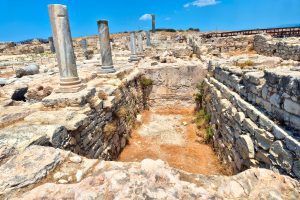
The nymphaeum at Kourion stands as one of the largest fountain complexes in the Roman Mediterranean world. This impressive water structure measured 45 meters long and 15 meters wide at its peak, dominating the northern edge of the city's public forum. Built through four major construction phases between the early first century and the mid-seventh century AD, the nymphaeum served not just as a water source but as a grand architectural statement about Roman power and civilization in Cyprus. cyprusalive.com Kourion occupied a strategic hilltop position on the southern coast of Cyprus, about 19 kilometers west of modern Limassol. Founded around the 13th century BC by Argive colonists according to tradition, the city controlled fertile valleys and natural harbors. This location brought prosperity through trade in grain, sheep, copper, and agricultural products across the Mediterranean. Before the Romans built aqueducts, Kourion depended largely on stored rainwater collected in numerous bottle-shaped cisterns carved into bedrock. The city and the nearby Sanctuary of Apollo Hylates both lacked natural springs. Residents had to transport water in jars by animal portage from distant sources. As the city grew wealthier and more populous, this system became inadequate. The construction of at least one major aqueduct, possibly followed by a second larger one, solved this problem by bringing water from springs further inland. Historical Background In…

Read more
Artisanal and Industrial Fishing Cyprus

Artisanal and Industrial Fishing Cyprus

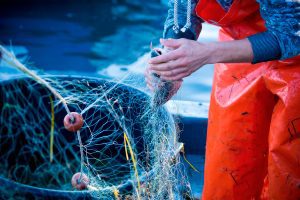
kiprinform.com Fishing in Cyprus faces significant external pressures and rising socio-economic concerns rather than a simple quiet balance. Small-scale artisanal fishers still work close to shore using selective, traditional methods, while a limited number of industrial operations supply markets with consistency and volume. Both exist within the same narrow waters, governed by strict regulation and ecological limits. Understanding this balance explains not only how seafood reaches Cypriot tables, but also how culture, sustainability, and modern life intersect around the sea. An island that learned to read the sea Cyprus has always depended on the Mediterranean in practical ways. Long before engines or harbours, coastal communities relied on observation, memory, and seasonal rhythm. Fishing was guided by wind, water temperature, and experience passed quietly between generations. As the island modernised during the twentieth century, fishing evolved rather than disappeared. Motors replaced oars, ice replaced immediate consumption, and ports became more organised. Yet many families continued to fish in familiar ways, preserving a working connection between past and present rather than treating tradition as nostalgia. What artisanal fishing really looks like fishingtourism.org Artisanal fishing in Cyprus is defined by proximity and restraint. Boats are small, usually under twelve metres, and operations remain close to the coast. Gear is chosen not for volume, but for precision. Common methods include trammel nets laid carefully…

Read more

Lilac Clouds and Golden Berries

Lilac Clouds and Golden Berries

Imagine walking through a quiet Cypriot village in late April. The air carries a sweet, honey-like fragrance, and suddenly you notice a graceful tree covered in clouds of delicate lilac flowers. By autumn, the same tree hangs heavy with clusters of shiny yellow berries that glow like tiny lanterns against the green leaves. This is the chinaberry – a charming, fast-growing guest that has quietly become part of Cyprus’s everyday landscape. www.inaturalist.org The Bead-Tree in the Mahogany Family Chinaberry, Melia azedarach, belongs to the Meliaceae (mahogany) family – the same noble group that gives us true mahogany timber and the famous neem tree of India. The genus Melia is small, and this species is the most widely planted. Locally it is known as Μαυρομάτα (Mavromata – “dark eyes”, referring to the darker centres of the flowers) or Αγριοπασχαλιά (Agrio Paschalia – wild Easter lilac). The name perfectly captures its springtime beauty. From Asian Forests to Cypriot Gardens Native to southern Asia (from India and China to northern Australia), the chinaberry has been valued for centuries for its shade, fragrant flowers and useful seeds. It reached the Mediterranean as an ornamental in the 19th century and arrived in Cyprus probably during the British period, planted in gardens, villages and small-holdings. Today it is fully naturalised across the island but remains non-invasive…

Read more