Explore Cyprus with Our Interactive Map

Explore our top stories and discover ideas worth your time.

The Mottled Giants by Cypriot Streams

The Mottled Giants by Cypriot Streams

Beside a sparkling mountain stream in the Troodos foothills, tall trees with beautiful patchwork trunks cast deep, cool shade over the water. Their large, hand-shaped leaves rustle gently, while round, spiky fruit-balls dangle like tiny planets through the winter. This is the Oriental Plane, Platanus orientalis – Cyprus’s own river guardian and one of the island’s most majestic native trees. www.inaturalist.org A Member of an Ancient Family Known scientifically as Platanus orientalis, the Oriental Plane belongs to the small but noble Platanaceae family within the order Proteales. The Tree of Hippocrates, under which Hippocrates—the "Father of Medicine"—taught at Kos, is reputed to have been an oriental plane. In Cyprus it is the only native plane tree, perfectly adapted to life along permanent watercourses where it often forms beautiful gallery forests with willows and alders. From Ancient Rivers to Modern Cyprus The Oriental Plane has been part of Cyprus’s landscape since prehistoric times and is listed as fully indigenous in the Flora of Cyprus. It was already noted by 19th-century British foresters in riverine woodlands, and in 2001 the Department of Forests honoured it as one of Cyprus’s Trees of the Year. Today it remains a flagship species of the island’s precious riparian habitats. www.inaturalist.org Distinctive Features That Make It Unmistakable The Oriental Plane is a large deciduous tree reaching 20–30…

Read more
Daily Life in Cyprus

Daily Life in Cyprus

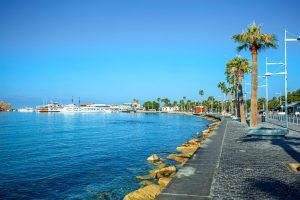
Cyprus life revolves around the Mediterranean Sea and the simple pleasure of walking. The island's 650 kilometers of coastline and 326 days of annual sunshine create perfect conditions for daily seaside visits that locals consider essential rather than optional. In-Cyprus-com Walking serves multiple purposes in Cypriot culture, from exercise and social connection to mental relaxation and community participation. The coastal promenades and beaches function as outdoor living rooms where families gather, friends meet, and strangers become acquaintances through repeated casual encounters. The History of Coastal Walking Traditions The tradition of evening coastal walks, known as the volta, traces back to ancient Greek and Roman practices of gathering in public spaces. During Byzantine times, promenades along harbor areas served as meeting points for merchants, fishermen, and community members. The Ottoman period introduced coffee culture that complemented these walking traditions, creating social patterns that persist today. British colonial rule added formal promenade design to coastal cities, particularly in Limassol and Larnaca where waterfront development emphasized public access. In-Cyprus-com The modern promenade culture emerged after Cyprus's independence in 1960, when cities began investing in coastal infrastructure. The Paphos promenade development connected the medieval harbor with archaeological sites, while Limassol created the Molos, a palm-lined waterfront park that opened in 2014. These projects reclaimed seafronts for public use after decades of commercial and industrial…

Read more
Saranda Kolones Fortress Paphos Byzantine Ruins

Saranda Kolones Fortress Paphos Byzantine Ruins

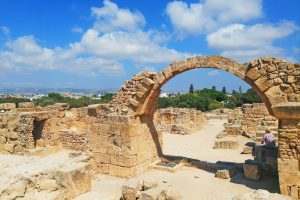
Inside the Paphos Archaeological Park, just north of the old harbor, a pile of broken stones and toppled columns marks where one of Cyprus's most important medieval fortresses once stood. Saranta Kolones, which translates to Forty Columns, served as the main defensive stronghold protecting Paphos during a turbulent period when Arab raids threatened the island. Today, visitors walk among its ruins and discover a fortress that endured multiple rebuilds, witnessed crucial historical events, and met a violent end in one of the worst earthquakes ever to strike Cyprus. tripadvisor-com Historical Background The fortress was built at the end of the 7th century AD under Byzantine rule. Historical records indicate that Theodore, the brother of Emperor Heraclius I, supervised its construction. At that time, the Arab Caliphate had emerged as a powerful force in the Middle East, and Cyprus found itself in the path of expansion. Arab forces launched raids on the island, making coastal cities particularly vulnerable. Paphos, with its strategic harbor and position on shipping routes, needed strong defenses. hotel-com The Byzantine builders created a formidable structure. The fortress featured walls three meters thick, substantial enough to resist siege weapons of that era. Four massive corner towers anchored the defenses, with four additional intermediate towers positioned along the connecting walls. A moat surrounded the entire complex, and access was…

Read more