Explore Cyprus with Our Interactive Map

Explore our top stories and discover ideas worth your time.

Choirokoitia Settlement

Choirokoitia Settlement

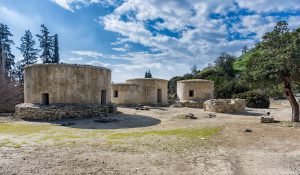
Choirokoitia Settlement is a remarkable Neolithic village on Cyprus's southern coast, dating back to around 7000 BC, where early humans first built permanent homes and formed communities. Recognized as the most important site of its kind in the eastern Mediterranean, it reveals how people shifted from wandering hunters to settled farmers, laying foundations for civilization. This ancient spot whispers stories of innovation and survival, sparking interest in humanity's shared journey toward organized life. turbinatravels-com A Window into Early Human Life Choirokoitia stands as one of the earliest and best-preserved examples of a settled Neolithic community in the region, offering a detailed look at the transition from nomadic existence to village life. Located in the Larnaca District on a hillside overlooking the Maroni River Valley, the site's strategic position provided natural defenses, access to water, and fertile soil for early agriculture. Spanning about 3 hectares, it housed up to 300 people in circular dwellings, marking a pivotal shift in human history known as the Neolithic Revolution. This change involved domesticating plants like emmer wheat, barley, lentils, and animals such as sheep, goats, and pigs, which were introduced to the island by the first settlers from the Levantine mainland around 8500 BC. topwar-ru The settlement's layout reflects emerging social organization, with houses clustered in a semi-circular pattern around a central open space,…

Read more

Pierides Ethnographic Museum

Pierides Ethnographic Museum

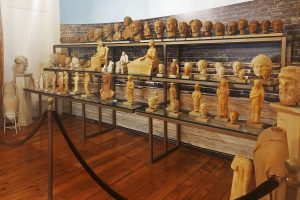
The Pierides Museum is the oldest private museum in Cyprus, housed in the ancestral home of the Pierides family in central Larnaca. This colonial-style mansion contains approximately 2,500 artifacts that document 9,000 years of Cypriot history, from the Neolithic period through the medieval era. The collection was assembled over five generations and represents one of the most important private archaeological holdings in the Eastern Mediterranean. visitcyprus-com Historical Background The museum's history began in 1839 when Demetrios Pierides started collecting Cypriot antiquities. Born in 1811, Pierides witnessed the widespread looting and export of Cyprus's archaeological heritage during the early 19th century. Foreign collectors and archaeologists routinely removed artifacts from the island, shipping them to museums in London, Paris, and other European capitals. Pierides believed that Cyprus's cultural heritage should remain on the island, and he dedicated his life to acquiring and preserving objects that might otherwise be lost. cyprusevents-net Demetrios Pierides came from a prominent Larnaca family with roots in the local merchant class. His position gave him access to antiquities discovered during agricultural work, construction projects, and tomb robberies. He purchased items directly from farmers and workmen, built relationships with other collectors, and sometimes conducted his own excavations at known archaeological sites. By his death in 1895, he had assembled a substantial collection covering most periods of Cypriot history. The…

Read more
Isolated Cyprus Villages with Scenic Views

Isolated Cyprus Villages with Scenic Views

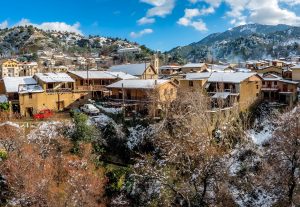
Isolated villages scattered across the Cypriot mountains offer some of the most dramatic views on the island. These remote settlements cling to hillsides and nestle in valleys, far from coastal tourist centers and modern development. shutterstock-com The villages sit at elevations ranging from 900 to 1,380 meters above sea level. Their geographic isolation preserved traditional architecture and ways of life that disappeared elsewhere. Stone houses with wooden balconies, cobblestone streets, and terraced hillsides create scenes that seem frozen in time. Panoramic vistas stretch in every direction from these mountain perches. Visitors can see across valleys thick with pine forests, down to distant coastlines, and toward other villages dotting the landscape. The clean mountain air and reduced light pollution make these locations ideal for photography and stargazing. Centuries of Mountain Settlement People have inhabited Cyprus mountains for thousands of years, though many current villages date from medieval times. During periods when coastal areas faced invasion threats, communities moved inland to the protection of mountain terrain. The Troodos Mountains became a refuge during Byzantine rule. Monasteries appeared first, followed by villages that supported religious communities. The mountains offered natural defense and cooler temperatures during scorching summers. tastecyprus-com Village names often trace back to feudal families or geographic features. Fikardou possibly derives from the phrase "den of fugitives" or from the noble Ficardo…

Read more