Explore Cyprus with Our Interactive Map

Explore our top stories and discover ideas worth your time.

Akrotiri Environmental Protected Area, Cyprus

Akrotiri Environmental Protected Area, Cyprus

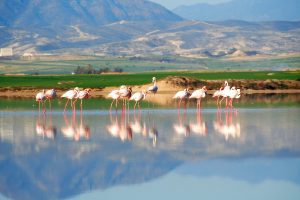
The Akrotiri Peninsula stands at the southernmost tip of Cyprus, where wetlands, salt lakes, and coastal habitats create one of the most important wildlife sanctuaries in the Mediterranean. This protected area combines ancient traditions with modern conservation to safeguard a landscape that supports rare species found nowhere else on Earth. tripadvisor.com Akrotiri Peninsula covers 60 square kilometers within the British Sovereign Base Area, just southwest of Limassol. The area centers around the Akrotiri Salt Lake, Cyprus's largest aquatic system, surrounded by coastal dunes, Mediterranean juniper forests, saltmarshes, and reedbeds. It holds designations as a Ramsar Wetland of International Importance, a Special Protection Area for birds, and a Special Area of Conservation. Historical Background Thousands of years ago, Akrotiri existed as an island separated from Cyprus. The Kouris River carried sediment to its delta over millennia, building up land that formed a bridge connecting the western side to the mainland. Later, a second bridge formed on the eastern side from sediment deposited by the Garilis River. This double tombolo formation trapped the salt lake in the center and took at least 56,000 years to complete. A Remarkable Concentration of Wildlife The peninsula hosts over 800 plant species, representing 40 percent of all plants found on Cyprus. About 300 bird species use the area, with 70 percent of Cyprus's entire bird population…

Read more

Cyprus Ancient Gods

Cyprus Ancient Gods

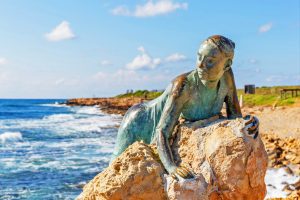
Long before saints and churches, Cyprus was home to powerful gods and goddesses whose temples dotted the island and whose myths shaped Mediterranean culture. From Aphrodite rising from the sea foam to warrior deities protecting cities, Cyprus's ancient pantheon blended Greek, Phoenician, and local traditions into something uniquely Cypriot - and traces of these divine beings still linger in the landscape today. A Crossroads of the Divine Ancient Cyprus didn't worship just one set of deities. Instead, the island's position at the crossroads of Greek, Near Eastern, and Egyptian civilizations created a rich religious tapestry where different cultures' gods merged, borrowed from each other, and sometimes became the same deity under different names. myfirstticket-com From the Bronze Age onward, Cypriots worshipped a Great Goddess of fertility who would eventually be identified with the Greek Aphrodite. But they also honored male gods adapted from neighboring lands - Phoenician warrior protectors, Greek sky fathers, and mysterious local spirits. By classical times, the island had developed a complex pantheon where Greek Aphrodite and Apollo appeared alongside Near Eastern Astarte and Resheph, creating a unique mythic identity that belonged fully to neither East nor West but to Cyprus itself. Where Divine Traditions Met and Merged Cyprus's religious history stretches back thousands of years, with each wave of settlers adding new layers to the island's…

Read more
Dragons, Deep Caves, and Serpent Myths

Dragons, Deep Caves, and Serpent Myths

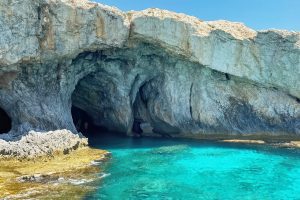
Cyprus possesses a landscape rich with caves, springs, and natural formations that have inspired supernatural stories for thousands of years. The island's geological features, from coastal grottos to mountain springs, became the settings for tales of dragons, serpents, and mysterious creatures that guarded treasures or threatened unwary travelers. pixabay-com These legends blend ancient mythology with local folklore, creating a unique tradition of supernatural stories connected to specific natural sites. The caves and springs of Cyprus served practical purposes as water sources and shelter, but they also held deeper meaning as places where the boundary between the ordinary world and the realm of myth became thin and permeable. Historical Context Serpent and dragon myths in Cyprus trace back to multiple cultural influences. The island's position at the crossroads of civilizations meant that Greek, Phoenician, Roman, and Byzantine traditions all contributed to local folklore. Ancient Greeks associated serpents with various deities and natural forces. The Agathodaemon, a benevolent spirit depicted as a serpent, was believed to protect homes and ensure prosperity for families. This protective serpent appears in Cypriot traditions as a guardian rather than a threat. The connection between serpents and water sources has ancient origins. Many Mediterranean cultures viewed springs and wells as sacred places where supernatural beings dwelled. In Cyprus, springs emerging from limestone rocks created mysterious cave systems…

Read more