Explore Cyprus with Our Interactive Map

Explore our top stories and discover ideas worth your time.

Resilient Cyprus Brooms

Resilient Cyprus Brooms

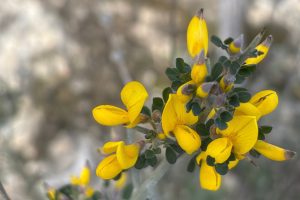
Imagine stepping onto a sun-drenched hillside in Cyprus as spring awakens the land. Suddenly, the dry, thorny scrub lights up with bright bursts of golden yellow, as though someone has scattered handfuls of sunshine across the rocks. These vivid displays come from the brooms of the Genisteae tribe – tough, spiny shrubs that turn the island’s classic maquis into a sea of gold. www.inaturalist.org Pea-Family Pioneers of the Mediterranean Scrub The Genisteae belong to the great legume family Fabaceae, the same group that gives us peas, beans and clover. In Cyprus, two standout members bring the colour and character: Genista fasselata (Fassel’s broom) and Calycotome villosa (hairy thorny broom). Both are evergreen or semi-evergreen shrubs perfectly suited to the island’s rugged, sun-baked slopes from sea level to the cooler heights of the Troodos. Born of Fire and Centuries of Change These plants tell a story as old as the Mediterranean itself. Long before people arrived around 6000 BC, Cyprus wore a cloak of dense forest. Over millennia, human activities – clearing land, grazing goats and accidental fires – transformed much of that woodland into today’s maquis and garigue. In these open, rocky habitats the brooms found their perfect home. Early naturalists exploring the island in the 1860s, such as Unger and Kotschy, noted the aromatic, spiny scrub clothing the hills,…

Read more
Artisanal and Industrial Fishing Cyprus

Artisanal and Industrial Fishing Cyprus

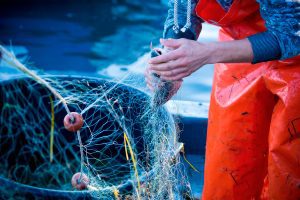
kiprinform.com Fishing in Cyprus faces significant external pressures and rising socio-economic concerns rather than a simple quiet balance. Small-scale artisanal fishers still work close to shore using selective, traditional methods, while a limited number of industrial operations supply markets with consistency and volume. Both exist within the same narrow waters, governed by strict regulation and ecological limits. Understanding this balance explains not only how seafood reaches Cypriot tables, but also how culture, sustainability, and modern life intersect around the sea. An island that learned to read the sea Cyprus has always depended on the Mediterranean in practical ways. Long before engines or harbours, coastal communities relied on observation, memory, and seasonal rhythm. Fishing was guided by wind, water temperature, and experience passed quietly between generations. As the island modernised during the twentieth century, fishing evolved rather than disappeared. Motors replaced oars, ice replaced immediate consumption, and ports became more organised. Yet many families continued to fish in familiar ways, preserving a working connection between past and present rather than treating tradition as nostalgia. What artisanal fishing really looks like fishingtourism.org Artisanal fishing in Cyprus is defined by proximity and restraint. Boats are small, usually under twelve metres, and operations remain close to the coast. Gear is chosen not for volume, but for precision. Common methods include trammel nets laid carefully…

Read more

Toumba tou Skourou Bronze Age Burial Site

Toumba tou Skourou Bronze Age Burial Site

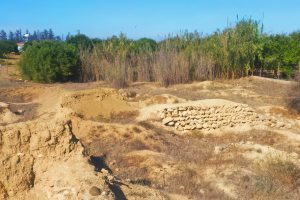
Near the town of Morphou in northwestern Cyprus, an artificial hill once rose from the fertile plain where the Ovgos River flows toward the sea. For over 600 years during the Bronze Age, this spot was home to potters who made beautiful ceramics, copper workers who processed metal from nearby mines, and families who buried their dead in tombs cut into the rock. Bulldozers destroyed much of the site before archaeologists could study it, but what they found in three short years changed how we understand Bronze Age Cyprus. visitcyprus-com Historical Background Toumba tou Skourou was a Late Bronze Age settlement and cemetery located 4 kilometers from central Morphou on Cyprus's northwestern coast. The name means "Mound of Darkness" in Greek, though scholars debate where this unusual name came from. The site consisted of an artificial mound about 10 meters high, 12 meters wide, and 20 meters long, created from the accumulated debris of centuries of human activity. wikimedia-org The settlement flourished from the Middle Bronze Age through the Iron Age, roughly 1650 BC to 750 BC. During its peak, Toumba tou Skourou functioned as an industrial center where craftspeople made pottery and processed copper from mines in the nearby Troodos Mountains. The site also contained residential areas, storage buildings with large pithoi (clay jars), and at least six chamber…

Read more