Explore Cyprus with Our Interactive Map

Explore our top stories and discover ideas worth your time.

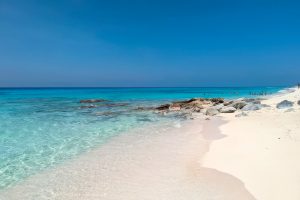
Governor’s Beach, Cyprus

Governor’s Beach, Cyprus

Governor's Beach is actually two connected beaches near Pentakomo village, about ten kilometers east of Limassol. The main section features dark volcanic sand framed by striking white chalk cliffs, while the neighboring Kalymnos beach extends as a narrow sandy strip approximately 200 meters to the west. tripadvisor.com Together they form a two-kilometer coastline recognized for exceptional water quality and environmental standards. The area sits roughly 40 kilometers west of Larnaca and 30 kilometers east of Limassol, positioned far enough from major tourist strips to maintain a more peaceful character. Historical Background The beach earned its name during British colonial rule when high-ranking officials chose this location for recreational activities. The striking white cliffs and gray sand apparently reminded them of the Dover coastline back home. A British governor maintained a summer residence nearby in Maroni village, though he frequently visited this particular stretch of coast. The first president of independent Cyprus, Archbishop Makarios III, also enjoyed the former colonial cottage, which still stands today awaiting government decisions about its future use. sandee.com The western section carries the name Kalymnos after professional sponge divers from the Greek island of Kalymnos who berthed their ships in this bay during the late 19th and early 20th centuries. These divers harvested natural sea sponges until overexploitation and disease destroyed the sponge fields throughout the…

Read more
The Silvery Sentinels of Cyprus Slopes

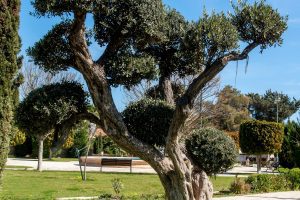
The Silvery Sentinels of Cyprus Slopes

On rocky hillsides and gentle terraces across Cyprus, trees with shimmering silver-green leaves stand like wise elders, their twisted trunks telling stories of centuries under the Mediterranean sun. These are the olive trees, living treasures that have shaped the island’s landscape, diet and culture since the dawn of human settlement here. www.inaturalist.org A Classic Evergreen of the Olive Family Known to science as Olea europaea, the olive belongs to the family Oleaceae within the order Lamiales. In Cyprus it thrives both as the familiar cultivated form in orchards and as the wild oleaster (Olea europaea var. sylvestris), a tougher, smaller-fruited version that grows naturally in maquis and garigue vegetation alongside carob and wild pistachio. www.inaturalist.org Echoes from the Dawn of Cypriot Civilisation Olives have been part of Cyprus since at least the Bronze Age, with ancient pollen records and archaeological finds showing they were already valued for oil and fruit more than 4,000 years ago. Phoenician, Greek and Roman settlers expanded their cultivation, while the wild oleaster formed part of the original maquis shrublands described in 19th-century British forest reports. Over time, centuries of human care turned scattered wild trees into the productive groves that still cloak the island’s lower slopes today. Graceful Form and Enduring Strength The olive is an evergreen tree reaching 8–15 metres, with a short, often…

Read more

Cyprus Birthplace Mediterranean Copper Trade

Cyprus Birthplace Mediterranean Copper Trade

Long before Cyprus became known for beaches or crossroads of empires, it was known for something far more fundamental. Copper. Drawn from its mountains and carried across open water, this metal placed the island at the center of the ancient Mediterranean world. Cyprus did not merely export a resource. It supplied the material that powered the Bronze Age and, in doing so, helped shape the earliest long-distance trade networks ever formed at sea. wikipedia-com This is not a story of passive geography or accidental wealth. It is the story of how an island learned to move its resources outward, turning stone into influence and distance into connection. An Island Defined by What Lay Beneath Copper was the first metal to change how societies lived. It allowed stronger tools, more effective weapons, and eventually the creation of bronze, the alloy that defined an entire era. Control of copper meant control of technology, agriculture, and military power. Cyprus stood apart because of scale. Its copper deposits, concentrated in the Troodos Mountains, were among the richest and most accessible in the ancient world. Mining was not scattered or marginal. It was continuous, extensive, and organized. The island’s association with copper became so strong that the Latin word cuprum ultimately derived from Cyprus. While the name of the island itself likely predates the metal…

Read more