Explore Cyprus with Our Interactive Map

Explore our top stories and discover ideas worth your time.

Atalanti Nature Trail Troodos Pine Forests

Atalanti Nature Trail Troodos Pine Forests

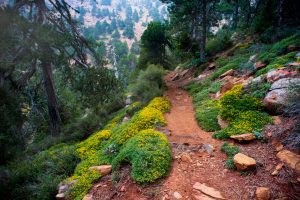
The Atalanti Nature Trail wraps around Mount Olympus at an altitude where black pines grow thick, and views stretch across the entire island of Cyprus. This 14-kilometer circular route offers a longer alternative to the more popular Artemis Trail, with the same mountain setting but fewer crowds. The path combines ecological education with genuine wilderness experience, complete with an abandoned chromite mine and an 800-year-old juniper tree. chooseyourcyprus.com The Atalanti Nature Trail sits at 1,700 to 1,750 meters above sea level in the Troodos National Forest Park. The route starts and ends at Troodos Square, the main gathering point in the Troodos Mountains. Despite its 14-kilometer length, the trail maintains a relatively flat profile throughout most of its course, with only the final quarter showing noticeable elevation changes. The trail is officially designated as a geo-trail, which means it includes geological interpretation along with natural history. Walking time ranges from 3 to 5 hours, depending on pace and how often hikers stop to examine the landscape. Historical Background Atalanti takes her name from Atalanta, one of the few female heroes in Greek mythology who appears as a central figure. According to myth, her father abandoned her as an infant because he wanted a son. A she-bear found and nursed the child until hunters discovered her and raised her. She grew…

Read more
Whispers of White Petals in the Cypriot Breeze

Whispers of White Petals in the Cypriot Breeze

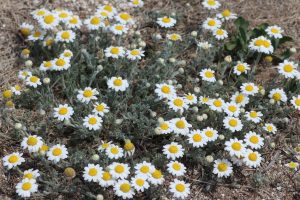
Picture a sun-drenched Cypriot meadow in spring, dotted with cheerful daisy-like flowers that bob like tiny suns on slender stems, their delicate scent mingling with the salty sea air. These are the Anthemis or Mayweed species, often mistaken for their chamomile cousins, a group of wildflowers that paint the island's landscapes with subtle beauty. But what tales do these unassuming blooms tell of Cyprus' wild heart? www.inaturalist.org Getting Acquainted with the Island's Daisies Anthemis is a genus of flowering plants in the vast Asteraceae family, which includes everything from sunflowers to dandelions, showing how these humble herbs fit into a broader world of composite blooms that rely on wind and insects for their spread. In Cyprus, they're known as wild chamomiles or μαργαρίτες (margaritas) in Greek, evoking simple, everyday beauty. Think of them as the island's resilient ground-huggers, annual or perennial herbs that thrive in open spaces, offering a gentle introduction to the Mediterranean's floral diversity without any fuss. A Legacy Etched in Ancient Soils The story of Anthemis in Cyprus reaches back to the island's Bronze Age settlers, who likely encountered these flowers amid terraced fields and rocky hills, perhaps using them in early herbal remedies as hinted in ancient texts like Dioscorides' "De Materia Medica," where similar chamomiles were praised for soothing woes. www.inaturalist.org Over centuries, as Phoenicians,…

Read more

Cyprus Metal Crafts Through Ages

Cyprus Metal Crafts Through Ages

Cyprus holds a unique position in metalworking history. The island gave its name to copper itself, with the Latin term "cuprum" deriving from "Cyprus." For over 6,000 years, Cypriot artisans have shaped metals into tools, weapons, jewelry, and decorative objects. The tradition spans from simple Chalcolithic copper tools around 4000 BCE to Byzantine gold treasures and modern handcrafted silver jewelry. This heritage connects ancient mining operations in the Troodos Mountains with contemporary workshops where craftspeople maintain techniques passed down through generations. myfirstticket.com Historical Background The metal story in Cyprus begins during the Chalcolithic period when early settlers discovered native copper deposits. By 3000 BCE, Cypriots were already working copper to create artifacts of high quality that circulated throughout the Mediterranean. Archaeological evidence shows that copper smelting started during the third millennium BCE, transforming the island into a major production center. www.ancientcyprus.com The Bronze Age brought massive expansion. Cyprus became the largest copper supplier around the Mediterranean, with the island's strategic location between three continents making it a vital trading hub. Ancient texts from Babylon, Mari, and Alalakh dating to the 19th through 17th centuries BCE mention copper from Alashiya, the Bronze Age name for Cyprus. The Ulu Burun shipwreck discovered off Turkey's southwestern coast carried over 10 tons of Cypriot copper ingots when it sank in the late 14th century…

Read more