Cypriot Greek Dance Music Rhythm and Commu
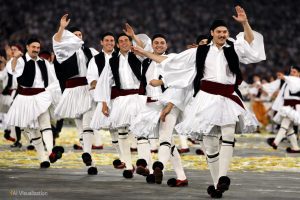
Greek and Cypriot dance music is not background sound. It is structure, instruction, and memory working at the same time. Across villages, islands, and generations, specific rhythms have guided how people move together, celebrate together, and mark life’s most important moments. This article explains how three core dance forms, Syrtos, Sousta, and Ballos, shape the musical language of Cyprus and Greece, why their rhythms matter, and how they continue to function not as performances, but as social glue. Music That Tells the Body What to Do In Greek and Cypriot tradition, dance music is practical before it is expressive. Its primary job is not to impress the listener, but to tell the dancer when to step, pause, turn, or leap. This is why rhythm matters more than melody. The structure of the beat dictates how bodies move together, whether in long communal lines or intimate pairs. Over time, certain rhythmic patterns became deeply familiar, allowing dancers to respond instinctively without instruction. Two broad movement styles dominate this musical world: Dragging, grounded movement, where dancers glide horizontally across the ground Leaping, spring-like movement, where energy rises and falls vertically These qualities are not abstract. They are felt immediately in the music. Syrtos: The Music of the Line and the Circle The Syrtos is the backbone of Greek and Cypriot dance music.…
Read more