Explore Cyprus with Our Interactive Map

Explore our top stories and discover ideas worth your time.

Troodos Hill Stations Platres and Square

Troodos Hill Stations Platres and Square

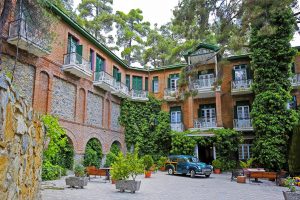
The Troodos Hill Stations refer to two main areas in the Troodos Mountains where the British colonial administration established summer retreats. Platres, located at an altitude of 1,100 meters on the southern slopes, became the premier mountain resort with luxury hotels, villas, and tree-lined walks. Troodos Square, situated near Mount Olympus at approximately 1,700 meters, served as the administrative center where the British governor relocated his entire government during the hot summer months. Together, these hill stations formed a unique mountain retreat system that shaped Cyprus tourism for over a century. facebook-com Historical Background When Lieutenant-General Sir Garnet Wolseley arrived in Larnaca on July 22, 1878, as the island's first High Commissioner, he immediately recognized a serious problem. British troops stationed on the coastal plains suffered terribly from extreme heat that often exceeded 40 degrees Celsius, and malaria was widespread in low-lying areas. Coming from their experience in India, where hill stations had successfully reduced mortality rates among troops and civilians, the British knew exactly what to do. shutterstock-com In September 1878, just two months after taking control of the island, construction began on the Troodos Hill Station. The site was chosen because elevations above 1,500 meters provided relief from tropical diseases and heat stress. Wooden huts were ordered from England, though records suggest these may never have arrived. By…

Read more

Sanctuary of the Great Mother (Avdimou)

Sanctuary of the Great Mother (Avdimou)

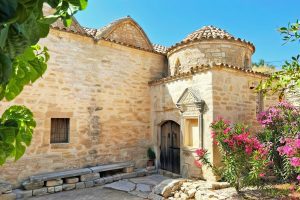
A cult site dedicated to the prehistoric fertility goddess, showing the continuity of worship from pagan fertility rites to later religious forms. facebook-com The Sanctuary of the Great Mother in Avdimou represents a timeless spiritual hub in Cyprus, where ancient veneration of a fertility goddess evolved into Christian devotion to the Virgin Mary. Located in the rural village of Prastio Avdimou near the south coast, this site embodies the island's layered religious history, blending prehistoric fertility cults with Byzantine and medieval Christian practices. It highlights Cyprus's role as a crossroads of civilizations, where pagan rites centered on life, birth, and renewal transitioned seamlessly into the worship of Panagia, the "All-Holy" mother figure, fostering a enduring tradition of pilgrimage and miracle-seeking that persists today. A Cult Site of Continuity The Sanctuary of the Great Mother, embodied in the Church of Panagia Diakinousa in Prastio Avdimou, stands as a testament to Cyprus's spiritual evolution, nestled in a serene valley amid olive groves and rolling hills. This site, spanning less than a hectare but rich in symbolic depth, draws from prehistoric roots where fertility goddesses were honored for their power over life and nature. In ancient times, Cypriots revered a "Great Goddess" depicted in cruciform statues symbolizing childbirth, with hundreds of artifacts dating to 3000-2500 BC found across the island. The Avdimou area,…

Read more
Church of the Transfiguration in Palaichori

Church of the Transfiguration in Palaichori

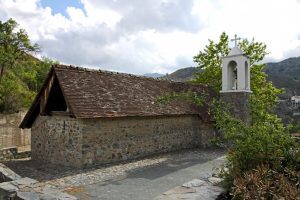
Church of the Transfiguration in Palaichori is a 16th-century Byzantine chapel in Cyprus's Troodos Mountains, renowned for its post-Byzantine frescoes that illustrate the persistence of Orthodox artistic traditions under foreign rule. Part of the UNESCO-listed Painted Churches, it preserves vivid paintings blending theological narratives with symbolic depth, reflecting medieval devotion in a rural setting. This site captures how faith endured and adapted, offering insights into Cyprus's cultural resilience amid external influences. sobory-ru A Testament to Enduring Faith in the Mountains The Church of the Transfiguration exemplifies the resilience of Byzantine religious architecture in Cyprus's highland regions, dedicated to Christ's Transfiguration - a pivotal event symbolizing divine glory and human potential for spiritual elevation. Situated in Palaichori village at an elevation of about 700 meters, amid orchards and pine-clad slopes, the chapel's modest stone form and interior art reflect the era's fusion of local Orthodoxy with subtle Western elements. Its construction and frescoes highlight the persistence of Byzantine traditions during Venetian (1489-1571) and early Ottoman (1571-1878) periods, when Catholic or Muslim influences challenged but did not erase island faith. As one of the ten Painted Churches inscribed on UNESCO's World Heritage List in 1985, it contributes to a group that collectively showcases Cyprus's medieval religious landscape, where rural isolation fostered artistic continuity amid political shifts. httpssobory-ru The chapel's location in the…

Read more