Explore Cyprus with Our Interactive Map

Explore our top stories and discover ideas worth your time.

A Tapestry of Cyprus Sacred Spaces

A Tapestry of Cyprus Sacred Spaces

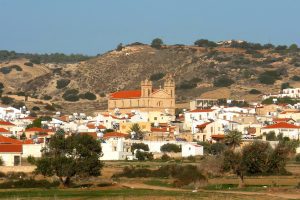
Most visitors to Cyprus know about its Greek Orthodox churches and ancient Christian monasteries, but the island's religious story is far richer and more complex. For millennia, Cyprus has been home to Jewish communities, Muslim mosques, Armenian and Maronite Christians, Sufi mystics, and Latin Catholic cathedrals - each faith leaving monuments that testify to survival, migration, and remarkable coexistence. orthodoxtimes.com Walking through Cyprus's cities means encountering this layered religious landscape where synagogues stand near mosques, Gothic cathedrals became prayer halls, and sacred springs were shared by people of different beliefs. Where Many Faiths Met and Mingled Cyprus has never belonged to a single religious tradition. Its position at the meeting point of Europe, Asia, and Africa made it a crossroads not only for trade and armies but also for belief systems. Long before Orthodox Christianity became dominant in the medieval period, Cyprus hosted Jewish traders and craftsmen, pagan mystery cults, and early Christian congregations mentioned in the New Testament. Later waves brought Islamic institutions during Ottoman rule, Armenian refugees fleeing persecution, Maronite Christians migrating from Lebanon and Syria, and Western European Crusaders establishing Latin Catholic strongholds. Rather than existing as isolated enclaves, these religious minorities participated actively in Cyprus's economy, diplomacy, and urban life. Their monuments - synagogues, mosques, churches of different denominations, and Sufi lodges - aren't marginal curiosities…

Read more

Cyprus Volcanic Rocks

Cyprus Volcanic Rocks

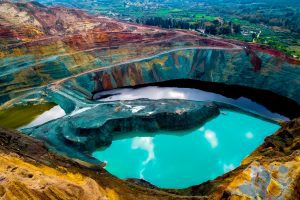
Cyprus holds a unique position in geological science. The island contains Earth's best preserved ophiolite complex, a rare slice of ancient oceanic crust and upper mantle thrust upward onto land. This exceptional geological heritage shaped both the island's dramatic landscapes and its human history, particularly through copper deposits that gave Cyprus its very name. sandatlas.org The Troodos Massif formed 90 million years ago during the Upper Cretaceous period at the bottom of the ancient Tethys Ocean. The rocks visible today once existed 8,000 meters below sea level at a mid-ocean ridge spreading center, where new oceanic crust continuously forms as tectonic plates pull apart. Geologists call this complete sequence an ophiolite complex. sandatlas.org Troodos was not metamorphosed during uplift, allowing scientists to study pristine oceanic rocks without submarines. This makes Cyprus an on-land analogue for modern mid-ocean ridges. The collision of African and Eurasian tectonic plates pushed the oceanic lithosphere upward rather than downward into a trench. Troodos first rose above sea level about 20 million years ago, with uplift centered around Mount Olympus at 1,952 meters. Erosion exposed deeper layers, allowing visitors to walk from rocks that once existed in Earth's mantle to rocks that formed at the ancient seafloor. Complete Rock Sequence from Mantle to Seafloor The ophiolite exposes a perfect vertical sequence. At the deepest level lie…

Read more
Roman Cyprus: Mediterranean Maritime Hub

Roman Cyprus: Mediterranean Maritime Hub

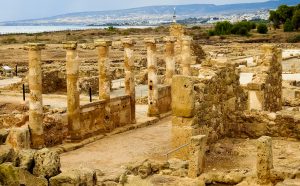
When Cyprus became part of the Roman world, the island did not need to reinvent its relationship with the sea. Instead, Rome refined it. Over centuries, Roman engineers, administrators, and merchants transformed Cyprus into a carefully managed maritime province, one that linked eastern trade routes with the wider Mediterranean through ports, harbors, and logistics designed for permanence rather than improvisation. Unsplash-com From Crossroads to System Cyprus had always sat between worlds. Long before Roman rule, ships traveling between the Levant, Egypt, Asia Minor, and the Aegean passed its shores. What changed under Rome was not geography, but organization. Cyprus trade route The Romans treated the sea as infrastructure. Ports were no longer just safe places to land. They became regulated environments, engineered to control movement, store goods, and support long-distance trade at scale. Cyprus, stable and centrally located, was perfectly suited to this vision. Engineering the Coastline Roman maritime power rested on the belief that nature could be improved. Where earlier cultures relied heavily on natural bays, Roman builders reshaped coastlines to suit imperial needs. Artificial breakwaters extended into open water. Quays were reinforced to handle heavy cargo. Harbors were designed to remain functional across seasons, not only during calm months. These were not short-term solutions. Roman ports were built to last for generations. On Cyprus, this approach created a…

Read more