Explore Cyprus with Our Interactive Map

Explore our top stories and discover ideas worth your time.

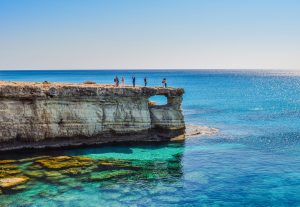
Cavo Greco Sunrise Viewpoint, Cyprus

Cavo Greco Sunrise Viewpoint, Cyprus

The Cavo Greco sunrise viewpoint sits at the southeastern edge of Cyprus, positioned at 95 meters above sea level on a small limestone mountain within Cape Greco National Forest Park. pixy-org This protected area spans 385 hectares between the resort towns of Ayia Napa and Protaras. The viewpoint marks the easternmost point of both the Republic of Cyprus and the European Union, offering unobstructed panoramas of the Mediterranean Sea, Famagusta Bay, and the surrounding coastline. Visitors come here primarily for the spectacular sunrise displays that occur daily, with the sun rising directly from the sea in vibrant colors that illuminate the limestone cliffs and turquoise waters below. Historical Background The limestone cliffs and formations seen today were created through a combination of tectonic activity and the erosive forces of the sea and wind over millions of years. The karst topography has produced numerous caves and natural arches throughout the area. The cape was known as Cape Pedalion in antiquity, and according to Strabo the trapezoidal hill lying above it was sacred to Aphrodite. Archaeological evidence shows the area has been inhabited since Neolithic times, with one of the oldest settlements in Cyprus discovered here in 1992. pixy-org Cape Greco was designated as a National Forest Park in 1993 to preserve its unique ecosystems and prevent further degradation. Between 1910 and…

Read more
Easter Traditions in Cyprus

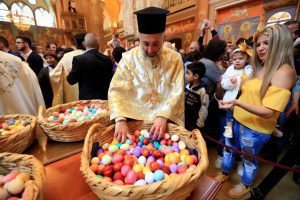
Easter Traditions in Cyprus

Easter represents the most important religious celebration in Cyprus, surpassing Christmas in spiritual significance and cultural observance. Known as Pascha in Greek, the Orthodox Easter follows the Julian calendar, often falling weeks after Western Easter. The celebration spans Holy Week with solemn church services, candlelit processions through village streets, and the midnight Resurrection liturgy when bells ring and fireworks light the sky. facebook.com Families gather for elaborate feasts featuring roasted lamb, traditional flaounes cheese pastries, and red-dyed eggs. The festivities blend Byzantine religious ritual with distinctly Cypriot customs like bonfire lighting and the tsougrisma egg-cracking game. For both devout believers and secular Cypriots, Easter functions as the primary family reunion occasion and cultural identity marker, bringing together generations to maintain traditions passed down through centuries of Orthodox faith. The 40 Days of Lenten Preparation Orthodox Lent begins on Clean Monday, called Kathara Deftera, exactly 48 days before Easter Sunday. This day marks a dramatic shift from the excess of carnival to the austerity of fasting. Cypriots traditionally spend Clean Monday outdoors with countryside picnics, flying kites and consuming only fasting foods like tahini, olives, beans, flatbreads, and shellfish. The outdoor gathering symbolizes spiritual renewal and connection with nature before the solemn weeks ahead. During the 40-day Lenten period, observant Orthodox Christians abstain from meat, dairy products, eggs, fish with backbones,…

Read more

Salamis Gymnasium – History & Facts

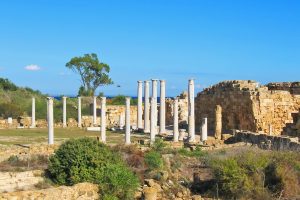
Salamis Gymnasium – History & Facts

The Salamis Gymnasium stands as one of Cyprus's most remarkable ancient structures. Located just north of modern Famagusta on the eastern coast of Cyprus, this impressive complex reveals the sophisticated approach ancient civilizations took toward physical fitness and public bathing. Built over earlier Hellenistic foundations during the 2nd century AD, the gymnasium represents the pinnacle of Roman architectural achievement on the island. encyclopedia-com Salamis itself dates back to around 1100 BC. According to ancient Greek tradition, the city was founded by Teucer, son of King Telamon, after the Trojan War. Archaeologists believe the city was actually established by settlers from the nearby Bronze Age site of Enkomi following an earthquake in 1075 BC. The city benefited from Cyprus’ rich copper resources and quickly became a major trade center and the island’s capital. For nearly a thousand years, Salamis served as the main port and political center of Cyprus. Historical Background The gymnasium complex has witnessed multiple cycles of destruction and rebuilding. Archaeological evidence shows that a Hellenistic gymnasium originally stood on this site. This earlier structure was destroyed by an earthquake and rebuilt during the reign of Emperor Augustus. The building faced another catastrophe in 76 AD during the reign of Emperor Vespasian when another powerful earthquake struck the region. The gymnasium as we see it today was restored by…

Read more