Explore Cyprus with Our Interactive Map

Explore our top stories and discover ideas worth your time.

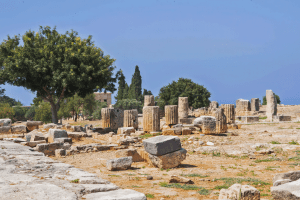
Sanctuary of Aphrodite, Palaepaphos

Sanctuary of Aphrodite, Palaepaphos

In the village of Kouklia, about 14 kilometers east of Paphos, stand the remains of what was once the most famous shrine dedicated to Aphrodite in the ancient world. For more than 1,600 years, pilgrims traveled from across the Mediterranean to worship at Palaepaphos, the place where the goddess of love was believed to have risen from the sea. Today, the site is a UNESCO World Heritage monument and one of the most important archaeological locations in Cyprus. thisispafos-com The Sanctuary of Aphrodite at Palaepaphos was founded around 1200 BC during the Late Bronze Age. It remained in continuous use until 391 AD, when the Roman Emperor Theodosius I banned all pagan religions. vici-org Palaepaphos was among the most powerful city-kingdoms of ancient Cyprus and became the first site on the island to be added to the UNESCO World Heritage List in 1980. The sanctuary functioned as the main center of Aphrodite worship across the Aegean world, attracting visitors from Greece, Rome, Egypt, and other parts of the eastern Mediterranean. Unlike typical Greek and Roman temples, the sanctuary followed a very different architectural approach. Instead of a roofed building with columns and a statue, it featured an open-air layout influenced by Near Eastern traditions. Aphrodite was not depicted in human form but represented by a sacred conical stone, a practice…

Read more

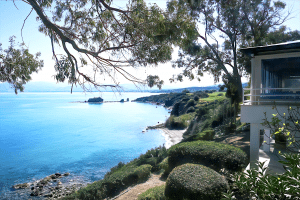
Aphrodite Nature Trail Cyprus Coastal Wilderness

Aphrodite Nature Trail Cyprus Coastal Wilderness

The Aphrodite Nature Trail cuts through the Akamas Peninsula, one of the last untouched wildernesses in Cyprus. This 7.5-kilometer circular route starts at the legendary Baths of Aphrodite and climbs to viewpoints where the entire northwest coast unfolds below. chooseyourcyprus-com The path combines mythology with genuine ecological significance, passing through an area that hosts 39 of Cyprus's 141 endemic plant species and serves as protected habitat for endangered sea turtles. The route reaches a maximum elevation of 370 meters at Moutti tis Sotiras, a rocky plateau that offers panoramic views across Chrysochou Bay to Cape Arnaoutis. Despite covering 7.5 kilometers, the trail maintains a moderate difficulty level, with most elevation gain concentrated in the middle section. Walking time ranges from 3 to 4 hours. The entire Akamas Peninsula covers 230 square kilometers and is designated as a NATURA 2000 protected area, recognized by the European Environment Agency as one of only 22 areas of endemism in Europe. The Goddess Who Rose from the Sea According to Greek mythology, Aphrodite emerged from sea foam off the coast of Cyprus. The Baths of Aphrodite, where the trail begins, is a natural grotto where the goddess supposedly bathed. Local legend claims this is where she met Adonis, her mortal lover, when he stopped to drink from the spring while hunting. The peninsula takes…

Read more
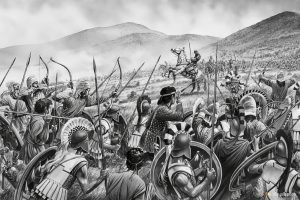
Cyprus War Resistance Stories

Cyprus War Resistance Stories

Cyprus has witnessed countless conflicts throughout its 10,000 years of human habitation. The island's position at the crossroads of three continents made it a prize worth fighting for, and its people developed a long tradition of resistance against foreign rule. dzeninfra-ru From ancient sieges to modern independence struggles, Cyprus has been repeatedly conquered, defended, and fought over by armies ranging from Persian emperors to British colonial forces. These conflicts left deep marks on the landscape and shaped the national character of both Greek and Turkish Cypriots who call the island home. Historical Background Cyprus experienced its first major conflicts during the ancient period when Persian forces conquered the island's city kingdoms in the 6th century BC. The Greek population survived Persian rule and later came under Alexander the Great's control, followed by Ptolemaic Egypt and then Rome. Each conquest brought armies, resistance, and sometimes devastation. nano-banana The Arab invasions beginning in 649 AD marked one of the most unusual periods in Cypriot history. Arab forces under Muawiyah I sailed from Alexandria with a large fleet and conquered the capital Salamis-Constantia after a brief siege. During this expedition, Umm-Haram, a relative of the Prophet Muhammad, fell from her mule near Larnaca's Salt Lake and died. She was buried there, and the Hala Sultan Tekke shrine was built in her honor. Arab…

Read more