Explore Cyprus with Our Interactive Map

Explore our top stories and discover ideas worth your time.

Cyprus Red Fox

Cyprus Red Fox

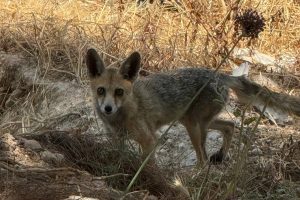
There is an animal on Cyprus that has been blamed for stolen chickens, celebrated in folktales, painted as the ultimate villain of the farmyard and yet, science tells us a very different story. The Cyprus fox, a unique island subspecies found nowhere else on Earth, is one of the most misunderstood creatures in the Eastern Mediterranean. Once you learn the truth about it, you may never look at a pair of amber eyes at dusk in quite the same way again. From the Family of Clever Ones The Cyprus fox belongs to the family Canidae the great clan that includes wolves, jackals, wild dogs, and domestic dogs. Within this family sits the genus Vulpes, the "true foxes," a group of about twelve species spread across the globe, from the tiny big-eared fennec fox of the Sahara to the ghost-white Arctic fox of the frozen north. Our island's fox is a member of Vulpes vulpes the red fox which is arguably the most successful and widespread wild carnivore on the planet, ranging from the Arctic Circle all the way down to North Africa, across Eurasia, and into North America. But the fox living in Cyprus is not simply a red fox that wandered over. It is a distinct island subspecies, formally described in 1907 by the American naturalist Gerrit Smith Miller,…

Read more

Archaeological Sites and Excavations in Cyprus

Archaeological Sites and Excavations in Cyprus

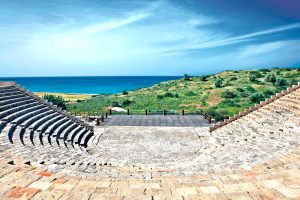
Beneath Cyprus's sunny beaches and pine-covered mountains lie layers of ancient civilizations waiting to be discovered. From 9,000-year-old Neolithic villages to Roman theaters still hosting performances, the island's archaeological sites tell the story of humanity's journey from Stone Age farmers to cosmopolitan Mediterranean traders - and remarkably, you can walk through most of them today. culture.gouv_fr A Living Museum Beneath Your Feet Cyprus is essentially one enormous archaeological site. Everywhere you turn - in downtown Larnaca, on clifftops overlooking the sea, hidden in mountain valleys - you'll find excavated ruins that reveal thousands of years of continuous human habitation. These aren't just piles of old stones; they're remarkably well-preserved windows into how people lived, worshipped, fought, and thrived across millennia. What makes Cyprus's archaeological landscape special is its completeness. You can trace the entire arc of Mediterranean civilization here: from Neolithic round-house villages to Bronze Age fortresses, from Phoenician temples to Greek theaters, from Roman bath complexes to early Christian basilicas. Each era built upon the last, creating stratified sites where one civilization's ruins literally rest atop another's foundations. From Stone Age Settlements to Classical Cities Cyprus's archaeological story begins over 11,000 years ago when the first humans arrived and found an island inhabited by pygmy hippos and dwarf elephants. By the 7th millennium BC, Neolithic farmers had established permanent…

Read more
Cyprus Secret Endemic Spurges

Cyprus Secret Endemic Spurges

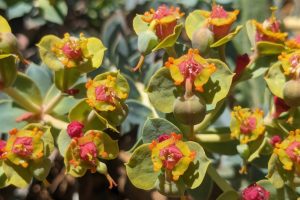
Tucked away in the rugged hills and mountains of Cyprus, two special plants — Euphorbia veneris and Euphorbia lemesiana — bring subtle beauty to rocky spots. These endemic spurges, found nowhere else, whisper stories of ancient gods and recent discoveries. But what makes them thrive in such harsh places, and why are they like hidden treasures waiting to be found? www.inaturalist.org What Are These Tough Little Island Natives? Euphorbia veneris and Euphorbia lemesiana are both small, wild plants from the spurge family, a group known for their milky sap and simple flowers. They're perennials that come back each year, perfectly adapted to Cyprus's dry, sunny landscapes, adding quiet charm to the island's wild corners. How Did These Plants Spring from Cyprus's Mythical and Fiery Past? The Euphorbia genus gets its name from Euphorbus, an ancient Greek doctor around 12 BC, whose name meant "well-fed" — a funny twist since these plants are toxic. Euphorbia veneris honors Venus (Aphrodite), the goddess born from Cyprus's seas, linking it to the island's mythical roots. Described in 1963, it's a nod to Cyprus's geological history from ancient ocean floors pushed up by tectonic forces. Euphorbia lemesiana, named after Limassol (Lemesos), was discovered more recently in 2015 as part of the Eastern Mediterranean spurge group, evolving in isolation amid the island's volcanic past. www.inaturalist.org Picture…

Read more