Explore Cyprus with Our Interactive Map

Explore our top stories and discover ideas worth your time.

Myrtle in Cypriot Hills

Myrtle in Cypriot Hills

Picture yourself on a sun-drenched slope in Cyprus, where the air carries a sweet, spicy fragrance whenever a breeze stirs the shrubs. Amid the rocky terrain and scattered pines, you encounter clusters of glossy green leaves dotted with delicate white flowers. This is the common myrtle, a quiet but ever-present companion in the island’s wild landscapes. www.inaturalist.org A Shrub Steeped in Mediterranean Grace Myrtus communis, known simply as the common myrtle, belongs to the Myrtaceae family a group that includes fragrant giants like eucalyptus and clove trees. In Cyprus it grows as an evergreen shrub or small tree, reaching up to five metres tall. It is one of only two species in its genus worldwide, the other being a rare Saharan relative. Here on our island it forms part of the classic maquis vegetation, that resilient scrubland of aromatic bushes that cloaks hillsides from sea level right up to 1,500 metres. Tales from Antiquity: Aphrodite’s Favourite Veil Long before botanists catalogued it, the myrtle was woven into the very birth story of Cyprus. Legend tells that when Aphrodite, the goddess of love and beauty, rose from the foaming waves near Paphos, she modestly hid her nakedness behind a myrtle bush. Ever since, the plant has been sacred to her. Ancient brides wore myrtle wreaths and bathed in myrtle-scented water on…

Read more
Cyprus Beaches And Water Sports

Cyprus Beaches And Water Sports

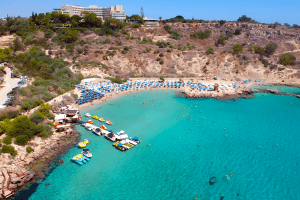
Cyprus ranks as the third largest island in the Mediterranean and boasts some of Europe's finest coastal areas, with 60 beaches marked with the Blue Flag, an international award in the field of ecology and environmental protection given to beaches and marinas. In practice this means incredibly clean beaches and crystal clear water. simcorner-com The eastern coast stands particularly renowned for its fantastic assortment of beaches considered by many to be the best on the entire island, with Ayia Napa and Protaras regions lined by glorious stretches of golden sand. The island's beaches offer something for everyone, from lively party atmospheres to secluded family-friendly coves, all benefiting from Cyprus's 340 days of sunshine annually and sea temperatures reaching 27 degrees Celsius during summer months. The Famous Beaches of Ayia Napa Nissi Beach stands as probably the most popular beach in Cyprus, stretching 500 meters with white sand and turquoise water. The water after entering remains quite shallow for a long distance and stays crystal clear with minimal waves. Nissi Beach got its name from an islet not far from the coast that visitors can reach when the tide is low in winter and spring, as a sand walkway unveils leading from the beach to the small island inhabited by low-level shrubs and pretty plants. atlanticahotels-com The beach has earned Blue…

Read more
Cyprus Mount Olympus Hiking Snow Troodos Adventures

Cyprus Mount Olympus Hiking Snow Troodos Adventures

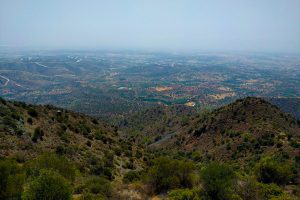
Mount Olympus, also called Chionistra in Greek, represents the highest point on an island better known for beaches than mountains. The peak sits within the Troodos range, a vast expanse of pine forests, rocky slopes, and endemic wildlife that covers roughly a third of Cyprus. Unlike its famous Greek namesake associated with Zeus and the ancient gods, Cyprus's Olympus tells a different story through geology, nature, and seasonal transformation. alamy-com The mountain serves multiple purposes throughout the year. In winter, it becomes the only ski destination in Cyprus. During warmer months, hikers take to trails that wind through black pine forests and offer panoramic views across the entire island. The summit itself houses British and Cypriot radar stations, making the actual peak off limits to visitors, but numerous viewpoints just below provide spectacular perspectives of the surrounding landscape. Historical Background Mount Olympus formed approximately 92 million years ago as part of the Troodos Ophiolite Complex, an uplifted fragment of ancient oceanic crust from the prehistoric Tethys Ocean. The mountain's core consists of ultramafic rock, primarily serpentinized harzburgite, which represents exposed upper mantle from deep beneath an ancient seabed. Tectonic forces pushed this oceanic crust upward through a process called obduction, eventually lifting it above sea level to create the island's mountain spine. This geological origin makes Troodos globally significant among…

Read more